
A root canal does not hurt the way people expect. With modern anaesthetic, the procedure itself feels similar to having a filling done — pressure and vibration, but not pain. What hurts is the infected tooth beforehand, and that pain usually stops within a day or two of treatment.
“I would rather have anything than a root canal” is something we hear most weeks. The reputation is decades out of date. The techniques, the anaesthetics and the instruments have all changed, and research bears it out: patients who have actually had root canal treatment consistently rate it about as uncomfortable as a routine filling. This article walks through exactly what you feel, minute by minute, so there are no surprises.
Why the tooth hurts in the first place
Inside every tooth is a soft core of nerve and blood vessels called the pulp. When decay, a crack or an old deep filling lets bacteria reach that core, the pulp becomes inflamed and then infected. It is sealed inside a rigid tooth with nowhere to swell, which is why the pain of an infected pulp can be so intense — throbbing, keeping you awake, sometimes spreading along the jaw or up towards the ear.
Root canal treatment removes that infected tissue. The pain you were feeling was the infection, not the treatment. That distinction is the whole point: the procedure is what ends the pain.
What you actually feel, step by step
- Numbing (2–5 minutes). A topical gel goes on first, so the injection itself is a pinch at most. For a hot, badly infected tooth we sometimes add a supplementary injection, because inflamed tissue can resist ordinary anaesthetic. We do not begin until you confirm the tooth is fully numb.
- Isolating the tooth (2 minutes). A small rubber sheet, the dental dam, is fitted so the tooth stays clean and dry and nothing runs into your mouth. Most patients find this the most restful part — nothing to swallow, nothing to rinse.
- Opening the tooth (5–10 minutes). An access hole is made through the crown. You hear the handpiece and feel vibration. No pain.
- Cleaning the canals (30–60 minutes). Fine files clean and shape the canals while a disinfecting solution flushes them. This is the longest stage and the quietest. You feel nothing but occasional pressure. Many patients listen to music through it; some doze off.
- Filling and sealing (10–15 minutes). The cleaned canals are filled with a rubber-like material and sealed so bacteria cannot re-enter.
- Rebuilding the tooth. A filling closes the access hole. Back teeth normally need a crown afterwards, because a treated molar has lost structure and is prone to fracture without one.
Most single-canal front teeth are finished in about 45 minutes. A molar with three or four canals may take 90 minutes, or be split across two visits.
Afterwards: what is normal and what is not
Expect the tooth to be tender to bite on for two to four days. That soreness comes from the ligament around the root, which was irritated during treatment, not from inside the tooth — the nerve is gone. Over-the-counter ibuprofen handles it well for most people; take it before the anaesthetic wears off rather than after.
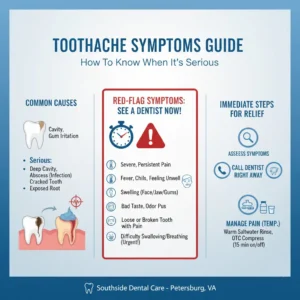
What is not normal: severe pain that builds after day three, swelling of the face, fever, or a bad taste that returns. Those suggest lingering infection and need to be looked at promptly. Call us rather than waiting it out — our emergency appointments exist for exactly this.
If you are anxious about the appointment
Fear of dental pain is real, common, and worth telling us about rather than pushing through. A few things that genuinely help:
- Say so at the start. We work more slowly, explain each step before it happens, and agree a stop signal — raise a hand and everything pauses.
- Book a morning appointment. Waiting all day gives anxiety time to build.
- Ask about sedation. Nitrous oxide takes the edge off and wears off within minutes, so you can drive yourself home. Deeper options are available for patients who need them.
- Bring headphones. Noise is a large part of what people dislike, and it is the easiest part to remove.
Root canal or extraction?
Taking the tooth out is faster and costs less that day. It is also the start of a longer, more expensive road: the gap shifts neighbouring teeth, the bone underneath shrinks, and replacing the tooth with an implant or bridge costs several times more than the root canal would have. Where a tooth can be saved predictably, saving it is almost always the better value.
Extraction becomes the right answer when the tooth is cracked below the gum, when too little structure remains to rebuild, or when severe gum disease has already loosened it. If that is your situation, our oral surgery page explains what removal and replacement involve.
How long does a root-canal-treated tooth last?
Long-term studies put success rates at roughly 85–95% over ten years. The two things that most affect the outcome are within your control: getting the permanent restoration — usually a crown — placed promptly rather than living with a temporary filling for months, and keeping the tooth and gums clean afterwards. A treated tooth still gets decay at its margins, so it needs the same brushing, flossing and check-ups as any other.
Frequently Asked Questions
Q: Does a root canal hurt during the procedure?
A: No. The tooth is fully numbed before anything begins, so you feel pressure and vibration rather than pain. Patients who have had one routinely compare the experience to having a filling. If you feel anything sharp, we simply add more anaesthetic — tell us and we stop.
Q: How long does the pain last after a root canal?
A: Mild tenderness when biting is normal for two to four days and responds well to ibuprofen. It should improve a little each day. Pain that worsens after the third day, facial swelling or fever are not normal and should be checked promptly.
Q: How many appointments does a root canal take?
A: Many are completed in a single visit of 45 to 90 minutes, depending on how many canals the tooth has. A tooth with a large infection may be treated over two visits, with a medicated dressing in between, and the crown is fitted at a later appointment.
Q: Can I drive and go back to work afterwards?
A: Yes, if you had only local anaesthetic. Your lip and tongue stay numb for a few hours, so avoid hot drinks and be careful not to bite your cheek. If you choose sedation beyond nitrous oxide, you will need someone to drive you home.
Q: Is it better to just have the tooth pulled?
A: Extraction is cheaper on the day but costs more overall, because replacing the tooth with an implant or bridge is far more expensive than the root canal and crown would have been. Where a tooth can be saved reliably, saving it is usually the better decision for both your bite and your budget.
Q: What happens if I put off a root canal?
A: The infection does not resolve on its own. It spreads through the root tip into the surrounding bone, forms an abscess, and can cause facial swelling that becomes a medical emergency. Pain that stops suddenly is not a good sign either — it often means the nerve has died while the infection continues.
If a tooth is keeping you awake
Do not wait it out. Persistent toothache, sensitivity to heat that lingers after the drink is gone, or a tooth that is painful to bite on all deserve a look. Call us at (804) 732-8557 or request an appointment — we keep room for urgent cases at our Petersburg office and will get you comfortable first, then explain the options.