
Early Signs of Oral Cancer in Petersburg, VA: Symptoms, Screening, and Prevention
Oral (mouth) cancer can affect the lips, tongue, gums, cheeks and throat. Early detection is crucial for successful treatment. This comprehensive guide for Petersburg, VA patients covers what oral cancer is, common early signs and symptoms, risk factors (like tobacco, alcohol, HPV, sun exposure), self-check and dental screening advice, and the diagnostic process (exam, biopsy, imaging). We explain why you should see a dentist if symptoms persist, outline treatment options, and highlight prevention tips (such as quitting tobacco, limiting alcohol, HPV vaccination, sun protection). Southside Dental Cares in Petersburg offers oral cancer screening and oral surgery services (including biopsies) to catch problems early. We include a comparison table of warning signs vs. actions, a flowchart of the diagnostic pathway, and FAQs. For a screening or exam, contact our Petersburg office.
What is Oral Cancer? Definition & Types
Oral cancer refers to cancers of the mouth and the oropharynx (the middle part of the throat). Most are squamous cell carcinomas, which start in the flat cells lining the mouth and throat.
– Oral Cavity Cancer: Affects lips, tongue (front 2/3), gums, cheek lining, floor of mouth, hard palate and other structures in the mouth.
– Oropharyngeal Cancer: Affects the back of the throat (oropharynx), including the base of tongue, tonsils, soft palate, and back throat wall. Many of these are linked to high-risk HPV infection.
– Other types: Rare salivary gland cancers and lymphomas can also occur in the mouth/throat.
Knowing the type matters for treatment. HPV-related oropharyngeal cancers (more common in younger, non-smoking patients) often have better outcomes. “Cancer prevention dentists” (dental providers focused on screening and counseling) emphasize regular checks for all types.
Early Signs & Symptoms of Mouth Cancer
Early oral cancers often cause subtle symptoms. Pay attention to any changes in your mouth that don’t go away in 2–3 weeks. Common early signs include:
- Non-healing sore or ulcer: A persistent sore on lip or inside the mouth that bleeds easily or won’t heal.
- Lump or thickening: A hard lump or area of thickened tissue in the cheek, tongue, gums, or neck.
- Red or white patch: Velvety red (erythroplakia) or white (leukoplakia) patches on the gums, tongue, tonsils or mouth lining.
- Persistent mouth pain or numbness: Ongoing pain, burning, tenderness, or numbness in the mouth, tongue, or lips.
- Difficulty swallowing/chewing: Feeling that something is caught in your throat, or pain and trouble swallowing, chewing or moving the tongue/jaw.
- Voice or ear changes: Hoarseness, changes in voice, or earaches without infection.
- Dental changes: Dentures fitting poorly, unexplained loosening of teeth, or jaw swelling.
- Unexplained weight loss or fatigue: These can occur in advanced cases.
These symptoms can be caused by other conditions too, but if any persist for more than 2 weeks, see a dentist promptly for evaluation. Early detection greatly improves outcomes.
Patients should inform their dentist about any of the above symptoms, especially if persistent.
| Early Sign or Symptom | Recommended Action |
| Sore in lip or mouth that bleeds or doesn’t heal (2+ weeks) | See your dentist promptly for a thorough exam. |
| Lump or thickened area in cheek, tongue, gum or neck | Schedule an evaluation; dentist may perform a biopsy if needed. |
| White or red patch on mouth lining, tongue, or gums | Have a dentist examine it; suspicious patches often need biopsy. |
| Persistent mouth or ear pain, soreness in throat | Inform your dentist or doctor and request an oral exam. |
| Difficulty or pain chewing, swallowing, moving jaw/tongue | Seek dental/medical evaluation; these can be early warning signs. |
| Numbness or tingling in mouth/lip | Contact your dentist; investigate to rule out oral cancer. |
| Unexplained bleeding from mouth, loose teeth | See dentist urgently to determine cause and rule out cancer. |
Risk Factors for Oral Cancer
Some factors increase the likelihood of developing mouth cancer. Knowing your risk can help with prevention and early detection:
- Tobacco use: This is the single biggest risk. Smoking cigarettes, cigars, pipes, and using smokeless tobacco (chew, snuff) greatly raise oral cancer risk. Smoking and chewing together with alcohol multiplies risk.
- Alcohol: Heavy, long-term alcohol use increases risk on its own and amplifies the effect of tobacco. Even moderate drinkers who smoke are at higher risk.
- HPV infection: Certain high-risk human papillomaviruses (especially HPV-16) can cause oropharyngeal cancers. HPV-related cancers now account for many throat cancers. Oral HPV infection is often sexually transmitted (through oral sex). Using barrier protection and vaccination can reduce this risk.
- Sun exposure: Intense or prolonged sun (UV) exposure (e.g. fair-skinned outdoor workers) raises the risk of lip cancer. Wear a wide-brimmed hat and SPF lip balm to protect your lips.
- Age and gender: Oral cancer risk rises with age, most cases occur in people over 50. Men are more often affected than women (partly due to higher rates of tobacco/alcohol use).
- Diet: Poor diet low in fruits and vegetables may slightly increase risk. A healthy diet rich in plant foods is recommended.
- Genetics/Immunity: A family history of oral cancers or conditions like Fanconi anemia can predispose to oral cancer. A weakened immune system (from medications or diseases) may also increase risk.
- Other irritants: Chronic irritation from poorly fitting dentures or broken teeth has been suggested as a factor, possibly by trapping tobacco/alcohol particles. However, good denture fit and oral hygiene mitigate this.
Dentists play a critical role in cancer prevention. They advise patients on quitting tobacco and alcohol, counsel on HPV vaccination (the CDC-recommended vaccine can prevent HPV strains linked to throat cancer), and emphasize protective measures like sunblock and oral hygiene.
Screening and Self-Exam: Detecting Oral Cancer Early
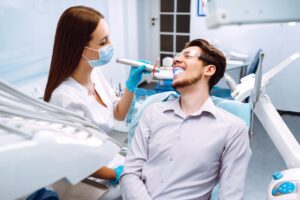
Regular dental exams in Petersburg include an oral cancer screening. During check-ups, dentists and hygienists carefully inspect all mouth tissues, throat, and lymph nodes for signs of cancer. The ADA recommends screening at least once a year.
You can also self-examine monthly at home. Use a bright light and a mirror (or your phone camera). Check all areas: lips, gums, cheeks (inside), roof (hard palate), floor of mouth, tongue (top and underside), and throat. Feel for any lumps on jaw and neck. Look for: – Color changes: Unusual red or white patches, dark spots, or any sores.
– Texture/lesions: Ulcers, bumps, crusty areas, or rough patches.
– Lumps/bumps: Any hard lump or raised tissue.
– Persistent sores: A sore (even if small) that does not heal in 2–3 weeks.
If anything looks suspicious (“something odd”), take a photo and schedule an appointment with your dentist. Early detection often happens at dental visits, since many oral cancers begin without obvious pain. Self-exams do not replace professional exams, but they help you notice changes sooner.
When to See a Dentist or Doctor
You should make an appointment with a dentist or doctor in Petersburg if:
- You notice any of the symptoms above lasting longer than 2 weeks. For example, a persistent sore, patch, or lump.
- You have a lump in your neck or any unexplained swelling. (Sometimes oral cancers spread to lymph nodes in the neck.)
- You experience difficulty swallowing, chewing or moving your jaw/tongue over time.
- You have unusual numbness or ear pain without ear problems.
Dentists are often the first healthcare providers to detect oral cancer signs. We perform thorough examinations and can order further tests if needed. Southside Dental Cares’ Petersburg office offers screening exams and can refer you to specialists. For any concerning symptom, call our office or use the contact page to schedule an exam.
Diagnostic Pathway (Screening → Exam → Biopsy → Imaging)
If a screening exam finds a suspicious area, the next steps include diagnostic tests to confirm cancer and stage it:
Oral Cancer Screening & Diagnostic Pathway
Suspicious Finding?
[IF YES]
- Biopsy of Lesion: Tissue sampling for laboratory analysis.
- Imaging (CT/MRI): Detailed scans to determine the extent of the area.
- Referral & Treatment Plan: Coordination with oncology and specialists.
[IF NO]
Routine Follow-Up: Continue with scheduled dental check-ups and standard screenings.
- Oral Examination: Your dentist inspects any abnormal areas and may use dyes or special lights to highlight lesions. Lymph nodes in the neck are also palpated for lumps.
- Biopsy: A small tissue sample is surgically removed for lab analysis (the definitive way to diagnose cancer). This can be done by a dentist, oral surgeon or ENT specialist under local anesthesia. If early cancer is found (even in precancerous lesions like leukoplakia), removal can prevent progression.
- Imaging: CT or MRI scans are used to see how far the disease may have spread, check jawbone involvement, and look for affected lymph nodes. Ultrasound or PET scans may also be used.
- Referral and Treatment Planning: A team of specialists (oral surgeons, ENT surgeons, oncologists) reviews results. Treatment could involve surgery, radiation, chemotherapy, or a combination, depending on stage.
Our practice’s Oral Surgery services include cyst/tumor removal and biopsies for suspicious oral lesions. Early biopsy and diagnosis greatly improve cure rates.
Treatment Overview
If oral cancer is diagnosed, treatment depends on the cancer stage and location. Common treatments:
- Surgery: Removal of the tumor, often with some surrounding tissue. Early tumors may be excised entirely, while more advanced cases may require jawbone or lymph node surgery. Reconstruction (grafts) can restore function after large removals.
- Radiation Therapy: High-energy X-rays or particles kill cancer cells. Often used alone for small cancers or after surgery to kill residual cells. Modern techniques minimize damage to healthy tissue.
- Chemotherapy: Cancer-killing drugs (pills or injections). Used with radiation (chemoradiation) for certain stages to improve outcomes.
- Targeted Therapy / Immunotherapy: For advanced cancers, drugs targeting specific tumor features or boosting the immune system may be used.
Recovery depends on treatment extent. Voice and swallowing therapy may be needed if structures are affected. Throughout treatment, dentists and oral surgeons manage side effects (like mouth sores, dry mouth) and ensure you keep a healthy oral environment.
Prevention and the Role of Your Dentist
While not all oral cancers are preventable, you can greatly reduce your risk by lifestyle choices and regular dental care:
- Quit Tobacco: Stopping smoking or chewing tobacco cuts oral cancer risk dramatically. Even longtime smokers lower their risk over time once they quit.
- Limit Alcohol: Avoid heavy drinking, especially if you smoke, since alcohol and tobacco together multiply risk.
- HPV Vaccine: Talk to your doctor about HPV vaccination. The CDC-recommended vaccine prevents HPV infections that cause oral and other cancers.
- Protect Lips from Sun: Use lip balm with SPF and wear hats to prevent lip cancer.
- Healthy Diet: Eat plenty of vegetables, fruits, and whole grains; limit processed meats and alcohol to support overall cancer prevention.
- Maintain Oral Health: Good oral hygiene and regular dental cleanings may reduce cancer risk by keeping your mouth healthy. Denture wearers should ensure a proper fit and clean them nightly to avoid irritation.
Dentists like us are your partners in cancer prevention. We perform routine oral cancer screenings at every hygiene visit, provide smoking-cessation support, and watch for precancerous changes. We may call ourselves a “cancer prevention dentist” because we catch signs early and guide patients on risk reduction.
Petersburg, VA Local Care Options
In Petersburg and the surrounding Prince George area, Southside Dental Cares provides oral cancer screening during regular dental exams. Our experienced team can evaluate any concerns and, if needed, perform biopsies or refer to specialists. We are located at 2731 South Crater Rd., Petersburg, VA. To schedule an appointment for a screening or to report a symptom, please call (804) 732-8557 or visit our Contact page.
Other local resources include Central Virginia Health Services (CVHS) Petersburg Dental Clinic (321C Poplar Dr.) and community health centers that can assist with referrals. The American Cancer Society’s helpline is also available at 1-800-227-2345 for guidance.
Patient Support: We know facing cancer fears is stressful. Local support groups and online resources (e.g. ACS or Head and Neck Cancer Alliance) can help. Ask us about recommended support services.
Frequently Asked Questions
-
What are the early signs of mouth cancer?
Look for sores, lumps, or patches in your mouth that don’t heal within 2–3 weeks. Common early signs include a long-lasting mouth sore or ulcer, a persistent red or white patch on the tongue or gums, a thickened area or lump inside the cheek or on the tongue, unexplained pain in the mouth, or difficulty swallowing. Some people notice numbness or ear pain. If you have any of these symptoms, see your dentist promptly for evaluation.
-
How are mouth cancers detected and diagnosed?
Your dentist will perform an oral cancer screening as part of your exam. If something suspicious is found, a biopsy (removing a small tissue sample) is done to look for cancer cells. Imaging tests (like CT or MRI) are then used to check how far a cancer has spread. Early-stage cancers may be treated with just surgery or radiation. Advanced cases often involve surgery plus chemo or targeted therapy.
-
Can I check myself for oral cancer?
Yes, monthly self-exams can help you notice changes early. Use a bright light and a mirror, and inspect all areas of your mouth – lips, gums, tongue (both sides), cheeks, roof and floor of the mouth, and the back of your throat. Look for any new sores, bumps, color changes or rough patches. Also feel for any lumps under your jaw or in your neck. If you find anything unusual, make an appointment with a dentist right away.
-
How often should I get screened for oral cancer?
It’s best to have an oral cancer screening at every routine dental check-up (typically every 6–12 months). In Petersburg, dentists include this in your exam. If you have higher risk factors (e.g. tobacco use or previous oral lesions), you may need more frequent exams. Also, if you notice any concerning symptoms between visits, schedule an exam right away.
-
Is HPV linked to oral cancer, and can it be prevented?
Yes, certain high-risk strains of HPV (especially HPV-16) are linked to throat and base-of-tongue cancers. HPV-related oral cancers are most common in men and are often diagnosed at a later stage. Preventing HPV infection is key: the HPV vaccine (recommended for pre-teens and catch-up in young adults) can protect against the strains most associated with cancers. Reducing multiple sexual partners and practicing safe oral sex also lower risk. Regular dental exams help catch any HPV-related changes early.
-
What local resources are available in Petersburg for support?
Southside Dental Cares (Petersburg) offers screening and can refer to specialists. The Central Virginia Health Services (CVHS) Petersburg clinic provides dental care and may assist with referrals. For cancer support, the American Cancer Society (1-800-227-2345) has information and local support groups. Our office can also direct you to local nutritional counseling or smoking cessation programs. Remember, early detection and treatment work best, so use your local resources and don’t delay care.