Does your heart race at the thought of a dental appointment? If so, you’re far from alone – dental anxiety is extremely common, affecting roughly one in three adults. In fact, an estimated 36% of adults have some fear of dental treatments, and about 3% avoid the dentist entirely due to anxiety. This fear of the dentist (also called odontophobia) can lead to a cycle of avoidance that makes oral health problems worse and increases the need for complex treatment. Southside Dental Care understands these concerns and has made patient comfort our top priority. We offer a friendly, gentle approach – including advanced technology and even sedation dentistry – to ensure you can get the care you need without stress.
At Southside Dental Care, we believe no one should suffer in silence or neglect their smile due to fear. In this article, we’ll share 10 proven dental anxiety tips to help you feel calm and in control before and during your next visit. From simple breathing exercises to exploring sedation options, these strategies will empower you to overcome anxiety and actually look forward to a healthy smile.
Why Do People Fear the Dentist (and How to Overcome It)
Dental anxiety can stem from many sources. For some, a previous painful or traumatic experience left a lasting impression; for others, the sight of a needle or the sound of the drill triggers intense fear. It’s important to understand why you feel anxious, because identifying specific triggers allows us to address them directly. Some of the most common causes of dental anxiety include:
- Fear of pain: Worry that a procedure will hurt (even though modern dentistry prioritizes comfort).
- Negative past experiences: A bad dental visit in the past can create lasting fear of future appointments.
- Loss of control: Sitting back in the chair and not knowing what’s happening can make one feel helpless or vulnerable.
- Embarrassment: Feeling self-conscious about the condition of your teeth or being judged can cause anxiety.
- Sensory triggers: The sounds (e.g. the drill) and clinical smells of a dental office can be overwhelming for some patients.
Understanding these fears is the first step to overcoming them. The good news is that dentistry today is more patient-centered and gentle than ever. By communicating your concerns with us, we can adjust our care – using extra numbing for pain management, explaining each step to give you more control, and creating a soothing environment to minimize unpleasant sounds or smells. We even have specialized kids anxiety tips on our pediatric dentistry team to help children feel safe and stress-free during early visits. No matter the source of your fear, there are solutions. Below, we outline ten effective ways to calm your dental anxiety before and during your visit.
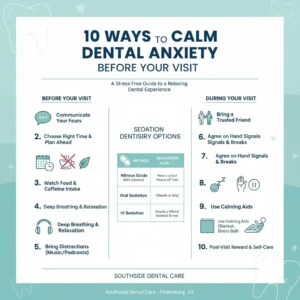
10 Ways to Calm Dental Anxiety Before Your Appointment
1. Communicate Your Fears with the Dental Team
Honest communication is the foundation for an anxiety-free dental visit. Don’t be afraid to share your fears with your dentist and the staff from the moment you schedule your appointment. Whether you dread the drill’s sound or fear injections, letting us know enables our team to tailor the experience to your needs. At Southside Dental Care, we take your concerns seriously and will never judge you for feeling nervous. Instead, we’ll walk you through each step of your procedure at a comfortable pace, check in frequently to ensure you’re okay, and use words of encouragement. Often, just knowing that we understand and respect your concerns can significantly reduce anxiety. So speak up – we are here to help you feel comfortable, not embarrassed.
2. Choose the Right Appointment Time and Plan Ahead
Scheduling wisely can set the tone for a calmer visit. Try to book appointments at a time of day when you feel most relaxed – for many people, early morning works best, so you don’t spend all day dwelling on it. Also consider choosing a day when you have no rushed errands or big meetings immediately after. Giving yourself a low-stress day means you won’t arrive flustered or be anxious about racing to the next obligation. Southside Dental Care offers flexible scheduling (including family-friendly slots) so you can find a time that suits you. Additionally, ask if you can visit during quieter hours; for example, mid-afternoon often has fewer patients and a calmer atmosphere in the office. By planning ahead – taking the day off work if possible, and arriving a bit early – you can avoid extra stress and create a more peaceful mindset before your dental procedure.
3. Watch Your Food and Caffeine Intake
What you consume before your appointment can influence your nerves. It’s best to avoid high-sugar foods and caffeinated drinks for a few hours beforehand. Sugar and caffeine can increase your heart rate and jitters, potentially amplifying feelings of anxiety. Instead, opt for water or perhaps a cup of caffeine-free herbal tea with calming ingredients (like chamomile) prior to your visit. Eating a light, healthy meal a couple of hours in advance can also steady your blood sugar so you’re not shaky from hunger or sugar highs. Some patients find that foods rich in magnesium (like bananas or almonds) have a calming effect. Essentially, fueling your body with something gentle – and skipping the triple espresso – will help keep those pre-appointment butterflies under control.
4. Practice Deep Breathing and Relaxation Techniques
Relaxation exercises are a simple, powerful tool to manage anxiety. When we’re anxious, we tend to take shallow breaths or even hold our breath, which can increase panic. Combat this by practicing deep breathing. For example, try the 4-4-4 breathing technique: inhale slowly through your nose for a count of four, hold the breath for four counts, then exhale through your mouth for four counts. Repeat this cycle a few times in the waiting room or dental chair – it’s been shown to slow your heart rate and promote a sense of calm. Another method is progressive muscle relaxation: gently tense then release each muscle group in your body, from your toes up to your shoulders, to melt away physical tension. You might also use visualization (imagine yourself lying on a beach or in another peaceful place). Even a short meditation session or listening to a guided relaxation app before your appointment can center your mind. Remember to breathe during treatment as well – we’ll remind you if we notice you’re holding your breath! These techniques take practice, but many patients find they significantly ease their dental anxiety.
5. Bring Distractions (Headphones, Music or Podcasts)
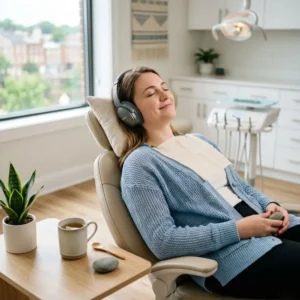
Sometimes the best way to calm your nerves is to take your mind somewhere else. Distraction techniques can be highly effective in a dental setting. Consider bringing a pair of headphones and your phone loaded with your favorite relaxing playlist, podcast, or audiobook. Listening to music or a story during your cleaning or procedure can help drown out the sound of dental instruments and keep your mind engaged on something enjoyable. Our office can let you know which devices are allowed; in most cases, using earbuds or headphones is perfectly fine for routine work. If music isn’t your thing, some patients watch a show on their phone or simply squeeze a stress ball to release tension. We even provide stress-relief squeeze balls and warm blankets to make you more comfortable. By focusing on an external source of comfort – a song that makes you happy or a podcast that makes you laugh – you’ll find the appointment goes by faster and with much less anxiety.
6. Bring a Trusted Friend or Family Member for Support
You don’t have to face your dental fears alone. Bringing a supportive friend or family member to your appointment can make a world of difference. Having a familiar, calming presence in the room (or in the waiting area, if the procedure room is limited) provides emotional security and distraction. Sometimes just holding a friend’s hand before treatment, or knowing they’re right outside when you need them, can greatly reduce anxiety. We welcome patients to bring a companion – especially for those with severe dental phobia – as long as you’re comfortable with them hearing about your health. A friend can also serve as your post-appointment driver if you’re too anxious or if you opt for any sedative medication. Many of our patients with dental anxiety report that having a loved one accompany them turned a scary appointment into a manageable (even pleasant) experience. So if it helps, ask a close friend, your partner, or a family member to come along for moral support. We’re happy to accommodate them and include them in instructions or discussions if it puts you at ease.
7. Agree on Hand Signals and Take Breaks
Feeling trapped or unable to stop the procedure is a common anxiety trigger. We address this by giving you control: before treatment begins, agree on a simple hand signal you can use anytime you need a break. For instance, you might raise your left hand to signal “Please pause for a moment.” Knowing that you can pause the procedure at will helps you feel less helpless and more empowered. Don’t hesitate to use the signal if you need to rinse your mouth, take a few deep breaths, or just regain composure. We won’t be annoyed – we want you to be comfortable! In addition to signals, feel free to ask for small breaks during a longer procedure. We can plan to stop for a minute every so often so you can relax your jaw or ask a question. Having this sense of control — that you can say “stop” and be heard — often relieves the fear of “what if it’s too overwhelming and I can’t endure it.” At Southside Dental Care, patient control is part of our comfort promise. You’re in the driver’s seat, and we will work at your pace.
8. Consider Sedation Dentistry for Severe Anxiety
When anxiety is severe or other calming techniques aren’t enough, sedation dentistry can be a game-changer. This involves using medication to help you relax deeply during your dental treatment. There are a few sedation options available, ranging from very mild to deeper sedation:
- Nitrous Oxide (Laughing Gas): A mild sedative gas you breathe through a mask. It induces a light, calming sensation while you remain awake and responsive. Nitrous oxide takes effect within minutes and wears off quickly after the mask is removed, so you can typically drive yourself home afterward.
- Oral Sedation: A prescribed anti-anxiety pill (such as a benzodiazepine like Valium) taken about an hour before your appointment. This produces a moderate level of sedation – you’ll feel drowsy and much less anxious, though usually remain awake. Oral sedation can significantly blur the memory of the procedure. You will need someone to drive you to and from the appointment if you take an oral sedative.
- IV Sedation: Medication delivered through a small IV line in your arm, providing moderate to deep sedation depending on the dosage. IV sedation acts quickly and our team can adjust the level as needed throughout the procedure. Many patients become so relaxed that they doze off, though they aren’t fully unconscious. You’ll have little memory of the treatment, and will definitely need an escort to drive you home.
- General Anesthesia: This is a controlled state of full unconsciousness (you’re completely “asleep”) reserved for extensive surgeries or extreme dental phobia cases. General anesthesia in dentistry is typically done by an anesthesiologist and is not routine for most patients. It’s an option for those who cannot tolerate any awareness of the procedure or have special needs that prevent cooperation. Under general anesthesia, you won’t feel or remember anything, but it does carry higher costs and risks and requires a recovery period.
Comparing sedation methods: Every method has its pros and cons. To help you understand the differences, here’s a quick comparison:
| Sedation Method | How It’s Administered | Level of Relaxation | You Stay Awake? | After-Effects |
| Nitrous Oxide (Gas) | Inhaled through a nose mask. | Mild relaxation; “floaty” feeling. | Yes (fully conscious). | Wears off within minutes; you can usually drive yourself home. |
| Oral Sedation (Pill) | One dose of prescribed medication taken before visit. | Moderate relaxation; drowsy and carefree. | Yes (very sleepy, may nap). | Lasts a few hours; you’ll feel groggy and need a ride home. |
| IV Sedation | IV drip during treatment (monitored by dentist/anesthetist). | Moderate to deep relaxation; on the edge of sleep. | No (likely won’t remember much). | Can take a few hours to fully recover; requires an escort home. |
| General Anesthesia | IV medications (and airway support) by anesthesiologist. | Complete unconsciousness. | No (fully asleep). | Longer recovery; need escort and some rest as it wears off. |
As you can see, sedation dentistry offers a spectrum of choices to match your level of anxiety and the type of procedure. At Southside Dental Care, we provide nitrous oxide and oral sedation to help anxious patients relax safely. Our team will carefully review your medical history and monitor you closely to ensure your safety at all times. Sedation is extremely effective for enabling comfortable, stress-free dental care – many patients say it’s the reason they finally could get through a long-awaited treatment. If you think you might benefit from sedation, don’t hesitate to ask. In the next section, we’ll help you determine if it’s the right choice for you.
Is Sedation Dentistry Right for You?
Sedation can be a wonderful solution, but it’s not necessary for everyone. How do you know if you’re a good candidate? You might consider sedation dentistry if:
- Your dental fear is severe or phobic. If you’ve been avoiding the dentist for years due to intense fear, or you experience panic attacks at even the thought of dental work, sedation can make the experience manageable.
- Local anesthesia isn’t enough for you. Some patients still feel anxious or mildly panicked even when fully numbed. Sedation addresses the anxiety itself, not just pain.
- You have a strong gag reflex or sensitive teeth. Gagging or extreme sensitivity can make dental work uncomfortable. Sedation helps relax your reflexes and nerves so treatment is easier.
- Multiple or lengthy procedures are needed. If you need a lot of work done (for example, several fillings or extractions), sedation allows the dentist to perform more in one session while you remain relaxed. This means fewer visits for you.
- You have special needs or difficulty sitting still. Patients with certain cognitive or physical conditions, or even children who are very fearful, often benefit from sedation to ensure they can receive care safely. (For pediatric cases, our doctors will discuss the best approach with parents individually.)
Before proceeding with any sedative approach, our dentist will evaluate your overall health and medical history. Safety is paramount: certain medications or health conditions might influence which sedation method is appropriate. For instance, if you have severe asthma or obstructive sleep apnea, we might avoid deeper sedation, or if you’re pregnant, we’ll likely stick to minimal nitrous oxide if anything. We will always explain the risks and benefits, and obtain your informed consent. Rest assured, when used appropriately sedation dentistry is very safe – our team is trained to administer these medications and monitor your vital signs throughout the procedure. The goal is to find the lightest level of sedation that keeps you comfortable. Many patients are pleasantly surprised at how well they handled an appointment with a little pharmaceutical help. It can truly be the bridge that allows you to receive care you’ve been postponing due to fear.
If you’re unsure whether sedation is right for you, come in for a consultation (there’s no pressure to undergo treatment that same day). We can talk about your options and even do a short trial of nitrous oxide so you can experience how it makes you feel. Ultimately, the decision is yours – we’re here to guide you and ensure that, sedated or not, you have a positive, stress-free experience.
Safety and Aftercare Tips for An Anxiety-Free Experience
Taking care of yourself during and after your dental visit will help keep anxiety at bay and ensure a smooth recovery from any procedure. Use this handy checklist to stay safe and comfortable:
- ✔️ Follow pre-appointment instructions: If we’ve prescribed an oral sedative for you, take it exactly as directed (usually at a specified time before your visit). Arrange safe transportation in advance – you’ll need a friend or family member to drive if you take stronger anti-anxiety medication or undergo IV sedation (no driving yourself afterward).
- ✔️ Communicate during the visit: Don’t hesitate to speak up if you’re feeling uncomfortable or need a break (using the hand signal you and your dentist agreed on). We’re here to listen. Sometimes just saying “I’m a bit anxious” out loud can prompt additional reassurance from the team.
- ✔️ Use calming aids in the chair: Feel free to bring your stress ball, wear your headphone for music, or ask for a blanket if you’re cold. We want you as cozy as possible. Some patients also use aromatherapy (a drop of lavender oil on a tissue) to have a calming scent during the appointment – this is welcome in our office as long as it’s not overpowering for others.
- ✔️ After the procedure – follow all instructions: Your dentist will give you specific aftercare guidelines if you had a treatment like an extraction or filling. Follow them closely, as doing so will prevent complications and reduce any post-treatment pain (which in turn reduces future anxiety). Take prescribed medications (like pain relievers or antibiotics) as directed. If you received sedation, you may be groggy for a few hours – plan to rest at home for the remainder of the day, and have someone stay with you if possible until you’re fully alert.
- ✔️ Practice good oral hygiene at home: One way to ease anxiety about future visits is to keep your teeth and gums as healthy as possible. By brushing, flossing, and perhaps using a fluoride rinse daily, you’ll reduce the chance of needing invasive treatments. That means your checkups will more likely be routine cleanings with no surprises, which can definitely help you feel more at ease next time.
- ✔️ Reflect and reward yourself: After the appointment, take a moment to acknowledge your accomplishment – you faced your fear and took care of your health! That’s something to be proud of. It can also help to plan a small reward for yourself afterward. Treat yourself to a favorite meal, watch a movie, or do any fun activity you enjoy. This positive reinforcement creates a good association with having completed the dental visit, making you more likely to feel optimistic about the next one.
By following these safety and aftercare tips, you’ll not only recover well but also build confidence. Over time, each successful visit will chip away at your anxiety, proving to yourself that you can do this and it wasn’t as bad as you feared. Our team will check on you post-visit if needed, and we’re only a phone call away for any questions or concerns after treatment.
The Southside Dental Care Advantage for Anxious Patients
Choosing the right dental practice can make all the difference for anxious individuals. At Southside Dental Care, we pride ourselves on a compassionate approach tailored to nervous patients. Everything about our clinic is designed to put you at ease. We prioritize a “patient-focused experience” with modern technology and proven techniques that minimize discomfort. For example, our injections are given with special numb gels and gentle technique so you barely feel them. Procedures that used to be unpleasant (like deep cleanings or fillings) are now quicker and gentler thanks to advanced tools.
A friendly, understanding team is at the heart of the Southside advantage. From the front desk to the dental chair, you’ll meet professionals who genuinely care and treat you like family. We never rush and never judge – our only goal is to help you achieve a healthy smile while keeping you comfortable. In fact, “we’re putting your comfort first” in all we do. If you need to pause or have something explained, we will always take the time. Our dentists and hygienists are experienced in caring for patients with all levels of anxiety; we even have training in behavioral techniques to help children overcome fear and build positive dental habits early. (Many kids who visit us actually leave smiling, which says a lot!)
Another Southside benefit is our availability of sedation dentistry to help you relax during more involved treatments. Not every general dental office offers this. We can administer nitrous oxide for a light relaxing effect, or prescribe oral sedation for a deeper calm, right here in our office so you don’t have to go to an outside specialist. Our commitment to safety means we monitor you with modern equipment throughout any sedated procedure, keeping you safe and at ease.
Finally, we strive for a soothing environment. Our clinic features comfortable chairs, a clean and modern ambiance, and even amenities like music or TV to help distract you. We’ve also implemented little comforts – from providing cozy blankets to having a variety of flavored polishing pastes – to make your visit more pleasant. And with flexible scheduling and a convenient location, we make it easy to book a visit when it works for you, reducing the hassle that can sometimes add to anxiety.
When you choose Southside Dental Care, you’re not just getting top-quality dental work – you’re gaining a partner in overcoming dental fear. Our entire team is dedicated to restoring your health and your peace of mind. Let us show you that a trip to the dentist can truly be gentle, positive, and even empowering.
Conclusion & Next Steps
Don’t let dental anxiety rob you of a healthy smile. With the right strategies and a compassionate dental team by your side, you can get through appointments calmly and keep your oral health on track. We covered ten tips to help calm your nerves, from practical tricks like deep breathing and bringing headphones, to professional solutions like sedation dentistry. Start by implementing one or two techniques that resonate most with you – even small steps can make a big difference in your comfort level.
Remember, Southside Dental Care is here to support you at every step. We have helped countless patients who once avoided the dentist entirely to regain their confidence and receive care regularly. We truly believe there is no dental problem too big to fix and no patient too anxious to help. If you’ve been postponing a dental visit due to fear, we invite you to reach out. Sometimes the hardest part is that first phone call or click of a button, but rest assured our friendly staff will take it from there and ensure your experience is smooth and reassuring.
Your oral health is vital to your overall well-being, and you deserve to have it cared for in a way that feels safe and comfortable. Let us show you how modern dentistry, combined with empathy and expertise, can dissolve your fears. Take the first step toward an anxiety-free smile – book a visit with Southside Dental Care. We’ll partner with you to conquer those dental fears once and for all, so you can look forward to a lifetime of healthy, happy grins!
Frequently Asked Questions (FAQ)
Q: How common is dental anxiety, really?
A: Dental anxiety is very common – research shows that about one-third of adults have some level of fear about dental visits. You are absolutely not alone in feeling this way, and you shouldn’t feel ashamed of it. The important thing is to communicate your concerns so your dental team can help. In our experience, even patients with extreme anxiety can successfully receive care with the right support (and many later say, “I can’t believe I waited so long – it wasn’t as bad as I imagined!”).
Q: Is sedation dentistry safe for calming my nerves?
A: Yes. Sedation dentistry, when performed by trained professionals like our team, is a safe and effective way to reduce anxiety. Dentists have been using methods like nitrous oxide for decades with an excellent safety record. Before we proceed with any sedation, we review your medical history and explain the process so you know what to expect. During the procedure, we monitor your vital signs (such as breathing and blood pressure) continuously to ensure you’re stable and comfortable. The sedatives used (whether a mild laughing gas or a prescribed medication) are administered in controlled doses tailored to your needs. Most patients handle dental sedation very well, experiencing only side effects like drowsiness which wear off within a short time. We will also give you clear post-sedation instructions (like not driving for 24 hours if you’ve had a stronger sedative). When used appropriately, sedation can make your dental visit much easier without compromising your safety. Your dentist will help decide the safest option for you.
Q: I haven’t been to the dentist in years because of fear – what should I do?
A: First, know that you’re not the first or the only person to be in this situation. Our advice is to start with a simple, low-pressure visit. You can schedule just a consultation or exam with us, with no treatments on that day. This lets you get to know our team and office without jumping into a procedure. We’ll simply look at your teeth, discuss any issues, and most importantly talk about your fears and how we can help. No scolding, no lectures – we’re just glad you’re taking the step to address your oral health. After that initial visit, we can create a treatment plan at your pace. If you need multiple procedures, we can prioritize them and possibly use sedation dentistry for the more involved ones so you stay relaxed. Many long-time avoiders find that after one gentle visit with us, their fear begins to ease because they realize we truly prioritize their comfort. Remember, dental problems only get worse (and can cause pain or health issues) if left untreated. By coming in now, you’ll likely prevent more complicated work later. So if it’s been years, don’t worry – we’ll help you catch up on care with understanding and zero judgment. Your smile is resilient, and it’s never too late to get back on track!