
Meta Title: Toothache Symptoms Guide: How to KIf you’re suffering from a toothache, you might wonder whether it’s a minor annoyance or a sign of something more serious. Tooth pain can range from a mild ache to an all-consuming throb that keeps you up at night. Understanding the symptoms and what they mean is the first step toward relief. Often, patients delay treatment out of fear or hope that the pain will go away, but waiting too long can allow a small issue to turn into a major problem.
Southside Dental Care is here to help you find answers and comfort. Our experienced, compassionate team has helped countless patients in pain, and we know how distressing a severe toothache can be. In this guide, we’ll explain common tooth pain causes and how to tell when your toothache might require immediate attention. You’ll also learn what to do next and how our clinic’s gentle approach can ease your anxiety while resolving your dental pain.
Why Do Teeth Hurt? (Common Causes of Tooth Pain)
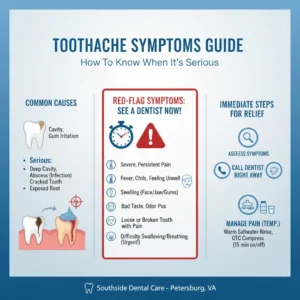
Toothaches happen for a variety of reasons. Some of these tooth pain causes are relatively minor, while others are serious dental conditions that need prompt care. Here are a few common causes:
Minor issues like a small cavity or gum irritation can cause brief discomfort, while more serious problems cause lasting pain. For example, a deep cavity or an abscessed (infected) tooth can lead to intense, throbbing pain that won’t go away on its own. A cracked or broken tooth can also be very painful and often needs prompt treatment to prevent further damage or infection.
Signs Your Toothache May Be Serious (When to See a Dentist)
Certain warning signs can tell you that a toothache isn’t just a simple cavity or sensitive tooth – it’s a red flag for a bigger issue. Here are key symptoms that indicate your toothache is serious and you should see a dentist as soon as possible:
- Severe or Persistent Pain: If your toothache is extremely intense or has lasted more than a day or two, it’s a big warning sign. Pain that keeps you from eating or sleeping, or that worsens instead of improving, is not normal and often signals a deeper issue that won’t resolve on its own.
- Fever, Chills, or Feeling Unwell: If you have a high temperature (fever) or chills along with your toothache, it’s a strong sign your body is fighting an infection. This combination of symptoms means you likely need emergency dental treatment, not home care.
- Swelling of the Face or Jaw: Any visible swelling in your gum, jaw, or cheek near the aching tooth is a sign of a serious infection (such as an abscess). If swelling makes it hard to breathe or swallow, it becomes a critical emergency. Never ignore swelling – it needs urgent treatment to drain the infection.
- Bad Taste, Odor, or Pus: A foul taste in your mouth, bad breath that won’t go away, or seeing pus around a tooth are classic symptoms of an abscessed tooth. That means an infection is present, which requires urgent treatment to prevent it from spreading.
- Loose or Broken Tooth with Pain: If a tooth is loose without an obvious cause, or if you cracked a tooth and it hurts, these are urgent problems. The tooth may be at risk of infection or further damage without prompt care.
In summary, don’t ignore severe toothache symptoms. Dental pain often means something is wrong, and it can worsen or spread if untreated. It’s better to get prompt care and be safe than to risk serious complications later on.
Toothache Emergency Checklist
Not sure if you should call the dentist right now? Use this quick checklist. If you check any of these boxes, seek prompt emergency dental care:
- [ ] Severe, unmanageable pain that is not relieved by painkillers.
- [ ] Pain lasting more than two days without improvement.
- [ ] Fever or chills alongside a toothache.
- [ ] Swelling in the face, cheek, jaw, or gums near a painful tooth.
- [ ] Difficulty swallowing or breathing due to dental-related swelling.
- [ ] Pus or a bad taste in your mouth (possible sign of infection).
- [ ] Broken, cracked, or loose tooth causing significant pain.
- [ ] Bleeding from the gums or tooth that won’t stop.
If you marked any of the above, it’s time to take action. The next section explains exactly what to do when you find yourself facing a serious toothache.
What to Do When Tooth Pain Strikes
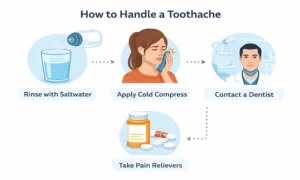
Facing a bad toothache can be scary, especially if you’re not sure what’s causing it. The good news is there are clear steps you can take to get relief and protect your health. Here’s a step-by-step guide on how to handle a painful tooth:
- Assess Your Symptoms: Note how severe and long the pain is, and check for any red-flag symptoms (like swelling or fever). This will help you decide if you likely need urgent dental care.
- Call a Dentist Right Away: Don’t hesitate to call your dentist if you think your toothache is serious (even if you’re not sure). Prompt treatment can prevent complications or even save the tooth. At Southside Dental Care, we offer same-day emergency appointments whenever possible to get you out of pain quickly.
- Manage Pain and Stay Clean: While waiting for your appointment, you can take steps to feel better. Rinse your mouth with warm saltwater, take an over-the-counter pain reliever (use as directed), and apply a cold compress on your cheek (15 minutes on, 15 minutes off) to reduce pain and swelling. Also, keep the area clean by gently rinsing or flossing away any food debris near the aching tooth. These measures can help temporarily until a dentist treats the cause.
- Follow Professional Advice: After your dentist fixes the issue, follow their aftercare instructions. Take any prescribed medications and follow any diet or care guidelines to ensure proper healing and prevent further problems.
The Southside Dental Care Advantage
Choosing the right dental team in a moment of crisis makes all the difference. At Southside Dental Care, we pride ourselves on providing prompt, expert treatment in a caring and comfortable environment. Here’s why patients trust us when they have a serious toothache or dental emergency:
- Experienced Emergency Care: With over 20 years of serving our community, our dentists have seen just about every type of dental emergency. We can quickly diagnose and treat your issue to get you out of pain.
- Same-Day Appointments: Dental emergencies don’t wait, and neither do we. If you call us with a severe toothache or injury, our team will strive to arrange an appointment immediately – often the very same day.
- Advanced Technology & Gentle Techniques: We use state-of-the-art tools to pinpoint the cause of your pain quickly. We also employ gentle techniques and offer sedation options if needed for anxious patients, ensuring you’re comfortable throughout treatment.
- Compassionate Team: Our staff truly cares about your well-being. We listen to your concerns, explain every step in plain language, and treat you with genuine empathy and respect. From the moment you walk in, you’ll be cared for like family.
When you choose Southside Dental Care, you’re choosing a partner in your oral health. We work diligently to relieve your pain, address the problem at its source, and help you regain a healthy smile.
Conclusion
Toothaches should never be ignored – they are your body’s way of telling you something is wrong. Sometimes a slight twinge is just a warning, but often that persistent or intense pain is a sign you need professional care. Any toothache that is severe, lasts more than two days, or comes with symptoms like fever or swelling is reason enough to see a dentist. It’s better to have a quick check-up than to risk a serious infection by waiting.
At Southside Dental Care, we’re here for you whether your toothache is big or small. Our goal is to relieve your pain and get you back to smiling as soon as possible. Don’t try to “tough it out” or hope the pain will disappear on its own – dental issues often worsen with time. Instead, take control of your health by reaching out for help.
If you suspect a serious toothache, we encourage you to schedule dental care with our team right away. We’ll provide a prompt evaluation, a clear explanation of what’s happening, and expert solutions to fix the problem. You’ll be treated with the compassion and skill that every patient deserves.
Focus on prevention going forward: good oral hygiene and regular check-ups (see our routine dental advice guide) can greatly reduce the chance of future toothaches. And if you do have a troubling toothache, remember that help is just a phone call away.
FAQ: Frequently Asked Questions
Q1: How do I know if my toothache is a dental emergency?
A: If your toothache is very painful, doesn’t improve after a day or two, or is paired with symptoms like swelling, fever, or trouble swallowing, it could be a dental emergency. Those signs often mean an infection or serious problem that needs prompt treatment. When in doubt, it’s best to contact a dentist for advice.
Q2: What can I do to relieve a toothache at home before I see the dentist?
A: Rinse your mouth with warm saltwater to reduce inflammation and clean the area. Apply a cold compress on the outside of your cheek to numb the pain and limit swelling. You can also take over-the-counter pain relievers (such as ibuprofen or acetaminophen) to manage the pain temporarily. These home remedies can help you feel better, but remember they’re just temporary relief until a dentist addresses the cause.
Q3: My toothache suddenly went away – do I still need to see a dentist?
A: Yes. A disappearing toothache doesn’t always mean the problem is gone. If a severe toothache stops on its own, it could mean the nerve inside the tooth has died – but the infection or damage is still there. It’s important to have the tooth checked and treated by a dentist to prevent the issue from coming back or getting worse.