
Child Tooth Pain Relief: Home Care Tips & Pediatric Pain Management in Petersburg, VA
Toothaches in children are common and can stem from different causes at different ages (teething, cavities, trauma, etc.). Parents can provide temporary relief at home while monitoring symptoms. Safe home-care measures include gentle brushing and flossing, warm salt-water rinses, cold compresses, and age-appropriate pain relievers (acetaminophen or ibuprofen). We summarize dosing guidance and safe practices (never give aspirin to kids), and caution about products to avoid (e.g. benzocaine gels, teething jewelry). A comparison table outlines home remedies by effectiveness and safety. We also cover when to call the dentist or seek emergency care (e.g. facial swelling, fever, knocked-out tooth). Preventive advice and comforting tips are included. Local resources in Petersburg, VA (like Southside Dental Cares’ Pediatric Dentistry and Emergency Dentistry services) ensure timely care if needed.
Common Causes of Tooth Pain in Children (by Age)
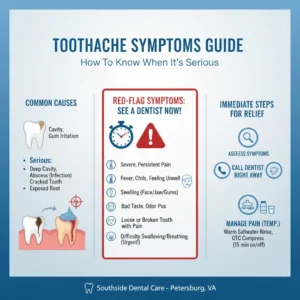
Tooth pain (“toothache”) in kids has many causes. In infants and toddlers, the most common culprit is teething, when primary (baby) teeth erupt. This can make gums sore and cause irritability and drooling. Beginning around 6–7 months, parents may notice mild symptoms (irritability, a slight temperature rise, chewing on objects). In older children (preschool and school-age), dental decay (cavities) is the leading cause. According to the CDC, nearly half of U.S. children 6–9 years old have had a cavity in their primary or permanent teeth. Cavities cause pain when decay reaches the inner tooth (dentin or pulp), leading to sensitivity, sharp pain on biting, or lingering discomfort. Gum infections or abscesses (often secondary to untreated cavities or gum disease) can also cause throbbing pain, swelling, and bad taste.
As kids grow, trauma or injuries become more common causes. A sports injury or fall can chip or knock out a tooth, causing immediate pain. Orthodontic problems (braces) or erupting permanent molars (around age 6 and again in teenage years for wisdom teeth) can cause pressure or mild pain. Finally, habits like grinding teeth (bruxism) may cause jaw pain, sometimes mistaken for a toothache.
Symptoms to watch for: Children may not describe tooth pain clearly. Look for them favoring one side when chewing, avoiding hot/cold foods, rubbing their face or jaw, or waking at night in pain. Other warning signs include visible swelling of gums or face, a pocket or pimple on the gum (abscess), fever, bad breath, or blood in saliva. If your child points to a specific tooth or complains of pain brushing a certain area, assume that toothache needs attention.
Home Care and Pain Relief at Home
While you arrange for dental care, these home care tips can relieve discomfort:
- Warm salt-water rinse: Have the child rinse gently with a warm salt-water solution (½ tsp salt in 8 oz warm water). This cleans the area, reduces bacteria, and soothes irritated gums. (For toddlers who can swish and spit; for infants just gently wipe the gums with saltwater on a clean cloth.)
- Cold compress: Apply an ice pack or cold cloth to the outside of the cheek near the sore area for 10–15 minutes. Cold helps numb the pain and reduce swelling. (Use a cloth or cold pack wrapped in thin towel; do not apply ice directly to skin.)
- Oral hygiene: Continue gentle brushing (soft-bristled toothbrush) and flossing to remove debris. Clean around the painful tooth but avoid aggressive brushing on swollen gums. If brushing hurts, do what you can or focus on rinsing after eating, then try again later. Good hygiene prevents infection from worsening.
Pain Relievers (Dosage Guidance)
Age-appropriate pain medication can be effective. Acetaminophen (Tylenol) and Ibuprofen (Advil/Motrin) are first-line analgesics for children. The ADA recommends these for short-term dental pain when needed. Always follow dosing by weight/age (see medication charts or packaging). For example, the American Academy of Pediatrics suggests acetaminophen every 4–6 hours (no more than 5 doses in 24 h) for children under 12, and ibuprofen every 6–8 hours. Do not use ibuprofen in infants under 6 months. Acetaminophen is not recommended for children under 2 without doctor advice. Do not give aspirin to a child with tooth pain – aspirin can cause Reye syndrome in children.
Keep dosing appropriate: use a proper measuring device (oral syringe) and double-check the concentration. If unsure about dosing, call your pediatrician or pharmacist. Do not exceed the recommended daily maximum, and if pain persists despite medication, consult a dentist. Always store medicines safely away from children.
Topical Remedies and Cautions
Some parents try topical remedies, but use caution:
- Clove oil (eugenol): Clove contains eugenol, a mild natural anesthetic/antibacterial, and can temporarily numb pain. However, experts caution that clove oil can damage gums and tooth pulp, and it is not recommended for children or infants. If used at all, it must be heavily diluted (mix 1 drop in oil), applied sparingly, and only for a very short time (and ideally under dentist advice). Generally, skip clove oil for young children.
- Topical analgesics (benzocaine gels): Avoid over-the-counter numbing gels (Orajel, Anbesol, etc.) that contain benzocaine or lidocaine. The FDA warns these can be dangerous to children, potentially causing life-threatening methemoglobinemia (reduced oxygen in blood). Do not apply these gels to an infant or toddler’s gums or mouth.
- Teething rings and cold objects (for infants): For babies with sore gums, offer firm rubber teething rings or a wet washcloth chilled (but not frozen) in the fridge. These provide counter-pressure. Do not freeze teething rings or use liquid-filled cold packs (risk of frostbite or breakage). Always supervise to prevent choking. Amber necklaces, bracelets, and other teething jewelry are unsafe (choking and strangulation hazard) and should be avoided.
Home Remedies Comparison
| Home Remedy | Effectiveness | Safety | Age/When to Use | When to Avoid/Note |
| Warm salt-water rinse | Mild antiseptic, eases irritation | Very safe (non-toxic) | Children ≥3 who can rinse and spit | Not for infants who cannot spit; risk if swallowed in large amounts |
| Cold compress (ice pack) | High (numbs pain, reduces swelling) | Very safe (use barrier between ice and skin) | All ages (apply outside mouth) | Not directly on skin; limit 10–15 min intervals |
| OTC pain meds (APAP/IBU) | High (targets dental pain) | Safe if dosed correctly; avoid in dehydration or kidney illness | APAP ≥3 months (consult doctor if <2); IBU ≥6 months | Overdose risk if too frequent; consult doc if unsure |
| Clove oil (diluted) | Moderate (temporary numbing) | Use with extreme caution | Older children only (not infants) | Not recommended for kids – can damage gums/pulp |
| Benzocaine gel (Orajel) | Low (short relief) | Unsafe for kids – risk of methemoglobinemia | None – avoid for all children | DO NOT use on children under 2 (or without dentist approval) |
| Teething ring/toy | Moderate (soothes teething pain) | Safe if firm and supervised | Infants/toddlers (starting ~4 months) | Avoid frozen or liquid-filled teethers; remove if broken |
Dietary and Hygiene Adjustments
Modifying diet and habits can help ease discomfort:
- Soft, cool foods: Offer soft foods (yogurt, applesauce, mashed potatoes) that are easy to chew. Avoid hard, crunchy, or sticky foods (nuts, hard candy) which can aggravate pain or dislodge fillings. Do not give very hot or cold foods if they trigger pain.
- Avoid sugars/acidic drinks: Minimize sugary snacks and acidic beverages (sodas, fruit juices) that can irritate a sore tooth. Encourage water (preferably fluoridated) to help rinse the mouth.
- Gentle oral care: Continue regular brushing with fluoride toothpaste and flossing twice daily. Use a soft-bristle toothbrush, especially around the painful tooth. If brushing hurts, try rinsing mouth with water after meals, then brush later when numb from rinsing or medication. Gentle plaque removal is important to prevent infection. Fluoride toothpaste helps strengthen enamel and may reduce sensitivity.
When to Seek Professional or Emergency Care
Most toothaches can wait for a dental appointment, but some situations require prompt professional attention:
- Duration/severity: If tooth pain lasts longer than 24 hours, keeps getting worse, or interferes with eating and sleeping, call your dentist.
- Facial swelling or fever: Swelling of the face, cheek, or jaw, or fever with tooth pain suggests infection or abscess – this is urgent. A “pimple” on gums or pus drainage also signals abscess.
- Trauma: If a tooth is knocked out, cracked, or badly broken, this is a dental emergency. For a knocked-out baby tooth, see a dentist immediately. Handle it by the crown, rinse (not scrub), and place it in milk while you go (for permanent teeth).
- Difficulty breathing/swallowing: Rarely, severe dental infections can cause neck swelling and breathing trouble – seek emergency care at once.
- Children under concern: If an infant has fever >100.4°F, refuses all feeds, or appears very unwell with gum pain, see a pediatrician or dentist urgently.
For urgent or after-hours help in Petersburg, Southside Dental Cares provides emergency dentistry services. Their Emergency Dentistry team in Petersburg can evaluate severe toothaches quickly. For non-emergencies, schedule a regular pediatric dental visit. Early treatment (fillings, cleanings, etc.) often prevents pain from worsening. Regular checkups every 6 months at a Pediatric Dentistry clinic help catch small cavities before they hurt.
Managing Pain During Dental Visits
Pediatric dentists specialize in caring for children’s fears and pain during appointments. Techniques include “tell-show-do” explanations, distraction (videos, games), and family-friendly communication. For procedures, dentists may apply a topical numbing gel (benzocaine) before giving a local anesthetic injection to reduce pain from the injection. Nitrous oxide (“laughing gas”) or conscious sedation may be offered for very anxious or younger children, always under professional supervision. The AAPD recommends non-pharmacologic methods (calm environment, guided imagery, etc.) plus appropriate analgesics based on the child’s treatment. Always feel free to ask your dentist about comfort options – modern pediatric dentistry focuses on a gentle, positive experience.
Preventing Future Tooth Pain
Prevention is key. Establish a “dental home” early: children should see a dentist by age 1 or within 6 months of first tooth. Consistent daily brushing (twice) and flossing, limiting sugary snacks, and getting dental sealants/fluoride treatments when recommended can greatly reduce cavities. Encourage healthy snacks (cheese, vegetables, nuts) instead of candy. Supervise brushing until age 6–8 to ensure thorough cleaning. For teething babies, regular gum cleaning and later early brushing builds good habits. By preventing decay and injury, you reduce the chance of painful episodes.
Local Petersburg Resources
Southside Dental Cares, located at 2731 South Crater Rd, Petersburg, VA, is a pediatric-friendly clinic serving Petersburg and surrounding areas. They offer pediatric dentistry (comprehensive care for children) and emergency dentistry (same-day care for trauma or severe pain). In a pinch, parents can call their office at (804) 732-8557 for guidance. For pediatric dental emergencies outside office hours, the Children’s Hospital of Richmond or urgent care facilities may be an option, but first seek advice on the safest step. Remember, Petersburg has local experts ready to help – don’t hesitate to reach out if you’re concerned.
FAQ (Frequently Asked Questions)
- Q: What causes tooth pain in toddlers and infants?
A: In infants (0–2), teething is the most common cause of gum discomfort. As teeth erupt, gums may feel sore, causing fussiness and drooling. In older toddlers and preschoolers, toothaches are often due to cavities (tooth decay) or sometimes loose teeth. Watch for signs like irritability with chewing, swollen gums, or dark spots on teeth. - Q: How can I relieve my child’s toothache at home?
A: Start with gentle home care: have your child rinse with warm saltwater, apply a cold (ice) pack to the cheek, and offer soft foods. Give an age-appropriate dose of children’s acetaminophen or ibuprofen for pain (per dosing chart). Encourage gentle brushing and flossing to remove debris. Avoid hard or sugary foods, and make sure they drink water to rinse their mouth. - Q: Is clove oil safe to use for my child’s tooth pain?
A: No, clove oil is generally not recommended for children. While clove contains eugenol, which can numb pain, reputable sources warn that clove oil can damage gums and tooth pulp in children, and they advise against using it on kids or infants. Stick to safer remedies (like cold compresses and approved pain relievers) and consult a dentist instead. - Q: Can I give my child Ibuprofen or Tylenol for a toothache?
A: Yes, over-the-counter children’s pain medicines are recommended for toothaches. Ibuprofen (Advil/Motrin) and Acetaminophen (Tylenol) are first-line treatments in kids. Use the correct dose by your child’s weight/age. For example, ibuprofen can be given every 6–8 hours (starting at 6 months old), and acetaminophen can be given every 4–6 hours (max 5 doses/day). Never give aspirin to a child due to Reye syndrome risk. Consult a pediatrician for dosing if you’re unsure. - Q: What should I do if my child has a swollen face or fever with a toothache?
A: Facial swelling, fever, or a bump on the gums are red flags of a possible infection/abscess. These require prompt dental or medical attention. Contact a dentist or doctor right away – an abscess might need drainage and antibiotics. If your child also has trouble breathing or severe pain that won’t subside, consider going to the emergency room. - Q: When is a toothache an emergency?
A: Certain situations are emergencies: a tooth knocked out or fractured, severe and unrelenting pain, or signs of serious infection (fever, swelling, red gums, or pus). In Petersburg, Southside Dental Cares’ emergency service can evaluate these cases immediately. For any uncertain case where a child looks very sick or a tooth injury is severe, don’t wait—seek urgent care. - Q: How can I prevent my child from getting toothaches?
A: Establish good dental habits early. Brush twice daily with fluoride toothpaste and floss regularly as teeth touch. Limit sugary snacks and teach your child to drink water instead of soda. Have the child visit the dentist every 6 months for checkups and cleanings. Sealants or fluoride treatments can be applied to protect cavity-prone teeth. Also encourage wearing mouthguards during sports to prevent injuries. Preventive care and diet control are your best defenses against future tooth pain. - Q: Where can I find pediatric dental care or emergency services in Petersburg, VA?
A: Petersburg’s own Southside Dental Cares offers pediatric dental care and emergency dentistry. Their pediatric team focuses on children’s oral health and can handle toothaches, injuries, and other urgent needs. You can call (804) 732-8557 or visit their clinic at 2731 South Crater Rd. Additionally, the American Academy of Pediatric Dentistry’s website has a dentist locator tool for finding child-friendly dentists in Virginia.