Bad breath, also known as halitosis, is more than just a minor inconvenience – it can cause embarrassment, anxiety, and even affect your social life. If you’ve ever felt self-conscious about your “dragon breath,” know that you are not alone. Studies show that around 50% of adults have had bad breath at some point in their lives. Southside Dental Care understands how distressing persistent bad breath can be, and we’re here to help you find both the cause and the solution in a gentle, non-judgmental way.
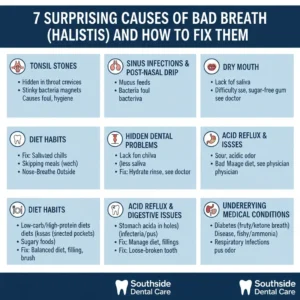
Halitosis can have many causes. Often we assume bad breath is simply due to poor oral hygiene or the garlic we ate. While oral bacteria from inadequate brushing is a common culprit, there are other, surprising factors that might be responsible for that unwelcome odor. You might practice good dental health basics – brushing, flossing, and mouthwash – yet still struggle with foul breath. If that’s the case, one of the 7 surprising causes of bad breath below may be to blame. Let’s uncover these hidden causes and discuss how you can address each one for fresher breath and a healthier smile.
Why Does Bad Breath Happen? (The “Why & How” of Halitosis)
Before we dive into the unexpected causes, it helps to understand why bad breath occurs. In most cases, bacteria in the mouth are the root of the problem. Your mouth is like a warm incubator where food particles and plaque allow bacteria to thrive. These bacteria break down proteins and release volatile sulfur compounds (VSCs) – smelly gases that give breath a rotten egg or sulfur-like odor. Good oral hygiene usually keeps these bacteria in check. Saliva also plays a key role by washing away food debris and neutralizing acids. When saliva is lacking (like when your mouth is dry at night or due to dehydration), odors can accumulate.
While about 80–90% of chronic bad breath comes from issues in the mouth (intraoral causes), the other 10–20% can stem from elsewhere. This means that factors beyond just forgetting to brush can contribute to halitosis. Below, we’ll explore seven lesser-known “why” causes of bad breath – and for each, explain “how” you can combat the issue effectively.
Tonsil Stones Hiding in Your Throat
One surprisingly common source of chronic bad breath is hidden deep in your throat: tonsil stones (also called tonsilloliths). These are small, calcified bits of debris that get stuck in the crevices of your tonsils. They are composed of food particles, dead cells, and mucus that harden over time – and unfortunately, they smell foul. In fact, research shows that about 3% of all halitosis cases are linked to tonsil issues like tonsil stones or chronic tonsillitis. Many people don’t even realize they have tonsil stones; the only noticeable symptom might be a constant bad taste or odor.
Why they cause odor: Tonsil stones act like bacteria magnets. They are often covered in the same anaerobic bacteria that produce those stinky sulfur compounds. If you’ve ever coughed up a small white or yellowish pebble that smells terrible – that’s a tonsil stone. Even tiny ones can release a rotten odor into your breath.
How to address it: For small tonsil stones, gargling vigorously with warm salt water can help dislodge them and neutralize odor. Maintain good oral hygiene (brushing, flossing, and tongue cleaning) to reduce bacteria that feed these stones. If tonsil stones persist or become bothersome, see your healthcare provider. In some cases, removing the tonsils (tonsillectomy) may be considered for recurrent tonsilloliths. Fortunately, addressing tonsil stones can result in a noticeable improvement in breath odor once those bacterial breeding grounds are gone.
Sinus Infections and Post-Nasal Drip
Have you been dealing with stuffy nose or sinus issues? Your bad breath might actually be coming from above your mouth. Chronic sinus infections, allergies, or nasal congestion can lead to post-nasal drip – excess mucus draining down the back of your throat. This mucus is full of proteins that oral bacteria love to feast on. The result? A post-nasal drip breath that smells bad even if your mouth hygiene is great.
Why they cause odor: When thick mucus from sinus issues drips into your throat, it creates a breeding ground for bacteria. The bacteria break down proteins in the mucus, producing those smelly sulfur compounds. You might also breathe through your mouth more when your nose is blocked, causing your mouth to dry out and further worsening the odor (dry mouth means less saliva to wash away bacteria).
Signs this might be your issue: If your bad breath comes with symptoms like a stuffy nose, frequent throat clearing, or a sour taste, a sinus or throat infection could be to blame. You may also notice it gets worse during allergy season or when you have a cold.
How to address it: Treating the underlying sinus problem will help. Keep your nasal passages clear with saline rinses or nasal irrigation (like a neti pot). Stay hydrated to thin the mucus. If you suspect a sinus infection, a medical evaluation is important – antibiotics or other therapies might be needed. Once the sinus issue clears up, that constant drip will reduce, taking the bad breath with it. In the meantime, maintaining good oral hygiene and possibly using an antibacterial mouthwash can help neutralize odors.
Dry Mouth (Xerostomia) – Nature’s Breath Dehydrator
Do you often wake up with “morning breath” or feel like your mouth is as dry as a desert? Dry mouth, known medically as xerostomia, is a major cause of halitosis that many people overlook. Saliva is your body’s natural mouthwash – it continually rinses food particles and bacteria away. When you don’t have enough saliva, those odor-makers multiply rapidly.
Common causes of dry mouth:
– Dehydration: Not drinking enough water, especially if you breathe through your mouth, can dry things out.
– Medications: Hundreds of medications list dry mouth as a side effect, including antihistamines, blood pressure meds, and antidepressants.
– Mouth Breathing: Habitual mouth breathing (often due to nasal congestion or even stress) leaves your mouth unmoisturized.
– Smoking and Alcohol: Tobacco and alcohol are notorious for drying out oral tissues – and both introduce their own odors as well.
– Medical Conditions: Disorders like Sjögren’s syndrome or uncontrolled diabetes can reduce saliva production.
Why it causes odor: Saliva does more than just wet your whistle – it contains enzymes and immune components that keep bacteria in check. Without enough saliva, food debris and bacteria aren’t cleared away. Bacteria then flourish and produce bad-smelling waste products. Ever notice your breath is worst when your mouth feels dry (like in the morning or after coffee)? That’s because dry mouth allows bacteria to party in your mouth all night long.
How to combat dry mouth: The good news is that many halitosis tips revolve around boosting saliva flow. Here are a few:
– Stay Hydrated: Sip water throughout the day. This is simple but incredibly effective for managing dry mouth.
– Chew Sugar-Free Gum or Lozenges: This stimulates your salivary glands to produce more spit. Look for xylitol-sweetened gum – it fights bacteria, too.
– Limit Caffeine and Alcohol: Both can contribute to a parched mouth. If you do enjoy coffee or wine, drink water after to rehydrate.
– Use a Humidifier at Night: Adding moisture to the air can help prevent that desert-dry morning mouth.
– Review Medications: If you suspect a prescription is causing dry mouth, talk with your doctor or dentist. They may adjust dosages or suggest saliva substitutes.
By keeping your mouth moist and practicing good oral hygiene, you starve the bacteria that cause bad breath. In fact, staying hydrated and keeping saliva flowing are some of the simplest yet most effective halitosis-fighting strategies.
Diet Habits: You Are What You Eat (and Drink)
It’s no surprise that pungent foods like garlic and onions can foul your breath. But did you know that the very way you diet – not just what you eat, but how you eat – can also cause bad breath? Some diet-related causes of halitosis may catch you off guard:
- High-Protein or Low-Carb Diets: Fad diets that cut carbs and ramp up protein (think keto or Atkins) might trim your waistline, but they can wreak havoc on your breath. When your body burns fat for energy in the absence of carbs, it produces chemicals called ketones. Some ketones (like acetone) are released in your breath and have a fruity or nail-polish remover smell. Additionally, a high-protein intake can be harder to digest and may release sulfurous gases during metabolism, leading to an unpleasant odor. This so-called “keto breath” is a well-known phenomenon among low-carb dieters.
- Skipping Meals or Fasting: Ever notice a sour, empty stomach smell when you haven’t eaten for hours? When you skip meals, you produce less saliva (because chewing and eating stimulate saliva flow). An empty stomach can also release acids that contribute to a “hungry breath” odor. In some cases, prolonged fasting leads your body to a mild ketogenic state as well, adding ketones to the mix. So, not eating can actually cause bad breath – a surprise for those trying intermittent fasting.
- High-Sugar Diets: Bacteria in your mouth love sugar. A diet full of sweets can lead to more bacterial growth and more odor. The bacteria feast on sugars and then produce acids and smelly compounds as waste. Think of sugar as fuel for bad-breath bacteria.
- Strong-Smelling Foods & Drinks: Beyond garlic and onions, consider things like coffee and alcohol. Coffee’s intense flavor (and acid content) can leave a lingering odor, plus the caffeine causes dry mouth, compounding the issue. Alcohol, especially in excess, not only gives a smell (ever talked to someone after a night of drinking?) but also dries the mouth for hours, allowing bacteria to flourish.
How to address diet-related bad breath: You don’t necessarily have to give up your diet or favorite foods entirely – just be mindful of their effects.
- If you’re on a high-protein/low-carb diet, consider adding a bit more complex carbs or fresh herbs/greens to meals to balance out odors. Ensure you drink plenty of water, and practice extra oral hygiene. Chewing sugar-free gum can also mitigate ketone breath by stimulating saliva.
- After enjoying coffee or alcohol, rinse your mouth with water and maintain good oral care. Moderation is key; heavy alcohol use not only causes breath issues but also risks your oral health.
- For high-sugar diets, try to reduce sugary snacks and drinks. Not only will your breath improve, but your teeth will thank you too (less risk of cavities).
- Eating a balanced diet with plenty of crunchy fruits and vegetables (like apples, carrots, celery) can naturally clean your mouth as you chew and promote saliva flow. And of course, brushing after meals will help remove food particles that bacteria break down.
If you suspect your dietary choices are leaving a lingering smell, a few tweaks and good habits can give you a breath-friendly diet without sacrificing health or flavor.
Hidden Dental Problems (Cavities or Gum Disease)
Sometimes, bad breath is a red flag that something is wrong in your mouth, even if you think you’re cleaning well. Tooth decay (cavities) and gum disease (periodontal disease) are two common dental issues that can cause persistent bad breath – and patients are often surprised, because you might not feel pain or realize there’s an infection brewing.
- Cavities & Infections: A cavity is essentially a hole in your tooth where bacteria have set up camp. Bacteria produce acids and can infect the tooth pulp, leading to a rotten odor. An abscess (infection) in a tooth or gum can smell and taste foul. If you’ve ever had a decayed food particle stuck somewhere, you know the smell – a decaying tooth is similar or worse. Sometimes a cracked tooth or old dental work (like a leaky crown) can trap food and bacteria, causing odor until it’s fixed.
- Gum Disease: Gum disease is one of the major causes of chronic bad breath. In gum disease (gingivitis and its advanced form, periodontitis), bacteria invade the space between teeth and gums, forming plaque and tartar. As the condition progresses, these bacteria cause gum inflammation, bleeding, and pocket formation. The pockets trap more food and bacteria – a vicious cycle. Bad breath that just won’t go away or a constant bad taste in your mouth can be a warning sign of gum disease. In fact, tobacco users who often have gum disease tend to have more halitosis.
Why they cause odor: These dental issues basically create havens for anaerobic bacteria. In a deep cavity or a gum pocket, bacteria can thrive protected by layers of plaque, releasing VSCs and other smelly compounds continuously. No amount of mint can fully mask a halitosis that originates from an active infection under the gums or within a tooth.
How to address it: This is where professional dental care is crucial. If your bad breath might be coming from a hidden dental problem, schedule an exam with us at Southside Dental Care. We will check for gum disease, cavities, or other issues. A thorough cleaning (to remove tartar and bacteria) or treatments like fillings or gum therapy can eliminate the source of the odor. Once the underlying dental problem is treated, the “dragon breath” often disappears. Remember, addressing these issues not only freshens your breath but also improves your overall oral health and prevents tooth loss. It’s truly a win-win.
Before & After: Before: A patient’s tongue and teeth are coated with plaque and bacteria, and the gums are red and inflamed – conditions that foster terrible breath. After: Following a professional dental cleaning and proper home care, the tongue looks pink and the gums are healthy. This visual transformation illustrates how removing bacterial buildup (on the tongue and around the teeth) leads to dramatically fresher breath.
Acid Reflux and Digestive Issues
If you experience a burning sensation in your chest or often have a sour taste in your mouth, your bad breath might be emanating from deeper down – your digestive tract. Conditions like acid reflux or GERD (gastroesophageal reflux disease) can cause stomach acids and partially digested foods to regurgitate into your throat or mouth, especially when you burp or sleep. This not only leaves a nasty taste, but can cause bad breath with an acidic or bitter odor.
Why it causes odor: Stomach contents are meant to stay in the stomach. When acids and enzymes creep up (even in small amounts), they can coat the throat and back of the tongue with an acidic film. Bacteria love the altered pH and food particles that come with it, contributing to odor. Additionally, chronic reflux might cause tiny amounts of digestive gases or bile to come up, which definitely don’t smell pleasant.
Beyond reflux, other digestive issues can manifest as bad breath:
– Helicobacter pylori infection in the stomach (the bacteria that cause ulcers) has been linked to halitosis in some cases.
– Digestive disorders or slower digestion can lead to more belching, which can carry odors upward.
– Bowel obstruction (a very serious condition) causes a feculent breath odor – this is rare and accompanied by many other symptoms, but underscores how the gut can affect the breath.
How to address it: If we suspect your halitosis is related to reflux or another digestive issue, we’ll likely ask about symptoms like heartburn, bloating, or stomach pains. Managing the underlying condition is key. For acid reflux, that might include dietary changes (avoiding spicy or acidic foods, not eating right before bed), medications to reduce stomach acid, and seeing your physician for evaluation. When your GERD is well-controlled, you should notice an improvement in your breath. Meanwhile, maintaining good oral hygiene – especially cleaning the back of your tongue – can help minimize the odors that do arise from the stomach. If bad breath persists despite reflux treatment, talk to your dentist and doctor; further investigation might be needed to rule out other GI issues.
Underlying Medical Conditions
Lastly, bad breath can sometimes be a sign of systemic health issues beyond the mouth and gut. It might surprise you to learn that conditions affecting your lungs, liver, or metabolic system can alter the smell of your breath. Here are a few examples of medical causes of halitosis:
- Diabetes: Uncontrolled diabetes can lead to a serious condition called diabetic ketoacidosis in which the body produces excess ketones. This often causes a person’s breath to have a sweet or fruity odor (sometimes compared to the smell of rotten apples). Even when not in acute ketoacidosis, diabetics with high blood sugar may have mild acetone breath. If you notice a consistently sweet chemical smell along with symptoms like frequent urination or extreme thirst, get your blood sugar checked.
- Liver or Kidney Disease: The liver and kidneys filter toxins from the body. When they aren’t functioning properly, these toxins can build up in the bloodstream and be exhaled in the lungs. Liver disease can cause a musty, sweet odor on the breath (known as fetor hepaticus), while kidney failure can result in a breath that smells ammonia-like or “fishy” due to buildup of urea (often described as urine or fish odor). These are usually signs of advanced illness, but breath changes can be an early clue.
- Respiratory Infections: Infections of the lungs (like bronchitis or pneumonia) or airways can cause foul breath, sometimes with a pus-like or sour scent. Essentially, you’re exhaling the odor of the infection. Chronic tonsillitis or strep throat can similarly cause nasty breath until treated.
- Illnesses like Sinusitis or Tonsil Issues: (We covered these in #2 and #1 above, but they fall under medical causes as well. Chronic tonsillitis, for instance, is a leading cause of non-oral-source halitosis.)
- Others: Severe cancers of the oral cavity, throat, or lungs can produce distinctive odors (due to tissue breakdown and necrosis). This is relatively uncommon but notable. There’s also an odd condition called trimethylaminuria (fish odor syndrome) where the body can’t break down a certain compound and it causes a fishy smell in sweat and breath.
Why they cause odor: In these cases, bad breath is essentially a side effect of the body trying to eliminate chemicals. For example, in kidney failure, excess urea is broken down to ammonia and exhaled; in liver failure, sulfur substances accumulate. In diabetes, the excess ketones are expelled via the lungs, creating an acetone smell. These odors don’t originate from bacteria in the mouth, which is why brushing or mouthwash won’t fully eliminate them.
How to address it: If a medical condition is at the root of your bad breath, it’s important to work with your healthcare providers to manage that condition. For instance, controlling blood sugar in diabetes will typically remove the fruity breath smell, and treating liver or kidney disease can reduce those related odors. From a dental perspective, we at Southside Dental Care can help by ensuring that no oral issues are compounding the problem. We often coordinate with physicians – if we suspect a non-oral cause, we’ll refer you to your doctor for further testing. Always mention persistent bad breath to your dentist and doctor, especially if you have risk factors for the conditions above. Together, we can pinpoint the cause and get you on the right track.
In summary: Bad breath is often the result of multiple factors working together. You might have a bit of dry mouth and a small cavity, or sinus issues and a high-protein diet, each contributing to the odor. Finding the cause can feel like a puzzle – but that’s where we come in. At Southside Dental Care, we act like detectives for your oral health, piecing together your history, symptoms, and a thorough exam to identify what’s causing your halitosis. Once we know the cause, we can guide you on the how – the best way to treat or manage it.
The next sections will compare quick fixes vs long-term solutions and walk you through steps to freshen your breath for good.
Comparison: Masking Bad Breath vs. Treating the Cause
It’s tempting to reach for a strong mint or mouthwash when you notice bad breath. While these quick fixes have their place, they often only mask the symptoms temporarily. In contrast, professional dental care aims to treat the underlying cause of halitosis for long-lasting freshness. The table below compares common at-home remedies with professional treatments:
| Approach | What It Involves | Pros | Cons |
| Quick Fix (Masking) | Examples: chewing minty gum, using mouthwash, or popping a breath mint. These work by covering bad odors with a stronger pleasant scent, or by killing some surface bacteria. | – Immediate fresh flavor<br>– Convenient and over-the-counter<br>– Can boost confidence short-term | – Temporary: Wears off in a few hours or less, doesn’t eliminate source of odor.<br>– Some contain sugar or alcohol (which can worsen dry mouth over time)<br>– May mask important signs of a dental issue (you might delay real treatment) |
| Professional Treatment (Addressing Cause) | Examples: dental exam & cleaning, filling a cavity, treating gum disease, or specialized halitosis evaluation. The dentist identifies and fixes what’s causing the odor (plaque, tartar, decay, etc.). | – Long-lasting relief: Removes the cause of odor, not just the odor itself.<br>– Improves overall oral health (treats infection, cleans buildup)<br>– Personalized advice on prevention (so it doesn’t return) | – Takes time and a dental visit (but usually just a routine visit or two!)<br>– Costs can be higher upfront than a bottle of mouthwash (but often covered by insurance for medical need)<br>– Requires your involvement in home care and possibly lifestyle changes (commitment) |
As you can see, quick fixes are fine in a pinch – we all use them (who hasn’t grabbed a mint before a meeting?). But if bad breath is chronic, it’s far better to solve it at the source. For example, using mouthwash might kill surface bacteria, but if gum disease or tonsil stones are the cause, the odor will come right back. A professional cleaning or medical treatment for your sinuses will yield a much bigger improvement in those cases.
Ideally, you’ll use a combination of approaches: good daily hygiene (and occasional mints or gum when needed) plus getting any underlying issues treated. That way, you’re not just covering up a problem – you’re eliminating it.
Step-by-Step Guide: How to Defeat Bad Breath for Good
If you’re battling halitosis, here’s a step-by-step game plan to regain fresh breath. This guide will also help you determine when it’s time to seek professional help.
Step 1: Reinforce the Basics of Oral Hygiene
Make sure you are truly on point with daily oral care. This means brushing your teeth twice a day for a full 2 minutes each time (don’t forget to gently brush your tongue or use a tongue scraper), and flossing or cleaning between your teeth once a day. Use a fluoride toothpaste and consider an antibacterial mouthrinse at night. Good oral hygiene removes food debris and reduces bacterial load – it’s the foundation for beating bad breath. Even if you think you already do a decent job, try upping your game here first. Many cases of mild halitosis resolve just with improved cleaning.
Step 2: Tackle the “Surprising” Causes at Home
Review the 7 causes above and see which might apply to you. Then take targeted action:
– If you have dryness, make a conscious effort to hydrate and stimulate saliva (e.g. drink water, chew sugar-free gum).
– If you suspect diet factors, adjust accordingly (reduce strong odor foods, add carbs if you’re too low-carb, don’t skip meals, cut down on sugar).
– Suffering allergies or sinus drip? Try a saline nasal rinse and consider antihistamines or seeing an ENT specialist.
– Notice any dental issues like bleeding gums or tooth pain? Make a dental appointment (sooner rather than later).
By addressing these factors, you might eliminate the cause on your own. Give it a couple of weeks of diligent effort with these halitosis tips and see if there’s improvement.
Step 3: Monitor and Self-Test
Sometimes we become nose-blind to our own scent. One way to gauge progress is to do a simple self-test every few days: floss a couple of your back teeth and smell the floss, or lick the back of your wrist, let it dry, and sniff. Not pleasant, but it can give you an idea if your efforts are working. Also, ask a trusted loved one if they notice any change. Keep notes if it helps. If your breath is improving – great! Keep up the routine. If bad breath persists for more than two weeks despite good care, move on to Step 4.
Step 4: Talk to a Dentist and Get a Professional Evaluation
Don’t be embarrassed to seek help – we are here for exactly this problem, and we handle it with empathy and expertise. If your breath issues linger, schedule an appointment at Southside Dental Care (or your local dentist). We will perform a thorough examination: checking your teeth for cavities, your gums for signs of disease, your tongue and tonsils for coatings or stones, and even your breath odor character (certain smells can hint at certain causes). Be open about your health history and habits – the more we know, the better we can find the cause. In some cases, we may find a treatable dental issue (maybe a deep tartar buildup or an infected tooth) and address it on the spot or in a follow-up. Or we might determine that the cause is not primarily dental, in which case we’ll guide you on next steps (such as seeing a medical doctor for reflux or sinus treatment).
Step 5: Follow Through and Maintain Fresh-Breath Habits
After any professional treatment, be it a dental cleaning, a filling, or a new routine from your physician, make sure to follow all aftercare instructions. Then, maintain your results by sticking to a consistent oral care routine and healthy habits. Bad breath can recur if you slip back into poor hygiene or if a condition flares up again. Many patients find it helpful to keep a checklist (like the one below) for daily maintenance. Also, keep up with regular dental check-ups (typically every 6 months) – this way, any new issues can be caught early before they cause odor or other problems. Fresh breath is an ongoing effort, but it gets much easier once you integrate these habits into your life.
By following these steps, you’re stacking the odds in your favor to defeat bad breath for good. Now, let’s summarize some key aftercare and prevention tips in a handy checklist.
Fresh Breath Checklist: Aftercare & Prevention Tips
Staying minty-fresh isn’t a one-time task – it’s a continuous routine. Use the checklist below to keep your breath in check every day. These tips cover oral care, lifestyle, and dietary advice to maintain a healthy, odor-free mouth:
- Brush and Floss Daily: Brush your teeth at least twice a day (morning and before bed) and floss once a day to remove plaque and food debris. Don’t forget to brush your tongue or use a tongue scraper to get rid of bacteria on the tongue surface (a major source of odors). This basic dental health basics routine is your first line of defense against bad breath.
- Stay Hydrated and Stimulate Saliva: Drink plenty of water throughout the day. If your mouth feels dry, swish with water and consider sucking on sugar-free candies or chewing xylitol gum to spur saliva production. Saliva is nature’s cleanser, so keep it flowing!
- Use Alcohol-Free Mouthwash (If Needed): Rinse with an antibacterial mouthwash to kill germs that brushing might miss. Choose alcohol-free formulas to avoid drying your mouth. Remember, mouthwash is a temporary help, not a cure – it’s best used as a supplement to brushing and flossing, not a substitute.
- Clean Dental Appliances: If you wear dentures, retainers, or night guards, clean them daily. These can harbor bacteria and food particles, leading to odors. Soak dentures as directed and brush your appliances just like you would your teeth (if appliance type allows). A clean appliance = fresher breath.
- Watch What You Eat (and Drink): Practice a breath-friendly diet: limit overly spicy or garlicky foods especially before important social occasions. Cut down on sugary snacks that fuel bacteria. Incorporate crunchy fruits and veggies which naturally cleanse the mouth. Moderate your coffee and alcohol intake – and chase them with water when you do indulge.
- Quit Tobacco: If you smoke or use tobacco, consider this yet another reason to quit. Tobacco not only causes its own mouth odor but also dries your mouth and promotes gum disease. Quitting will greatly improve your breath (and overall health). Talk to your healthcare provider for support in quitting – your breath will thank you.
- Keep Up with Dental Check-ups: See your dentist regularly (usually twice a year) for exams and professional cleanings. Dentists can spot and treat problems like cavities or gum infection before they start stinking up your breath. Regular cleanings also remove tartar and buildup you can’t tackle at home, giving you a “clean slate” and fresh feeling.
- Communicate and Follow-Up: If you’re still noticing bad breath despite doing all the above, don’t suffer in silence or mask it with mints. Reach out to us at Southside Dental Care. We may recommend a special clinical treatment, prescribe a medicated mouthrinse, or coordinate with your physician to explore non-dental causes. We’re your partners in keeping your breath fresh and confidence high – so keep the conversation open and never hesitate to talk to your dentist.
By checking off these items daily, you’ll greatly reduce the chances of halitosis returning. Consistency is key – a little effort each day saves you from bigger troubles (and odors) down the road.
The Southside Dental Care Advantage: Why Patients Trust Us for Fresh Breath
At Southside Dental Care, we know that concerns about bad breath can be sensitive and stressful. Our mission is to provide effective, compassionate care that addresses not just the symptom (the odor) but the root causes of your halitosis. Here’s what sets our clinic apart and why so many patients in our community trust us to help them regain fresh breath and confident smiles:
- Experienced, Understanding Team: Our dentists and hygienists have extensive experience in diagnosing and treating the various causes of bad breath – from gum disease to dry mouth to tricky cases of halitosis with no obvious origin. We stay updated on the latest research and techniques in halitosis management (we even use tools like breath odor monitors when needed). More importantly, we approach every patient with a non-judgmental, understanding attitude. We understand it can be embarrassing to discuss bad breath; rest assured, we’ve seen it all and are here to help, not judge. Many people are too embarrassed to seek help, not realizing dentists deal with this issue regularly – at Southside, we make it comfortable to get the care you need.
- Comprehensive Oral Health Evaluation: We don’t just mask the problem with mouthwash and send you on your way. We perform a thorough evaluation to pinpoint what’s causing your bad breath. This includes checking for gum disease, cavities, signs of dry mouth, tongue coatings, and even discussing your medical history and lifestyle habits. By taking a holistic view, we ensure that nothing is missed. If the cause is something we can treat in-office – great, we’ll tackle it. If the cause might be elsewhere (like acid reflux or sinus issues), we will coordinate a referral or advice for your physician. Our goal is finding answers and crafting a solution tailored to you.
- State-of-the-Art Technology: Southside Dental Care is equipped with modern dental technology to aid in diagnosis and treatment. From digital scanners and low-radiation X-rays that can spot hidden dental issues, to halitosis assessment tools (yes, there are instruments that can measure VSC levels!), we invest in technology that leads to better outcomes for our patients. For example, if plaque and tartar are contributing to your halitosis, our ultrasonic cleaning devices can remove buildup more comfortably and effectively than traditional methods. Advanced tools help us be precise and thorough, so nothing is left behind that could cause odor.
- Gentle, Patient-Centered Approach: We pride ourselves on gentle dentistry. Bad breath treatment often involves cleaning inflamed gums or addressing sensitive issues, and we do so with a careful touch. Our patient comfort measures – from a relaxing office environment to optional sedation dentistry for those with anxiety – ensure that you can get through procedures with minimal stress. We listen to your concerns, explain every step in plain language, and involve you in the decision-making process. Your comfort and trust are paramount to us.
- Education and Prevention Focus: We believe in empowering our patients. When you come to us for halitosis, we not only treat it but also teach you how to prevent it in the future. We’ll demonstrate proper techniques for brushing, flossing, and tongue cleaning (you’d be surprised how a couple of little changes can make a huge difference). We’ll also send you home with personalized tips – perhaps specific mouthrinse recommendations, dietary pointers, or a reminder list like the checklist above. Our team makes sure you leave with the knowledge and tools to maintain fresh breath long after you’ve left our office.
- All-in-One Dental Care: Oftentimes, treating bad breath might involve other dental services – such as a deep cleaning (scaling and root planing) if gum disease is present, a filling or crown if there’s decay, or even something like replacing an old denture. At Southside Dental Care, we offer a full range of services in-house (from general dentistry to periodontal care to restorative treatments). This means you won’t need to run around town to different specialists in most cases – we can handle your care under one roof, with a team you know and trust. This comprehensive approach ensures continuity of care and convenience for you.
In short, The Southside Advantage is all about expertise, empathy, and comprehensive care. We treat you like family and take your concerns seriously. Our clinic has helped countless patients turn their oral health (and breath) around, giving them the confidence to smile and speak freely again. When you choose Southside Dental Care, you’re choosing a partner dedicated to your overall dental health and well-being.
Conclusion: Fresh Breath is Achievable – Let’s Get There Together
Persistent bad breath can be frustrating and demoralizing, but as we’ve explored, it always has a cause – and once that cause is found, it can be treated or managed. Whether it’s as simple as upping your flossing game or as complex as coordinating with medical specialists for a health condition, there is hope for fresher breath and better confidence. Bad breath is not something you “just have to live with.” It’s a sign your body is giving you that something needs attention, be it a pesky tonsil stone, a dry mouth, or an infected gum.
At Southside Dental Care, we encourage you to take that first step and reach out if you’re struggling with halitosis. We have the experience, knowledge, and compassion to identify what’s causing your bad breath and to guide you on the solution. Imagine the relief of knowing that you can greet people without worry, speak up in meetings, or kiss a loved one without feeling self-conscious. Our goal is to get you to that place of confidence with a healthy mouth.
You asked, we answered: We hope this comprehensive guide has answered your questions and eased some fears about bad breath. To wrap up, here are a few common questions patients often ask us about halitosis – along with our expert answers:
Q: How can I tell if I have bad breath when I can’t smell it myself?
A: It’s often hard to smell your own breath. One trick is the “wrist lick test”: lick the inside of your wrist, let it dry for a few seconds, then sniff – the smell can give you an idea of your breath odor. Another method is to ask a trusted friend or family member for an honest opinion. Dentists can also perform a breath test during a visit. Don’t rely solely on blowing into your hands (we all become accustomed to our own scent). If in doubt, assume you might have some odor and focus on oral hygiene and potential causes – it’s better to be proactive. Remember, about 50% of adults experience halitosis at some point, so you’re not alone in worrying about it.
Q: Will mouthwash cure my bad breath?
A: Mouthwash can be a helpful part of your routine but it’s usually a temporary fix, not a permanent cure. Antibacterial mouthrinses can reduce the bacterial count and neutralize odors for a short time, which is great before a social interaction. However, if there is an underlying issue (like plaque buildup, gum disease, or a sinus infection), the bad breath will come back once the mouthwash effect wears off. For lasting results, address the root cause – use mouthwash as a supporting player. Also, avoid alcohol-based mouthwashes that can dry out your mouth (dry mouth can worsen halitosis). We often recommend alcohol-free antiseptic rinses and tongue cleaning, combined with good brushing and flossing, as a more effective strategy than mouthwash alone.
Q: When should I see a dentist or doctor about bad breath?
A: If you have chronic bad breath that persists despite good oral care, it’s time to see a professional. A general rule of thumb: if bad breath lasts longer than two weeks and you can’t freshen it with routine measures, schedule a dental appointment. You should also seek help sooner if you notice signs like bleeding gums, tooth pain, loose teeth, ulcers, or a coating on your tongue, as these indicate specific treatable problems. Additionally, if your dentist finds that your mouth is healthy but you still have halitosis, they may refer you to a physician. You’d want to rule out issues like sinus infections, tonsil problems, or acid reflux as causes. For instance, consistent bad breath with nasal congestion might warrant an ENT visit, and a fruity odor with other symptoms could mean checking for diabetes. In short, involve your dentist and doctor when bad breath is unexplained – a team approach often works best to pinpoint the cause and fix it.
Fresh breath is within reach. By understanding these 7 surprising causes and following the guidance provided, you can take control of halitosis. Southside Dental Care is here to support you on this journey with personalized, expert care. Don’t let bad breath hold you back any longer – together, let’s help you put your best breath forward!