Every athlete deserves to smile confidently, during and after the game. Yet sports-related dental injuries – from chipped teeth to knocked-out incisors – are more common than you might think. Dentists estimate that roughly 13% to 39% of all dental injuries occur while playing sports. Children and adults alike can suffer a hard hit to the mouth, and nearly 80% of those injuries involve at least one front tooth. Besides the immediate pain and panic of a broken tooth, the long-term costs and treatments can add up quickly. In fact, replacing a single knocked-out tooth can cost over $20,000 over a lifetime.
The good news is most sports dental injuries are preventable. Southside Dental Care is here to help you protect your teeth or your child’s smile on the field. Simply wearing a well-fitted mouthguard can dramatically reduce the risk of serious dental trauma. Experts report that mouthguard users are far less likely to suffer broken or lost teeth – one study found it cuts the risk by as much as 82–93% compared to athletes without mouthguards. Another sports safety review concluded that athletes are 60 times more likely to damage their teeth when not wearing a mouthguard. In this comprehensive guide, we’ll explain why and how to safeguard your (or your child’s) teeth during sports, compare different mouthguard options, and provide step-by-step tips for prevention and aftercare. With a little preparation – and help from our team at Southside Dental Care – you can focus on the game without worrying about your smile.
Why Protecting Your Teeth in Sports Matters (The “Why & How”)
Dental Injuries Can Be Serious: A sudden impact in sports can crack a tooth, drive it out of position, or even knock it out completely. Such injuries aren’t just painful – they can affect speech, nutrition, and self-confidence if not addressed. Even a small chip or crack may lead to nerve damage or infection if ignored. Athletes might brush off a cut lip or loose tooth in the excitement of the game, but oral injuries need prompt care. Time is of the essence: if a tooth gets knocked out, getting to a dentist within 1–2 hours offers the best chance of saving it. That’s why preventing these injuries is so important.
Common Sports & Risk Factors: Any sport with contact, collisions, or hard projectiles poses a risk to your teeth. We often think of obvious high-contact sports like football, hockey, boxing or rugby – and indeed, mouthguards are mandatory in sports like high school football, hockey, lacrosse, and field hockey (and even for wrestlers with braces). But dental injuries also occur in sports where mouthguards aren’t required. Basketball and baseball, for example, have some of the highest rates of dental trauma in youth sports. A stray elbow, ball, or fall can crack a front tooth just as easily on the basketball court or playground as on the football field. Even non-contact activities like skateboarding, gymnastics, or biking can lead to face and mouth injuries. In fact, biking and skateboarding are among the leading causes of dental emergencies in children outside of organized sports. The message is clear: if there’s any chance of impact to the face, it’s worth protecting your mouth.
How Mouthguards Help: A mouthguard is a soft, cushioning tray that covers your teeth. It acts like a shock absorber for your smile. When you take a blow to the face or collide with another player, the mouthguard distributes and dissipates the force of impact. This dramatically reduces the chances of severe injury. According to the American Dental Association and sports medicine experts, a properly worn mouthguard helps prevent broken teeth, dislocated or knocked-out teeth, and cuts to the lips or tongue. It even provides some protection against jaw fractures – and there’s some evidence it may reduce concussion risk by cushioning the jaw impact. Essentially, the mouthguard takes the hit so your teeth don’t have to.
Preventing Pain and Costly Treatment: Beyond the obvious health benefits, preventing a dental injury will save you significant cost and hassle. Consider this: treating a knocked-out tooth can involve emergency care, possible root canals or implants, and years of follow-ups – expenses that can easily reach tens of thousands of dollars. By contrast, investing in a quality mouthguard is a fraction of that cost (as we’ll outline below). The return on investment for a mouthguard is huge when you compare a small upfront cost to the potential lifetime cost of dental trauma. And no price tag can quantify the pain, stress, and time lost to a serious injury. Simply put, wearing a mouthguard and following basic dental safety habits can spare you and your family a lot of heartache.
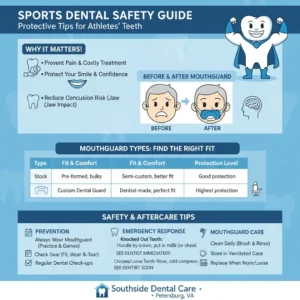
Comparing Mouthguard Options: Finding the Right Fit
Not all mouthguards are created equal. There are three basic types of mouthguards available, and each offers different levels of fit, comfort, and protection:
| Mouthguard Type | Fit & Comfort | Protection Level | Approx. Cost |
| Stock (Ready-Made) | Pre-formed, one-size-fits-most. Must bite down to hold in place (often bulky). | Basic protection – least effective due to poor fit (can dislodge easily). | Lowest – budget-friendly (often \$5–\$20 for a simple model). |
| Boil-and-Bite | Semi-custom fit: softened in hot water, then molded to your teeth. Better fit than stock, but can be uneven. | Good protection if fitted well. Covers teeth more securely than stock guards. | Low – typically \$20–\$50 at sporting goods stores. |
| Custom Dental Guard | Best fit – made from a mold of your teeth by a dentist, so it fits perfectly. Thin, comfortable, and tailored to you. | Highest protection (maximizes shock absorption and coverage). Also lasts longer with proper care. | Highest – an investment (can range from a couple hundred dollars up to \$500), plus a dental visit for impressions. |
As the table shows, custom-fitted mouthguards provide the top level of comfort and safety – but they do cost more upfront. A custom sports mouthguard made by a dentist typically ranges around \$200–\$500, depending on materials and your location. In contrast, boil-and-bite or stock mouthguards are very affordable (sometimes under \$20) and better than wearing nothing at all. However, cheaper guards may feel bulky, make it harder to breathe or talk, and often don’t stay in place securely. Many athletes find a cheap guard so uncomfortable that they “forget” to wear it – and an unused mouthguard protects nothing! For growing children or athletes in low-contact sports, a boil-and-bite guard can be a reasonable starting point. But for the best fit and maximum protection, a custom guard from your dentist is the gold standard. When it comes to mouthguards, the best one is truly the one you will actually wear every time. Southside Dental Care offers professionally fitted custom mouthguards for athletes of all ages, ensuring you get a guard that’s effective and comfortable.
Is a Sports Mouthguard Right for You (or Your Child)?
Who Should Wear a Mouthguard? In our view: almost everyone participating in sports or active play can benefit from a mouthguard. Certainly, if you play contact or collision sports – like football, hockey, martial arts, boxing, rugby, or lacrosse – a mouthguard is a must-have piece of gear. These sports have frequent face impacts by design. It’s no surprise that since football began requiring faceguards and mouthguards decades ago, orofacial injuries in that sport plummeted from 50% of all injuries to less than 1%. But mouthguards aren’t just for football and boxing. Basketball, soccer, baseball, softball, volleyball, gymnastics, skating, biking – any sport where collisions, falls, or flying objects are possible – can cause dental injuries. The American Dental Association actually recommends custom mouthguards for athletes in 29 different sports, including many where they’re not mandatory. If you or your child is involved in any of these activities, a mouthguard is a smart precaution. Remember, a significant portion of sports dental injuries occur during practices or informal play, not just games, and often in athletes not wearing mouth protection.
Special Cases – Kids, Braces, and More: Young athletes should start protective habits early. If your child is in youth sports (even as young as tee-ball or peewee soccer), it’s never too soon to guard their growing smile. Kids are actually more prone to dental injuries due to developing coordination and the relative size of their teeth. We’re passionate about kids sports safety – our pediatric dental team frequently works with young athletes to make mouthguards fun and comfortable. For kids and teens, one consideration is growth: their mouthguard will need to be replaced as they grow or get new teeth (typically each sports season or year). Still, the habit of always wearing a mouthguard is one of the best lessons for a young athlete.
If you have braces or orthodontic appliances, a mouthguard is especially critical. Braces can cause serious cuts to the lips or cheeks if hit, and an impact can even damage the orthodontic brackets. Fortunately, there are mouthguards designed to fit over braces (often a slightly roomier, flexible orthodontic mouthguard). A custom-fabricated guard is ideal to accommodate the brackets and wires. In high school sports, any wrestler with braces is required to wear a mouthguard – which shows how important it is. At Southside Dental Care, we can create a custom guard that fits comfortably over braces or other dental work, so you stay protected without hindering your orthodontic treatment.
Overcoming Excuses: We often hear athletes say, “Mouthguards are uncomfortable” or “I play a non-contact sport, so I don’t need one.” Modern mouthguards, especially custom ones, are lightweight and comfortable – many athletes forget they’re wearing one after a few minutes of play. And as for not needing one: consider that up to half of all athletes will experience a sports-related dental injury in their career. Even if your sport isn’t known for hard hits, accidents happen when you least expect. It only takes one fall or collision to break a tooth. Given how simple and affordable mouthguards are compared to the pain and cost of an injury, it’s an easy choice. If you find the standard store mouthguards intolerable, talk to us about a custom solution rather than going without. Our goal is to ensure every patient finds a protective solution that works for them.
Safety & Aftercare Tips for Sports Dental Injuries (Checklist)
Even with the best precautions, accidents can happen. It’s important to know how to respond if a dental injury occurs during sports. Below is a quick checklist of safety and aftercare tips – follow these guidelines to minimize damage and improve the chances of saving an injured tooth:
- Always Wear Your Mouthguard: This may seem obvious, but the first rule is prevention. Make it a habit to wear your mouthguard during all practices and games – most injuries happen when athletes skip the guard “just this once.” Keep it in until the action is over. A properly fitted guard won’t impede your breathing or performance. Remember, it only works if it’s in your mouth, not the gym bag!
- Check Your Gear: Before play, ensure your helmet, face shield, or other protective gear fits well and is in good condition. A loose helmet or damaged faceguard can lead to facial injuries even if your teeth are protected. If you’re a parent, regularly inspect your child’s sports gear (including their mouthguard for wear and tear). Replace a mouthguard at the first signs of significant wear, tearing, or if it becomes ill-fitting. Typically, kids may need a new one each season as they grow.
- Stay Alert and Practice Safe Play: Many dental injuries can be avoided by using proper technique and staying aware of your surroundings on the field. Encourage children to follow rules (no leading with the head, no elbowing), and for sports like baseball or softball, consider using protective face masks on helmets. Good sportsmanship – like avoiding high swings of bats or reckless tackles – helps keep everyone’s teeth safe.
- If a Tooth Gets Knocked Out (Avulsed): Act fast and stay calm. Handle the tooth by the crown (top), not the root. If it’s dirty, gently rinse it with water – do not scrub or use soap. If possible, place the tooth back into its socket and have the athlete bite down on clean gauze to hold it in place. If you can’t reposition it, keep the tooth moist – ideally in a container of cold milk. You can also tuck it gently in the injured person’s cheek (if they’re conscious and old enough not to swallow it). Get to a dentist immediately – time is critical for reimplanting a tooth (within ~60 minutes is best). Do not delay until after the game; prompt treatment can often save the tooth.
- For a Chipped or Broken Tooth: Rinse the mouth with warm water to clean the area. If there’s bleeding, have the person bite down on gauze or a clean cloth. Save any broken tooth fragments in milk or saline if you can. Even a small fracture needs dental evaluation, as there could be damage to the tooth’s nerve. Apply a cold compress to the lips or face to reduce swelling. Then see a dentist as soon as possible. Quick treatment can often repair the tooth with bonding or a crown.
- Soft Tissue Injuries (Cut Lips, Tongue, Cheeks): These are common if the athlete wasn’t wearing a mouthguard or got hit in the face. Clean the area gently with water. Use a cold compress to control swelling and bleeding from the outside. If there’s heavy bleeding that doesn’t stop in 10-15 minutes or a deep laceration, seek emergency care. Many times, a dentist or ER can stitch a deep cut on the lip or tongue.
- After any Dental Injury – See the Dentist: Even if a tooth isn’t knocked out, a serious impact to the teeth should be examined by a dental professional. Sometimes an injury isn’t visible (for example, a tooth could be cracked or the root damaged without obvious chips). Our office provides prompt care for dental trauma and will use X-rays to check for any hidden damage. We can stabilize loose teeth with a splint, prescribe medicine to prevent infection, and plan any further treatment to save your smile. Don’t “tough it out” or wait – seeing a dentist promptly can make all the difference in saving an injured tooth.
- Take Pain Seriously: If a tooth is aching or sensitive after a hit, that’s a sign of possible injury. Use over-the-counter pain relievers as needed (avoiding aspirin for children), and have the dentist evaluate it. Pain or sensitivity to cold could indicate a hairline crack or bruising of the tooth’s ligament. It’s better to get it checked than to ignore it and develop worse pain days later.
By following these steps, you’ll be prepared to handle most dental emergencies on the field. Being prepared – with a plan and a properly stocked kit (include gauze, a small container with lid, and saline or access to milk) – can turn a scary injury into a story of a saved tooth. Our team at Southside Dental Care is always just a phone call away to guide you in an emergency and provide the care you need.
The Southside Advantage: Why Trust Us with Your Family’s Dental Safety
Protecting athletes’ smiles isn’t just a job for us – it’s our passion. At Southside Dental Care, we take pride in helping our local community’s athletes, from peewee leagues to weekend warriors, keep their teeth safe and healthy. Here’s what sets us apart and why patients trust us for sports dental care:
- Expertise in Sports Dentistry: Our dentists have extensive experience in preventing and treating sports-related dental injuries. Whether it’s fitting a first mouthguard for your child or handling a complex dental emergency, you’re in skilled hands. We stay updated on the latest materials and techniques for athletic mouth protection. For example, we offer custom mouthguards made from high-impact absorbent materials that meet ADA standards for safety. We even consider factors like your sport and whether you have braces or dental work when designing your guard. Our team knows what works in real game conditions – many of us are parents or athletes ourselves, so we get it.
- Advanced Technology & Comfortable Care: Say goodbye to the old days of biting into messy molds. Southside Dental Care uses modern digital scanning to take precise impressions for custom mouthguards (no gagging on goop!). This ensures a perfectly snug fit. Our clinic is equipped with state-of-the-art diagnostic tools, like low-radiation digital X-rays and 3D imaging, which help us assess injuries quickly and accurately if an accident occurs. Most importantly, we prioritize your comfort at every step. Our friendly staff and gentle dentists are great at easing the nerves of anxious patients – whether it’s a child coming in for a preventive review of their sports gear, or an adult with a dental emergency needing relief. We offer sedation options and pain-free techniques for treatments when needed, so you can feel at ease even in a stressful situation.
- Comprehensive Care – From Prevention to Emergency Response: We’re your one-stop dental resource. Looking to prevent injuries? Come in for a custom mouthguard fitting or a consultation on sports safety. We’ll thoroughly evaluate your teeth and mouth, discuss your activities, and recommend the best protective solutions. We might even catch other issues (like a cavity or a cracked filling) during your visit that, if fixed, will strengthen your teeth against injury. Need urgent help? If a dental trauma does happen, we offer same-day emergency appointments. During urgent cases, our calm and efficient team will quickly relieve pain, repair damage, and get you or your child back on the road to recovery. We have an on-call dentist for after-hours emergencies because we know accidents don’t always happen 9-to-5. Having treated countless sports injuries, we act fast to save teeth whenever possible.
- Family-Friendly, Kid-Focused Care: Athletes of all ages are welcome here, but we have a special soft spot for kids in sports. Our pediatric dental specialists make extra effort to ensure kids are comfortable with their care and understand the importance of mouthguards. We can customize mouthguards in fun colors (maybe in your kid’s team colors!) and involve them in the process so they take ownership of wearing it. The Southside Dental team makes dental visits fun and educational – from the waiting room to the treatment chair, kids and parents often tell us how at ease they feel. When it comes to kids sports safety, we go the extra mile because protecting those growing smiles today sets the foundation for a lifetime of healthy teeth.
- Community Trust and Convenience: We’ve been serving the community for years and have built a reputation for excellence and trust. Local coaches, parents, and athletes often refer their friends to us for mouthguards and emergency care – a testament to our quality. We’re conveniently located and offer flexible scheduling (including some evening and weekend hours during sports seasons) to accommodate your busy routine. Our office also works with most insurance plans and can help navigate coverage for custom mouthguards or injury treatments. We believe everyone deserves access to top-notch dental protection. When you choose Southside Dental Care, you’re choosing a team that truly cares about you like family and will do everything to keep your smile bright and safe.
Conclusion
A healthy smile shouldn’t be the price you pay to enjoy sports. With the right precautions – especially consistently wearing a quality mouthguard – athletes can significantly reduce the risk of dental injuries and play with confidence. Remember, dental trauma can happen in a split second but can impact you for a lifetime if a tooth is lost. However, nearly all of these injuries are preventable with a little planning and the proper gear. Southside Dental Care is proud to be your partner in sports dental safety. From providing custom-fit mouthguards to offering prompt, compassionate emergency care, our mission is to keep you or your child smiling on and off the field.
We encourage you to put your dental safety game plan in place now. Feel free to reach out to us for a preventive review – we’ll gladly assess your sports gear, discuss your needs, and get you set up with the best protection for your teeth. Your smile is one of your greatest assets; let’s shield it while you enjoy the sports you love. Stay safe out there, and remember: the only hits you should be taking are on the scoreboard, not to your teeth!
Frequently Asked Questions
Q1: Can I wear a mouthguard if I have braces or dental appliances?
A: Yes, absolutely. In fact, it’s even more important to wear a mouthguard if you have braces. A blow to the face could not only break teeth but also damage the brackets and wires, or cause them to cut the inside of your mouth. Special orthodontic mouthguards are designed to fit over braces comfortably. At Southside Dental Care, we make custom mouthguards that account for your braces or bridgework. These guards have a little extra space to accommodate the brackets while still protecting your teeth, lips, and cheeks. Keep in mind that as your teeth move (or if your braces get adjusted), you may need to have the mouthguard refitted or replaced periodically. But don’t let braces be an excuse – you can and should wear a mouthguard to keep your orthodontic treatment on track and your mouth safe. (Fun fact: in school sports like wrestling, wearing a mouthguard is mandatory for athletes with braces!)
Q2: How should I clean and store my sports mouthguard?
A: Taking care of your mouthguard will help it last longer and stay hygienic. After each use, rinse it thoroughly under cool or lukewarm water. Gently scrub it with a toothbrush and mild soap (or toothpaste) to remove any debris and plaque – much like brushing your teeth. Avoid using very hot water, which can warp the mouthguard’s shape. Occasionally, you can deep-clean it by soaking it in an antiseptic mouthwash or a denture-cleaning solution, but rinse it well afterward. Always store your mouthguard in a ventilated case (one with air holes) when not in use. This allows it to dry and prevents bacteria or mold from growing. Keep the case itself clean, and make sure the mouthguard is completely dry before storing it to avoid mildew. Also, keep it away from pets! (Dogs, especially, love to chew on mouthguards left lying around.) With good care, a custom mouthguard can last a sports season or more, but do check it regularly for any signs of wear, cracks, or bite-through areas. If it looks worn or isn’t fitting well, it’s time to get a new one. Fresh, clean gear not only protects better but also feels and smells better – which means you’re more likely to wear it every time.
Q3: At what age should my child start wearing a mouthguard for sports?
A: We recommend introducing a mouthguard as soon as your child starts participating in organized sports or activities with any risk of falls or impact – sometimes, that’s as young as 5 or 6 years old for sports like soccer, hockey, or martial arts. Even if they still have baby teeth, those teeth can be injured and the habits of protection start early. For the youngest kids, a boil-and-bite mouthguard from the store can be molded to their small mouth (some brands even make sizes for age ranges). As they get a bit older and especially once permanent teeth come in, consider upgrading to a custom-fitted mouthguard for the best comfort and protection. Elementary and middle school athletes in sports like football, basketball, wrestling, baseball, and hockey should definitely be wearing mouthguards. If your child finds a mouthguard uncomfortable at first, be patient and encouraging – sometimes it just takes a few practices to get used to it. Set a good example too: if you’re an adult who plays sports (or even if you grind your teeth at night), show them that using a mouthguard is a normal part of staying healthy. By normalizing mouthguards early, your child is more likely to continue wearing them through the teen years when the risk of injury can be highest. And of course, our pediatric team at Southside Dental Care is happy to help with fitting and training kids to use their mouthguards properly. Protecting that growing smile from day one is one of the best investments you can make in your child’s health!