
Busy professionals often struggle to prioritize oral health amid hectic work schedules. Yet quick, consistent habits can keep teeth and gums healthy even when time is tight. Key strategies include following proven dental hygiene routines (brushing twice daily for 2 minutes, daily cleaning between teeth, and rinsing with fluoride mouthwash). Time-saving tools like portable toothbrushes and floss picks make it easier to maintain freshness on the go. Eating tooth-friendly snacks (water, cheese, sugar-free gum) and limiting sugary drinks also help prevent cavities. For Petersburg professionals, combining efficient morning and evening routines with quick midday care can support a lifetime of healthy smiles. (All tips assume adult readers in Petersburg, VA with no special dietary restrictions.)
Efficient Morning & Evening Routines
Starting and ending the day with simple dental rituals lays the foundation for oral health. Each session can be as short as two minutes per ADA guidelines. For example, morning: brush teeth for 2 minutes with a soft-bristle toothbrush and fluoride toothpaste, aiming 30 seconds per mouth quadrant. An electric toothbrush with a built-in timer ensures you hit the full 2 minutes (and saves mental effort). After brushing, quickly clean between teeth once (with floss or picks) to dislodge overnight bacteria. Finish by swishing with an alcohol-free fluoride mouthwash (20–30 seconds) to strengthen enamel and freshen breath.
Evening routines are similar. Brushing after dinner or before bed prevents nighttime plaque buildup. Floss or use an interdental cleaner after the last meal to remove food debris. Use a tongue scraper or brush the tongue briefly (10–15 seconds) to remove odor-causing bacteria. A quick rinse with mouthwash seals the routine, keeping breath fresh overnight. Consistency is key – even on busy mornings or late nights, a focused 2-minute routine twice a day dramatically reduces cavity and gum disease risk.
Daily Oral Care Routine
Duration: 2 minutes
Duration: 30 seconds
Duration: 15 seconds
Duration: 30 seconds (Fluoride)
Figure: Example efficient 2-minute oral-care routine (total ~3 minutes).
On-the-Go Dental Habits
Professional days often involve work travel, client lunches, or meetings. In these situations, quick fixes keep smiles bright:
- Portable kit: Carry a travel toothbrush and toothpaste (or disposable brushing kit) to use after lunch or coffee. A 2-minute brushing break after meals can prevent stains and plaque formation.
- Floss picks: Keep a pack of floss picks or a single-use dental flosser at your desk or in your briefcase. Floss picks require only ~10 seconds per use and remove debris where brushing missed. They’re more convenient than carrying floss thread on the go.
- Sugar-free gum: Chew xylitol gum after eating if you can’t brush immediately. It stimulates saliva and washes away sugars, lowering cavity risk.
- Hydration: Drink water frequently. It rinses food particles and counters dry mouth (a common office-side effect of long hours or air-conditioned rooms).
- Mouthwash swish: Keep a travel-size fluoride mouthwash in your bag. A quick 20–30 second swish after coffee or a sticky snack freshens breath and adds a dose of cavity-fighting fluoride.
- Healthy snacking: Choose low-sugar, crunchy snacks like cheese, nuts, or raw vegetables. Crunchy, fiber-rich foods can mechanically clean teeth and raise pH, helping neutralize acids.
By integrating these steps, Petersburg professionals can handle lunchtime and business outings without neglecting oral hygiene. For example, flossing quickly in the office bathroom before a meeting or chewing sugarless gum right after a quick snack go a long way toward preventing cavities and gum issues.
Time-Saving Dental Habits for Busy Lifestyles
Adopting smarter habits can save time without sacrificing health:
- Electric toothbrush: Automated brushing (especially with a timer) speeds the process and often cleans more thoroughly than a manual brush. You might finish a quality clean in under 2 minutes, freeing up a bit of time each morning/evening.
- Multitasking: Brush during another activity (e.g. while showering or listening to news in the morning). Combining routines ensures you don’t skip brushing on rushed days.
- Preloaded floss picks: Pre-load floss picks on a keychain or store them in obvious places (desk drawer, car visor). Having them handy turns flossing from a chore into an automatic reflex.
- Two-in-one products: Use a toothbrush with built-in tongue cleaner or a dual bristle brush, reducing steps. Some flossers come with an integrated pick, and many mouthwashes contain fluoride, combining benefits. (Always choose ADA-Accepted products for safety.)
- Scheduled reminders: Set phone alarms labeled “Brush Teeth!” in morning and evening, or add a sticky note on your bathroom mirror. Digital reminders fit naturally into busy tech-savvy lives.
- Visit scheduling: Book dental checkups around your work calendar (even early morning or lunchtime slots) so you’re less tempted to skip visits. Regular professional cleanings (often every six months) complement home care and quickly remove hidden plaque.
Implementing these habits turns oral care into streamlined tasks, not burdensome chores. In Petersburg, VA’s busy community, even small changes can keep dental problems at bay and avoid costly emergency visits later.
Quick-Tools Comparison
Below is a brief comparison of fast dental-cleaning tools and their typical use time:
| Tool/Method | Pros | Cons | Approx. Time |
| Floss Picks | Portable, easy & quick to use | Less eco-friendly (disposable); not as thorough as ideal floss | ~5–10 sec per tooth (total <1 min) |
| Interdental Brushes | Effective for wide gaps/braces; reusable | Need access to sink or rinsing; only certain sizes fit all gaps | ~10–20 sec per section |
| Water Flosser (Oral Irrigator) | Hands-free cleaning; good for braces/sensitivity | Requires power source or battery; not as portable | ~30–60 sec full-mouth |
| Floss Threader (powered) | Thorough cleaning | Time-consuming; requires good technique | ~60–90 sec |
| Alcohol-free Mouthwash | Covers entire mouth; kills germs; freshens | Doesn’t replace floss; some have taste, cost | ~20–30 sec rinse |
| Sugar-free Gum (xylitol) | Stimulates saliva; convenient | Temporary freshness; not a substitute for brushing | Few min chewing |
Each busy person can choose tools fitting their schedule. For example, floss picks or mouthwash swishes add minimal time but yield significant benefit. The goal is consistent use: even 30 seconds spent flosser water-rinsing or a quick pick-through can markedly reduce plaque accumulation in hard-to-reach places.
Recommended Products (Evidence-Based)
Choose dental products with the ADA Seal of Acceptance, which ensures they are safe and effective. Some suggestions (brands omitted per guidelines):
- Toothbrush: Soft-bristle electric toothbrush (with timer) or a quality manual brush.
- Toothpaste: Fluoride toothpaste, non-abrasive for daily use.
- Floss: Waxed dental floss or pre-threaded floss picks – carry a few daily.
- Interdental cleaners: For tight spaces or braces, small interdental brushes or picks.
- Mouthwash: Alcohol-free fluoride mouthrinse, used once daily.
- Tongue Scraper: A simple plastic or metal scraper to remove bacteria from the tongue.
- Sugar-free gum: Chewing gum with xylitol after meals if brushing isn’t possible.
- Travel kit: Small toothbrush/toothpaste set, floss picks, and mini mouthwash for your bag.
By having these items on hand, you make it easy to perform quick oral care in any setting. For example, a professional kit in your briefcase or car lets you brush after a big meeting lunch, preventing coffee stains and bad breath.
Emergency Dental Tips for Professionals
Even with great routines, accidents happen. Here are fast responses for common issues:
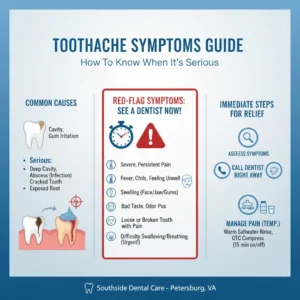
- Toothache: Rinse the mouth with warm saltwater (½ teaspoon salt in 1 cup water) to clean around the sore tooth. Take an over-the-counter pain reliever (ibuprofen/acetaminophen) as directed. Apply a cold compress to the cheek if there’s swelling. Call your Petersburg dentist promptly – early treatment often prevents worse pain.
- Knocked-out tooth: Handle by the crown (top), not root. Rinse it gently (no scrubbing) and try to reinsert into the socket. If not possible, place it in a glass of cold milk or saliva, and seek immediate dental care (chances to save it are best within 1 hour).
- Chipped or broken tooth: Save any pieces in milk, rinse mouth, and avoid biting on the rough edge. Use sugarless gum or dental wax (from a pharmacy) to cover sharp edges temporarily. See a dentist as soon as possible to prevent infection or further damage.
- Lost filling or crown: The site is sensitive. Use over-the-counter dental cement (sold for temporary relief) or sugar-free gum to fill the cavity until your appointment. Keep the area clean by gentle brushing and rinsing.
- Food stuck between teeth: Floss gently; avoid using toothpicks that can break gum tissue. If swelling or pain develops, an antiseptic mouthwash rinse (chlorhexidine-containing, if available) can reduce infection risk until you see a dentist.
Being prepared can turn a dental emergency into a manageable situation. In Petersburg, Southside Dental Cares and other local clinics often offer same-day emergency slots; do not delay seeking professional help for urgent issues.
Internal Link Suggestions
For Petersburg, VA-based readers, a local practice would naturally link to relevant service pages. Example anchor texts and site paths for a Petersburg dental practice could include:
| Anchor Text | Target URL Path |
| Gum disease prevention tips | /gum-care |
| Cavity prevention strategies | /cavity-prevention |
| Emergency dental care | /emergency-dentistry |
| Wisdom tooth extraction services | /wisdom-tooth-extraction |
| Schedule your appointment | /contact |
These links (if placed in a local practice site) would guide readers to detailed pages on gum care, cavities, emergency services, and scheduling – reinforcing local relevance (e.g. “Petersburg, VA emergency dentistry” queries).
FAQs for Busy Professionals
Q: How often should I brush and floss if I only have 5 minutes a day?
A: Even a very busy schedule allows for two 2-minute brushing sessions (morning and night) plus a quick floss in one of them. The ADA and CDC recommend brushing twice a day and cleaning between teeth at least once daily. Splitting this into short sessions (e.g. 2 min AM, 2 min PM, ~1 min floss) covers the essentials. Portable floss picks make the flossing step fast, and carrying a travel kit ensures you never “skip” brushing entirely.
Q: Is using floss picks or a water flosser enough?
A: Floss picks and water irrigators are great time-savers. ADA guidance emphasizes cleaning between teeth daily. Floss picks reach between teeth like string floss. Water flossers remove debris and plaque in hard spots. Some studies note they can’t replace traditional floss for every case, but they are much better than skipping interdental cleaning altogether. If you use a water flosser (especially for braces), pair it with occasional regular flossing for best results. The key is consistency: use whatever device you will stick with every day.
Q: What if I only brush once a day?
A: Brushing only once leaves plaque on teeth for too long, raising cavity and gum disease risk. Studies show brushing twice is significantly more protective. If time is an issue, ensure at least the “once” is thorough (2 full minutes) and try to add a quick cleanup after lunch or dinner (even a short rinse with water or mouthwash) to help. Ultimately, reorganizing your schedule to brush both morning and night is best.
Q: Can I just use mouthwash instead of brushing at work?
A: Mouthwash is a helpful adjunct but not a substitute for brushing. It can kill bacteria and freshen breath, but it won’t remove plaque like brushing and flossing do. Use a mouthwash swish (especially one with fluoride) when you can’t brush, but plan to brush at home for 2 minutes as soon as possible.
Q: What quick snacks help protect my teeth on the go?
A: Snacks low in sugar and high in water content are best. For example, cheese, nuts, crunchy raw vegetables or whole fruits (like apples) stimulate saliva and mechanically clean teeth. Chewing sugar-free gum (especially with xylitol) after eating also helps neutralize acids. Avoid sticky/chewy or very sweet snacks that cling to teeth. Drinking water after snacking is always beneficial.