
Managing Oral Swelling After Dental Treatment: A Petersburg, VA Guide
Executive Summary: After any dental procedure (extraction, implant, oral surgery), swelling is a normal inflammatory response. It typically peaks around 48–72 hours and then gradually subsides. Effective management includes home remedies (cold packs, head elevation, salt-water rinses) and appropriate pain relief, following a clear aftercare plan for each post-op period (first 24 hours, days 2–3, and the following weeks). Most swelling is mild and resolves with these measures, but severe or worsening symptoms (fever, intense pain, spreading redness or drainage) may signal infection or complications. This comprehensive guide (targeted to Petersburg, VA residents and visitors of Southside Dental Cares) covers causes and timeline of post-dental swelling, evidence-based home remedies, medication options (OTC and prescription), diet/activity advice, special considerations, procedure-specific tips, and red flags for urgent care. For detailed routine instructions, see our [Home Care Instructions] and [Oral Surgery] pages.
Causes and Timeline of Swelling
Swelling after dental work is caused by tissue trauma and inflammation. Any extraction, implant surgery, wisdom tooth removal, or other oral surgery can trigger this response. Normally, swelling builds for 2–3 days and then begins to resolve. Expect moderate facial puffiness and jaw soreness around post-op day 2–3; gradually it should diminish over the next week. Mild bruising or stiffness may accompany swelling. In general, pain and swelling will increase for 72 hours after surgery and then start to settle. A small amount of swelling or discomfort can persist for 1–2 weeks, especially if the procedure was complex or involved multiple teeth.
Immediate Home Remedies (First 1–3 Days)
- Cold Compresses: Apply an ice pack or cold gel pack to the cheek near the treatment area for 20 minutes on, 20 minutes off, during the first 24–36 hours. This constricts blood vessels and slows inflammation.
- Head Elevation: Keep your head elevated (e.g. extra pillows) when resting or sleeping, especially on day 1. This prevents blood pooling that can worsen swelling.
- Warm Saltwater Rinses: Starting 24 hours after surgery, gently rinse your mouth 2–3 times daily with a solution of 1 teaspoon salt in 8 oz warm water. Saltwater soothes tissues, reduces bacteria, and can help ease swelling.
- Gentle Heat (After 36h): If swelling persists beyond the first day, switch to moist heat packs (warm, damp cloth) in 20‑minute cycles. Heat after the initial 36 hours can promote circulation and reduce edema.
- Oral Analgesics: Take over-the-counter pain relievers such as ibuprofen (Advil/Motrin) or naproxen (Aleve), which reduce inflammation, and/or acetaminophen (Tylenol) for pain. NSAIDs like ibuprofen are first-line and often combined with acetaminophen for better relief. Tip: Chew food on the opposite side to avoid pressing the surgical area and causing pain.
- Topical Gels: Apply a numbing gel (e.g. Orajel) on the gums for short-term relief of tenderness if needed. Use sparingly.
Related Resource: For a comprehensive dental aftercare checklist and routine, see our [Home Care Instructions] page.
Pain Management & Medications
Analgesics (Pain Relievers): NSAIDs are the cornerstone of post-op pain management. According to ADA guidelines, NSAIDs (ibuprofen, naproxen) are more effective for dental pain than opioids and should be the first-line therapy. For example: Ibuprofen 400–600 mg every 6 hours, or naproxen 220 mg every 8–12 hours, often provides excellent relief. Acetaminophen (325–1000 mg) can be taken every 4–6 hours up to 3000–4000 mg/day (watch for liver safety). Combining ibuprofen (400 mg) plus acetaminophen (1000 mg) every 6 hours has been shown to relieve pain better than opioids. If pain is severe, dentists may prescribe short-term stronger NSAIDs or an opioid/analgesic combo (e.g. hydrocodone/acetaminophen) only if first-line treatment is insufficient. Always follow dosing instructions and avoid “just-in-case” opioid scripts.
Antibiotics: Routine antibiotics are not indicated for simple post-op swelling. The ADA recommends against using antibiotics for most routine dental pain or mild swelling. Antibiotics (e.g. amoxicillin 500 mg TID, or clindamycin 300–450 mg QID if penicillin-allergic) are prescribed only if there are signs of infection or systemic involvement: fever, spreading redness, foul drainage, or failure to improve. Do not self-prescribe; take the full course if given.
Steroids: For significant swelling (especially after complex oral surgery or wisdom teeth removal), a dentist/oral surgeon may use corticosteroids (e.g. dexamethasone 4–10 mg) perioperatively. Research shows short-term steroids consistently reduce postoperative edema and trismus. Doses and regimen vary, but one common approach is a Medrol Dose Pack (methylprednisolone taper) starting just before surgery. Side effects (hyperglycemia, delayed healing) are minimal with a single short course, but steroids should be used only under professional guidance.
Summary Table – Common Medications: Below is a comparison of typical medications for managing post-dental pain/swelling. (Always confirm dosing and interactions with a dentist or pharmacist.)
| Medication | Typical Dose (Adult) | Onset | Duration | Common Side Effects |
| Ibuprofen (NSAID) | 400–800 mg every 6–8 hr (with food) | ~30 min | 6–8 hours | GI upset/bleeding, kidney strain, ↑bleeding risk |
| Naproxen (NSAID) | 220–500 mg every 8–12 hr | ~60 min | 12–16 hours | GI upset, kidney strain, ↑bleeding risk |
| Acetaminophen | 325–1000 mg every 4–6 hr (max 3000–4000 mg/day) | 30–60 min | 4–6 hours | Hepatotoxicity in overdose, rash |
| Hydrocodone/Acetaminophen | e.g. 5/325 mg every 4–6 hr (opioid) | ~30 min | 4–6 hours | Drowsiness, constipation, addiction risk, nausea |
| Amoxicillin (antibiotic) | 500 mg every 8 hr or 875 mg every 12 hr | 1 hr | 8–12 hr | GI upset, yeast infection, allergic rash |
| Clindamycin (antibiotic) | 300–450 mg every 6–8 hr | 1–2 hr | 6–8 hr | GI upset, risk of C. difficile colitis |
| Dexamethasone (steroid) | 4–10 mg once (preop) or taper | 1–2 hr | ~36–72 hr | Mood changes, ↑blood sugar, immunosuppression |
Citations: NSAID first-line; acetaminophen benefits; combination NSAID/APAP efficacy; steroid efficacy; ADA antibiotic guideline.
When Swelling Is Normal vs. Concerning
Normal: Mild to moderate swelling that peaks by day 2–3 and then improves is typical. Discomfort should gradually lessen. Minor bruising or a little temporary tingling is normal. You should be able to swallow and breathe normally.
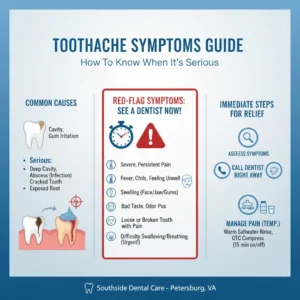
Watch for Red Flags: Certain signs suggest an infection or complication requiring prompt care:
- Worsening/Prolonged Swelling: If swelling worsens after 72 hours instead of subsiding, or persists intensely beyond day 5–7.
- Severe Pain: Pain that increases after the second day (rather than improving) may indicate dry socket (after extraction) or infection.
- Fever or Malaise: Any fever or flu-like feeling suggests systemic involvement (infection).
- Redness/Heat: Spreading redness, warmth, or streaks on the face/jaw.
- Pus or Foul Odor: Yellow/green discharge or bad taste/odor from the wound.
- Trismus: Inability to open the mouth significantly (trismus) can accompany severe swelling.
- Nerve Changes: New numbness or tingling beyond the surgical area.
- Bleeding: Uncontrolled bleeding (gushing or not stopping after 1 hour with pressure).
If any of these occur, seek dental care immediately. Petersburg patients can contact Southside Dental Cares at (804) 732‑8557 for after-hours guidance or go to the nearest emergency department (e.g. Bon Secours Southside Medical Center in Petersburg).
Step-by-Step Aftercare Plan
A daily timeline checklist helps ensure nothing is missed. Use extra pillows and avoid exertion in the first day; start gentle rinsing on day 2; progress your diet and hygiene as healing permits. Below is a sample timeline after a routine extraction or implant. Adjust based on your dentist’s instructions.
| Timeframe | Aftercare Steps |
| First 0–24 Hours | – Bite on gauze for 30–60 minutes to stop bleeding. Change gauze as needed. <br> – Rest quietly; keep your head elevated above heart level. <br> – Apply ice pack (20 min on, 20 off) to the face for swelling. <br> – Avoid rinsing, spitting, or using straws (these can dislodge the clot). <br> – Eat only cool liquids (water, smoothies, broth); avoid hot/spicy foods and alcohol. <br> – Take prescribed pain meds (NSAID or acetaminophen) before numbness wears off. |
| 24–48 Hours | – Begin gentle warm saltwater rinses (½–1 tsp salt/8oz) after 24h, 2–3× daily to clean the area. <br> – Transition to moist warm compresses if swelling persists beyond day 1. <br> – Continue soft diet: yogurt, applesauce, pudding, mashed potatoes, soup (not hot). <br> – Brush teeth gently, avoiding the surgical site; do not spit forcefully. <br> – Avoid tobacco and strenuous activities (no heavy lifting, bending, or exercise). |
| Days 3–7 | – Swelling should peak around day 2–3 and then begin to diminish. <br> – Keep using saltwater rinses and continue regular gentle brushing and flossing other teeth. <br> – Eat soft, nutritious foods (soups, soft grains, bananas, eggs); avoid crunchy, hard, or sticky foods for ~1–2 weeks. <br> – If sutures were placed, attend the follow-up to have them removed or checked. <br> – It’s normal to feel tenderness; manage with OTC meds as needed. Monitor for improvement. |
| 1–2 Weeks | – By week 2, most swelling/pain should be significantly reduced. <br> – Resume normal hygiene (brush and floss all areas carefully). <br> – Introduce more solid foods as tolerated, but avoid chewing directly on healing sites until fully healed. <br> – Contact your dentist if any issues persist (e.g., delayed healing, any worrisome symptoms). |
Sources: Post-extraction recovery guidelines. Adjust details for implants or surgeries based on your doctor’s instructions. For more on typical aftercare steps, visit our [Home Care Instructions] page.
Dietary and Activity Recommendations
- Diet: Stick to soft, non-spicy foods for at least the first week. Good choices include cold foods like yogurt or smoothies, lukewarm soups, mashed potatoes, pudding, scrambled eggs, and oats. Avoid hot beverages (can increase swelling), alcohol, caffeine, seeds, nuts, chips, and anything you have to chew hard or crunch. No straws! The suction can dislodge the clot. Continue a nutritious diet rich in protein and vitamin C to aid healing.
- Hydration: Drink plenty of water. Staying hydrated supports tissue healing and reduces swelling.
- Activity: Rest on day 1. Avoid bending, lifting heavy objects, or strenuous exercise for 48–72 hours, as these raise blood pressure and can intensify bleeding/swelling. Light walking is fine. Gradually return to normal activity after 3 days, unless advised otherwise. Do not drive or operate machinery while on strong pain medications.
Oral Hygiene Aftercare
Maintaining oral hygiene helps prevent infection. However, be careful around the surgical site:
- Gentle Brushing: You may resume brushing your teeth the night of surgery or the next morning, but brush gently and avoid the extraction area. Do not use a regular mouthwash initially; it can irritate the area. Continue flossing other teeth normally.
- Salt Rinses: As noted, begin saltwater rinses 24h after surgery to clean the area. Swish gently and spit carefully (do not swish too vigorously).
- Special Rinses: If prescribed chlorhexidine or other medicated mouth rinse, use as directed (often after the first day) to prevent infection.
- No Smoking: Avoid all tobacco/vaping – it greatly delays healing, increases pain, and can cause dry socket (loss of clot).
Special Populations
- Children: Use appropriate pediatric dosages of pain medications and supervise their care closely. Never give aspirin to children. Avoid codeine or tramadol for those under 12 (contraindicated). Provide soothing foods they like.
- Elderly: Healing may be slower. They may have other health conditions or medications (e.g. bisphosphonates for osteoporosis) that affect bone healing. Encourage adequate nutrition (protein, vitamin C). Closely monitor for infection or dehydration. Check with the dentist about any heart or joint antibiotic prophylaxis needs.
- Immunocompromised (e.g. diabetics, cancer patients): High infection risk. Your dentist may prescribe prophylactic antibiotics. Emphasize rigorous oral hygiene and follow all instructions precisely. Monitor swelling and healing carefully.
- Anticoagulant/Antiplatelet Users: Many patients on blood thinners can safely undergo dental surgery without stopping meds. Local pressure (gauze, sutures, hemostatic agents) usually controls bleeding. Do not alter your medication without medical advice. If a special regimen is needed, your dentist will coordinate with your doctor.
Swelling After Specific Procedures
- Extractions: (See [home care instructions].) Swelling is common after pulling teeth, especially wisdom teeth. The guidelines above apply. Pain usually peaks at days 2–3. Beware dry socket: if pain suddenly worsens around days 3–5, see your dentist.
- Implants: Similar to extractions, plus possible bone graft. Apply ice first day, then switch to warm compress after 36–48h. Avoid pressure on the implant site. Rinse gently but do not disturb stitches. Follow your surgeon’s protocol carefully.
- Root Canals: Non-surgical root canal therapy usually causes minimal external swelling, unless an infection was present. If your jaw is swollen after a root canal, it could be from pre-treatment infection. Medications and warm compresses can help. Report any persistent swelling to your endodontist.
- Oral/Maxillofacial Surgery: More extensive surgeries (jaw surgery, cyst removals) often produce greater swelling. Your surgeon may give steroids and stronger antibiotics/pain meds. Continue ice for 48h, then heat, and stick to bland diet as advised. You may need 1–2 weeks to feel normal. See our [Oral Surgery] page for general oral surgery aftercare practices.
Red Flags and When to Seek Help
If you notice any of the following, get urgent care or contact an oral surgeon/dentist immediately:
- Intense Swelling/Pain: Swelling that rapidly worsens after day 3, or extremely firm, hard swelling under the jaw/neck.
- Infection Signs: High fever, chills, or feeling very unwell. Visible pus or bleeding that won’t stop. Foul taste or odor in the mouth. Spreading redness on face or neck.
- Difficulty Breathing/Swallowing: If swelling impedes your airway or you have trouble swallowing, call 911 at once.
- Persistent Bleeding: If bleeding soaks through gauze after an hour of firm pressure, seek medical help.
- Nerve Symptoms: New numbness of the tongue, lip, or chin lasting beyond the numbness of anesthesia.
Local Emergency Contacts (Petersburg, VA): For non-life-threatening dental emergencies, Petersburg patients can contact Southside Dental Cares’ after-hours line at (804) 732‑8557. Local hospitals such as Bon Secours Southside Medical Center (Petersburg) provide emergency services for severe facial infections. Otherwise, call 911 or go to the nearest emergency department if breathing or severe infection symptoms occur. (Exact local dental hotlines can be obtained from your provider.)
Comparison of Swelling Management Methods
To recap the strategies for managing swelling, here’s a quick comparison of common home-care methods, how they help, and when to use them:
| Method | How It Helps Reduce Swelling | When & How to Use |
| Cold Compress (Ice) | Constricts blood vessels to limit inflammation and numb pain. | Use in first 24–48 hours after procedure. Apply to cheek 15 min on, 15 min off, with a cloth barrier. |
| Warm Compress | Increases circulation to disperse fluid build-up and soothe muscles. | Begin after 48 hours (once swelling peaks). Apply gentle heat 15 min on/off (warm, not hot). |
| Head Elevation | Prevents blood from pooling at the surgical site, reducing pressure and puffiness. | Sleep with extra pillows or a recliner for 2–3 nights. Keep head above heart level whenever resting. |
| Saltwater Rinse | Keeps the area clean and fights bacteria, which helps prevent infection and excess inflammation. | Start 24 hours after surgery. Rinse gently with ½ tsp salt in warm water 2–3 times daily (don’t spit forcefully). |
| Anti-inflammatory Medication | Reduces the body’s inflammatory response, directly decreasing swelling and relieving pain. | Take ibuprofen or other NSAIDs as directed by your dentist (usually regularly for first 1–3 days, if medical condition allows). |
| Rest & Soft Diet | Physical rest lowers blood pressure (less bleeding/swelling), and soft foods avoid mechanical irritation of tissues. | Take it easy for 48 hours – no heavy exercise. Eat soft, cool foods and stay hydrated; avoid straws and spicy/hard foods. |
As you can see, cold vs. heat, activity vs. rest – it’s all about timing and balance. Cold and rest initially, then gentle heat and a return to routine as you improve. By combining these methods, you’re addressing swelling from all angles and ensuring a smoother recovery.
FAQs (JSON-LD Schema)
Dental Surgery Recovery: Frequently Asked Questions
How long does swelling last after dental surgery?
It’s normal for swelling to peak 2–3 days after surgery, then gradually improve over about a week. Minor swelling or stiffness can linger for 1–2 weeks. Note: If swelling keeps getting worse after 3 days, contact your dentist immediately.
What home remedies reduce dental swelling?
- Cold Compresses: Apply on/off (20 min) during the first day.
- Elevation: Keep your head elevated and get plenty of rest.
- Salt Water Rinse: After 24 hours, rinse gently with warm salt water.
- Medication: Use NSAIDs (ibuprofen, naproxen) as directed.
- Moist Heat: May be helpful after the first 36 hours.
When is swelling after a tooth extraction an emergency?
Seek medical help if swelling is severe or worsens after 72 hours, or if you experience:
- High fever or intense pain
- Pus discharge
- Difficulty swallowing or breathing
- Uncontrolled bleeding
What should I eat after oral surgery?
Stick to soft, cool, or lukewarm foods such as:
Yogurt, smoothies, soup, mashed potatoes, pudding, and eggs.
Avoid: Hot, spicy, or crunchy foods for 1–2 weeks. Do not use straws.
How do I manage pain after a tooth extraction?
Try OTC NSAIDs like ibuprofen (400–600 mg) or naproxen (220–500 mg) every 6–8 hours. Only use prescription opioids if NSAIDs are insufficient and only for short-term use. Always follow your dentist’s specific dosing guidelines.