Visiting the dentist for a cleaning can be intimidating if you’re not sure what to expect. You might be worried about pain, the strange tools, or feeling embarrassed about your teeth. At Southside Dental Care, we understand these concerns and want to put your mind at ease. In this article, we’ll walk you through the dental cleaning process step by step, so you know exactly what happens during a dental cleaning and why it’s so important for your smile. Regular cleanings twice a year help prevent gum disease and cavities, keeping your teeth healthy and your breath fresh.
Dental cleanings aren’t just about polishing your teeth for looks – they’re a key part of preventive care that keeps your mouth healthy. Even with good brushing and flossing, plaque can harden into tartar that you can’t remove at home. Professional cleanings remove this buildup and bacteria brushing alone can’t reach. If you have dental anxiety, let us know – we offer gentle care (including comfort options like sedation if needed) to help you feel calm. By understanding the cleaning steps ahead of time, you can feel more confident and prepared for your visit.
Why Are Regular Dental Cleanings Important?
Skipping your routine cleanings might seem harmless, especially if you’re not feeling any pain – but plaque and tartar are constantly forming on your teeth. Plaque is a sticky film of bacteria, and if it’s not thoroughly cleaned, it hardens into tartar (calculus) that irritates your gums and can lead to gum disease and tooth decay. Regular professional cleanings remove these stubborn deposits and prevent small problems from turning into big ones. In fact, maintaining clean teeth with routine dental visits has benefits beyond just a pretty smile. Good oral health has been linked to a lower risk of other health issues like heart disease and diabetes. Simply put, a healthy mouth contributes to a healthy body.
Another reason these cleanings matter is they allow your dental team to catch issues early. During your visit, the dentist or hygienist will examine your mouth for signs of cavities, gum inflammation, or other concerns that you might not notice at home. Early detection means simpler, less costly treatment. And of course, a professional cleaning leaves your teeth feeling smooth and looking brighter by removing surface stains. It’s a win-win for your oral health and confidence in your smile. For the healthiest teeth, combine diligent home brushing/flossing with regular in-office cleanings – both are essential parts of keeping your smile in top shape.
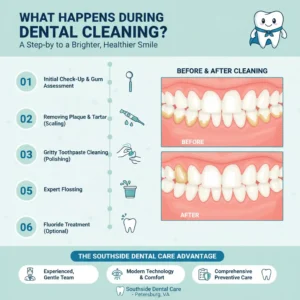
What Happens During a Dental Cleaning? (Step-by-Step)
Every dental office has its own slight variations, but at Southside Dental Care we follow a thorough, gentle procedure. Here’s a step-by-step guide to the typical dental cleaning process and what to expect during your appointment:
Step 1: Initial Check-Up and Gum Assessment
Your visit will usually start with a physical exam of your mouth. A dental hygienist (or sometimes the dentist) will take a small mirror and inspect your teeth and gums. They’ll be looking for any obvious problems like cavities, broken fillings, or signs of inflammation such as redness and swelling in the gums. As part of this initial gum assessment, we gently measure the spaces between your teeth and gums to check for any periodontal (gum) disease. This exam is quick and painless. If the hygienist finds anything concerning – for example, severe gum inflammation or a loose tooth – they might pause and consult the dentist before proceeding. Otherwise, if everything looks okay, the cleaning moves forward.
Step 2: Removing Plaque and Tartar (Scaling)
A dental hygienist uses an ultrasonic scaler on a patient’s teeth during a cleaning. The vibrating tip and water spray help break apart hardened tartar while keeping the tooth cool. Scaling is often the longest part of a dental cleaning, but it shouldn’t be painful. Using the mirror for guidance, the hygienist will use special instruments called scalers to methodically remove plaque and tartar from your teeth, especially around the gumline and in between teeth. You’ll hear scraping or buzzing sounds – that’s completely normal. Stubborn tartar deposits may require a bit of focused scraping or an ultrasonic scaler (a device that uses vibration and water) to dislodge them. Rest assured, this process is done carefully and typically does not hurt. If you do feel any sharp discomfort, let the hygienist know; we can always adjust technique or apply a numbing gel for sensitive areas.
Keep in mind that tartar (hardened plaque) cannot be removed by brushing or flossing at home once it’s formed – it can only be removed with professional tools at the dental office. That’s why regular cleanings are so crucial. The more tartar buildup you have, the more time this scaling step may take as the hygienist carefully cleans each affected spot. If it’s been a while since your last cleaning, your gums might bleed a bit during this process – that’s a sign of inflammation. Our team will be as gentle as possible to minimize any soreness.
Step 3: Gritty Toothpaste Cleaning (Polishing)
Once all the plaque and tartar have been scaled away, the next step is to polish your teeth. The hygienist will use a slow-speed handpiece with a soft rubber cup on the end, along with a special gritty toothpaste (called prophylaxis paste). It might make a low humming or grinding noise as it spins. This “tooth polishing” feels like a thorough scrubbing on your teeth. The paste has a sandy texture which helps buff away minor surface stains and any remaining plaque particles, leaving your enamel smooth. You can often choose the flavor of the polishing paste (mint, cherry, etc.), but all varieties have a mild abrasive quality that cleans and shines your teeth without damaging them. This deep polishing is safe to do twice a year as part of your cleaning. (It’s not the same as your regular toothpaste, so you wouldn’t replicate this step at home – scrubbing too hard at home can wear your enamel.) After a good polish, your teeth will literally feel clean to your tongue – a slick, glossy feeling.
Step 4: Expert Flossing
Whether or not you floss diligently at home, the hygienist will perform a professional flossing next. They expertly thread floss between every pair of teeth, hugging it along the sides of each tooth to clear out any plaque or paste left from the cleaning. This isn’t a judgment on your flossing skills – it’s a final quality check to make sure every area is debris-free. The hygienist might also observe if certain areas bleed during flossing, which can point out gum areas that are a bit inflamed or spots you need to pay more attention to in your home flossing routine. Getting a thorough flossing from a professional also ensures that no gritty polish material is stuck between teeth. If your gums are healthy, this step should be easy and painless; if you do have some gum sensitivity, you might feel minor discomfort or see a little blood, but this is normal and will improve as your gums get healthier.
Step 5: Rinsing
Now that the cleaning and polishing are done, you’ll be asked to rinse out your mouth. Often the rinse contains a bit of fluoride or an antiseptic mouthwash to give an extra fresh finish. You’ll swish it around and spit into a small sink or suction device. This rinse removes any remaining debris, leaving your mouth feeling refreshed. It’s a nice final cleanse after all the scraping and polishing. Don’t be alarmed if the rinse you’re given is a different flavor or has a slight foamy texture – it’s all part of making sure your teeth are as clean as possible.
Step 6: Fluoride Treatment (Optional)
The last step is optional but highly recommended, especially if you are prone to cavities or have sensitive teeth. A fluoride treatment helps strengthen your tooth enamel and protect against cavities for months after the cleaning. If you opt for fluoride, the hygienist will apply it either as a flavored foam/gel or a varnish. For foam or gel, they’ll fill a soft tray that fits over your teeth (like a mouthguard) and let it sit on your teeth for about a minute. For fluoride varnish, they’ll paint it directly onto your teeth with a tiny brush. Fluoride varnish sets quickly (it hardens upon contact with saliva), so you can eat and drink right away afterwards. If you had the fluoride foam or gel, you’ll be asked not to eat or drink anything for 30 minutes after the treatment to allow the fluoride to fully absorb into your enamel. Don’t worry – the flavors are usually pleasant, and this final step is quick and easy. It’s like a protective shield for your teeth until your next visit.
At this point, the cleaning portion is complete! If this appointment is also your periodic exam, the dentist will come in next to do a thorough check of your teeth and gums, review any X-rays (if taken), and discuss any findings or recommendations (for example, if you might need a filling or have any questions about your oral hygiene). The dentist’s exam usually only takes a few minutes if everything looks healthy. After that, you’re all set until your next visit!
Regular Cleaning vs. Deep Cleaning: What’s the Difference?
Most patients will receive a routine dental cleaning (also called prophylaxis) like the process described above. But if you have symptoms of gum disease (such as deep gum pockets, bone loss on X-rays, or a lot of tartar below the gums), you might hear your dentist recommend a deep cleaning instead. Here’s a quick comparison of a routine cleaning versus a deep cleaning:
| Aspect | Routine Dental Cleaning (Prophylaxis) | Deep Cleaning (Scaling & Root Planing) |
| Purpose | Preventive maintenance for healthy teeth and gums; removes plaque and tartar above the gum line to prevent disease. | Therapeutic treatment for gum disease; removes plaque and tartar that have collected below the gum line, around tooth roots, to halt infection. |
| When Needed | Every 6 months (for most patients). It’s recommended for everyone as a routine part of oral care to keep gums healthy. | Only when there are signs of periodontitis (moderate to severe gum disease), such as deep pockets between teeth and gums or heavy tartar under the gums. |
| Procedure | Performed by hygienist; involves scaling above the gums, polishing, flossing, and evaluation of oral health. Generally no anesthesia needed. | Performed by hygienist or dentist; involves scaling beneath the gums and root planing (smoothing the root surfaces). Gums are numbed with local anesthetic for comfort. May be done quadrant by quadrant (¼ of the mouth at a time). |
| Visits & Time | Usually one visit of ~45–60 minutes for a standard cleaning. | Often 2 visits of ~1 hour each (half the mouth per visit) or more, since cleaning deep under the gums is detailed work. Follow-up periodontal maintenance every 3-4 months may be recommended afterward. |
| Aftercare | Minimal – you can resume normal brushing/flossing same day. Teeth feel smooth and clean. | Mild soreness or gum tenderness for a day or two is common. Over-the-counter pain relievers or saltwater rinses help. Since gum infection is being treated, good home care and follow-ups are critical. |
| Insurance Coverage | Typically classified as preventive care – most dental insurance plans cover 100% of routine cleanings twice a year. | Classified as a periodontal treatment (scaling & root planing). Insurance coverage may vary, often requiring a co-pay or multiple visits; it might need proof of gum disease diagnosis. It’s more extensive than a regular cleaning, but very important for saving teeth from advanced gum disease. |
Safety and Aftercare Tips
A routine dental cleaning is a very safe procedure – there’s no drilling, no needles (unless you need deep cleaning or have a special issue), and it’s non-invasive. You might have a bit of tooth sensitivity or gum tenderness afterward, especially if a lot of tartar was removed or if your gums were already inflamed. This is normal and temporary. At Southside Dental Care, we take extra care to be gentle, but here are some aftercare tips to ensure you stay comfortable and get the most out of your cleaning:
- Wait 30 Minutes After Fluoride: If you received a fluoride treatment (gel or foam), avoid eating or drinking for at least half an hour afterwards. This gives the fluoride time to absorb and strengthen your teeth. (If we applied fluoride varnish, you’re free to eat and drink immediately – just skip crunchy or hot foods for a few hours.)
- Manage Post-Cleaning Tenderness: It’s normal for your gums to feel a little sore or for your teeth to be slightly sensitive if a lot of buildup was cleared away. Rinsing gently with warm salt water can soothe your gums. If needed, you can take an over-the-counter pain reliever like ibuprofen to ease any discomfort. This should only last a day or two.
- Maintain Good Oral Hygiene: Keep up your daily preventive care routine at home to prolong the benefits of your cleaning. Brush your teeth twice a day with a fluoride toothpaste and floss once a day to prevent new plaque from building up. Cleanings are most effective when paired with consistent home care – you’ll notice your teeth stay cleaner and your gums won’t be as tender at your next visit.
- Watch for Unusual Symptoms: If you experience anything out of the ordinary after your cleaning – for example, gum pain that doesn’t subside after a couple of days, significant swelling, or bleeding that continues at home – be sure to call us. Complications are very rare, but we’re here to help if you have concerns.
- Schedule Your Next Visit: Regularity is key. Before you leave, make sure to schedule your next checkup and cleaning (typically in 6 months). Staying on track with routine visits means easier cleanings and a healthier mouth. If you ever have to reschedule, our front desk will gladly help you book a cleaning appointment at a convenient time.
The Southside Dental Care Advantage
Choosing the right dental office can make all the difference in how comfortable you feel during a cleaning. At Southside Dental Care, we pride ourselves on offering an experience that keeps patients coming back with a smile. Here’s why our clinic stands out:
- Experienced, Gentle Team: Our dentists and hygienists are not only highly trained in the latest dental techniques, but they also truly care about your comfort. We take a patient-first approach, explaining each step of the cleaning and checking in with you to ensure you’re at ease. If you’re anxious or have sensitive teeth, we can adjust our techniques or discuss mild sedation options. Your relaxation and trust are our top priorities.
- Modern Technology for Comfort: We use advanced tools like ultrasonic scalers that make cleanings more efficient and comfortable (these devices gently vibrate to break up tartar, reducing the need for heavy scraping). Our clinic also employs digital X-rays with minimal radiation, intraoral cameras to show you what we see, and other state-of-the-art tech to enhance your care. This means a faster, more precise cleaning process with great results.
- Comprehensive Preventive Care: A dental cleaning at Southside isn’t an isolated service – it’s part of our comprehensive approach to keeping your entire mouth healthy. During your visit, we also perform a thorough exam, an oral cancer screening, and a gum health evaluation. If we spot any issues, we’ll inform you and tailor a treatment plan or home-care tips. Our goal is to address small concerns early and keep you away from bigger problems. We also educate you on maintaining oral health between visits, because preventive education is a big part of our ethos.
- Comfortable & Friendly Environment: From the moment you walk in, you’ll notice our office feels welcoming. Our staff is friendly and approachable, ready to answer any questions you have. We understand that dental offices can cause stress for some, so we’ve designed our environment to be calming – from a cozy waiting area to offering headphones, blankets, or short breaks during the cleaning if you need them. We want you to feel at home while you’re with us.
- Your Partners in Health: At Southside Dental Care, you’re not just a set of teeth – you’re a person with individual needs and concerns. We take the time to listen to you. Do you have particular worries about your teeth? Let us know. Want advice on improving your brushing technique or diet for healthier teeth? We’re happy to help. Our team’s mission is to support your oral health goals with personalized care and genuine empathy. When you’re here, you can trust that you’re in good hands.
When you combine a caring team, modern technology, and a patient-focused philosophy, the result is a dental visit that’s refreshingly easy. We love seeing our patients leave with bright, freshly cleaned smiles and a boost in confidence about keeping up their oral care.
Conclusion & Next Steps
A professional teeth cleaning is one of the best investments you can make in your oral health. Now that you know what happens during a dental cleaning, we hope you feel more relaxed and informed about your upcoming visit. Remember that some mild discomfort (like scraping noises or a little gum soreness) is normal, but the procedure is generally painless and very beneficial. Your teeth will thank you for removing all that hidden plaque and tartar! After your cleaning, maintain those results by brushing and flossing daily, and enjoy that super-clean feeling.
At Southside Dental Care, we’re here to make the experience positive from start to finish. If it’s been more than six months since your last cleaning, or if you have any other dental concerns, don’t put it off – we’re ready to help you regain a healthy smile. Feel free to give us a call or [book a cleaning] through our website to schedule your next visit. We look forward to keeping your smile bright, clean, and healthy for years to come!
Frequently Asked Questions (FAQ)
Q: Does a dental cleaning hurt?
A: No – a routine dental cleaning is generally painless. You’ll feel touch and pressure, and hear some scraping or buzzing, but the process shouldn’t cause sharp pain. The hygienist uses gentle techniques and may even numb a specific spot if it’s extremely sensitive (though that’s rarely needed). If you do feel discomfort at any point, let your hygienist know right away. We work carefully to ensure you stay comfortable. Many patients even find cleanings relaxing once they realize it’s not scary! After the cleaning, your gums might be a little tender and your teeth may feel sensitive for a short time, especially if a lot of tartar was removed – but this is normal and goes away within a day or two.
Q: How often should I get a dental cleaning?
A: For most people, dentists recommend a cleaning every six months (twice a year). This frequency keeps plaque and tartar at bay and allows us to catch any developing issues early. Some individuals with specific conditions might benefit from more frequent cleanings – for example, if you have a history of periodontal (gum) disease, you may need cleanings every 3-4 months to maintain gum health. Likewise, people who build up tartar very quickly, smokers, diabetics, or those with weakened immune systems might be advised to come in more often. During your checkup, our dentist will assess your situation and let you know the ideal recall interval for you. Sticking to a regular cleaning schedule is one of the simplest ways to prevent tooth decay and gum problems down the road.
Q: What’s the difference between a regular cleaning and a deep cleaning?
A: A regular cleaning (prophylaxis) is the standard procedure for patients with generally healthy gums. It cleans above the gum line to remove plaque, tartar, and surface stains, and it’s part of routine preventive care. A deep cleaning, on the other hand, is a specialized procedure for treating gum disease. Also known as scaling and root planing, a deep cleaning goes below the gum line: we numb your gums and thoroughly clean the tooth roots, removing bacteria and tartar from deep periodontal pockets. Essentially, a regular cleaning maintains health, while a deep cleaning treats infection. You’d only need a deep cleaning if you have gum disease with symptoms like deep pockets, bone loss, or lots of tartar under the gums. It’s more involved than a normal cleaning (often done in sections of the mouth over multiple visits), but it can stop gum disease from progressing. If you’re unsure which one you need, don’t worry – our dental team will evaluate your gums (with X-rays and measurements) and recommend the appropriate treatment. Regular cleanings are for keeping a healthy mouth healthy, whereas deep cleanings are a targeted therapy to restore gum health when there’s a problem.
By understanding what happens and why each step is done, we hope you feel more empowered to take charge of your dental health. A clean, healthy smile is within reach – and we’re here to help you achieve it comfortably!