
Dental anxiety is very common. People often feel fear or stress at the thought of visiting the dentist, whether from past painful experiences or simply fear of the unknown. It’s important to remember that you’re not alone – most dental offices (like Southside Dental Cares in Petersburg, VA) are used to nervous patients and have many ways to help you feel comfortable. This post will explain why dental fear happens and give you ten practical, reassuring tips to calm your nerves before (and during) your visit. We’ll cover psychological causes of fear, effective relaxation and preparation techniques (like deep breathing and visualization), and when to talk about sedation dentistry or child-friendly care. By following these strategies, you can approach your appointment with confidence, knowing that your comfort is the top priority.
Identify What Scares You
Everyone’s “fear of the dentist” has its own reasons. Some people dread needles, others fear pain or loss of control, and past bad experiences can also create anxiety. Psychologists call severe dental fear “odontophobia,” and it can include triggers like traumatic previous treatments or even embarrassment about oral health. The first step to beating anxiety is recognizing what specifically worries you. Is it the sound of the drill? Fear of injections? Not knowing what’s happening? Once you pinpoint your fear (or fears), you can address them directly.
“It’s very common for people to fear going to the dentist,” notes Harvard Health. When that fear is severe enough to stop you from going, it’s called a phobia (odontophobia). Many anxious patients find that acknowledging their fears – for example, fear of needles or past painful visits – and discussing them with their dentist can start to reduce anxiety. Dentists are trained to help with these concerns, not to judge you.
Why this helps: Understanding the root of your anxiety takes away some of its power. If you realize, for example, that the whir of the drill makes you tense, you can use noise-canceling headphones (see tip #6) or ask for more local numbing. If it’s fear of pain, remind yourself that modern anesthesia is very effective. Just naming the fear (and sharing it with your dentist) helps reduce the “unknown” and makes you feel more in control.
Communicate Openly with Your Dentist
One of the best ways to reduce anxiety is to talk about it. Before or during your appointment, tell your dentist and hygienist that you feel nervous. Let them know exactly what worries you. Dentists and their teams expect this, and they can adjust their approach to help. You might agree on a “hand signal” to pause the procedure if you feel uncomfortable, for example.
“Speak to your dentist and explain your feelings,” advises the UK’s NHS. “Try breathing and relaxation techniques…take headphones with you and listen to music.” The NHS recommends that anxious patients work with the dental team to make the visit as relaxed as possible. Similarly, Dental Associates’ specialists note that being “transparent about your fears allows your dentist to walk you through the procedure…in a way that is helpful to you and can calm your nerves.”
Your dentist can explain each step before it happens, use extra numbing gel to minimize pain, or offer sedation options (see tip #8) if needed. They can also stop at any time if you signal them. Research shows that open communication and understanding exactly what to expect significantly lowers anxiety. Remember: your dentist’s job is to give you pain-free, gentle care – they’re on your side, not judging you.
Schedule and Prepare Carefully
Planning ahead can make a big difference. Pick a good appointment time and conditions to reduce stress. For instance, avoid scheduling on a day when you’re already rushed or under pressure at work. Many patients feel calmer with early-morning appointments (so they aren’t nervous all day). Also, take care of your physical state before the visit:
- Get a good night’s sleep before the appointment. Being well-rested helps your mind stay clear and calm.
- Eat something light (if allowed). Hunger can increase irritability or shakiness; if the procedure allows, have a healthy, moderate meal beforehand. (Just follow any fasting instructions your dentist gives for sedation.)
- Avoid caffeine and high-sugar foods right before your visit. These can raise your heart rate and jitteriness, making anxiety worse. Instead sip herbal tea or water, which soothe nerves.
One dentist’s blog recommends scheduling “on a day where you won’t be really busy or in a rush,” and even watching what you eat: “Before your appointment, avoid foods with high sugars or caffeine, as they may make you more jittery.” Drinking a calming caffeine-free tea (like chamomile) can help relax you in the lead-up.
Also plan logistics: know the exact address (Petersburg, VA clinic), how to get there, and aim to arrive a bit early so you can sit in the waiting room and breathe before going back. Preparation can turn a chaotic morning into a calm one.
Bring a Support Person
Don’t be afraid to ask someone to come with you. A supportive friend or family member can wait with you or even sit in the exam room if allowed. Their familiar presence can be very comforting. They can hold your hand, talk soothingly, or help listen and remember post-care instructions. Studies show that having a trusted companion can reduce the feeling of helplessness and stress during medical procedures.
For children, especially, a parent or guardian in the room can make a huge difference. (And even adults often appreciate a friend nearby.) The idea is simply: you don’t have to face this alone. A friend’s voice or smile can distract your mind from what’s happening in your mouth. Afterward, they can celebrate with you, which makes the whole thing feel more positive (see tip #9).
Practice Relaxation Breathing and Mind-Body Techniques
Deep, slow breathing is one of the most powerful tools to calm your nervous system. When we’re anxious, we tend to breathe shallowly and fast, which actually feeds more adrenaline into our body. By deliberately slowing your breath, you signal your brain that you’re safe. A simple method is the “4-7-8” breath: inhale quietly through your nose for 4 seconds, hold that breath for 7 seconds, then exhale slowly through your mouth for 8 seconds. Repeat until you feel calmer.
Harvard Health recommends “focused breathing and meditation” as proven ways to slow your heart rate and ease dental anxiety. Even before you enter the clinic, sit quietly and take 5–10 deep breaths. During the appointment, when a tense moment approaches, pause and take a few more calm breaths.
Other mind-body exercises include progressive muscle relaxation (tense and then release each muscle group, from head to toe) and visualization (imagine yourself in a peaceful, happy place like a beach or garden while the procedure is happening). Many anxious patients use these with success. For example, the Dental Associates blog notes “Practice a deep breathing technique… key component to staying calm and relaxed.”. You can even bring a stress ball or quietly tense/release your fists under the bib if it helps release tension.
Some dentists play soothing music or nature sounds to help you stay relaxed. If you feel tense in the chair, close your eyes for a moment and concentrate on your breath going in and out. Inhale positive calmness; exhale the fear. Your dental team will support you taking moments like this – it’s your body’s natural way to cope.
Use Distractions
Distraction is a powerful coping strategy. Take your mind off the drill by bringing something to focus on besides the treatment:
- Headphones & music or podcasts: Listening to your favorite music or a calming guided meditation can drown out noises and make the time pass faster. Bring earbuds and let the clinic know you plan to play music.
- Watching a video/movie: Some modern dental offices have ceiling TVs or VR headsets. If available, these can transport you to another world.
- Fidget objects: A stress ball, soft toy, or a small fiddle gadget for your hands can redirect nervous energy.
NHS Scotland explicitly recommends taking headphones and music to “act as a distraction and take the focus away from any noises which make you anxious.”. This makes sense: if your mind is engaged in a podcast or song, it’s harder to pay attention to fear. Distraction combined with calming breathing (tip #5) can greatly reduce anxiety during the procedure.
Stay on Top of Regular Care
Surprisingly, avoiding the dentist often makes anxiety worse over time. The longer you wait, the more you worry about what might be wrong — and dental issues can worsen, leading to more invasive treatments later. Instead, aim for routine check-ups every 6 months if possible.
Dentists report that patients who visit regularly become more comfortable with the environment and process. What was once novel becomes routine. Each visit builds trust with the dentist. You start to know what the sounds and sensations feel like (with numbing), and that familiarity reduces fear. As the Dental Associates team points out, “When you see your dentist every six months, there are fewer unknowns and the process feels routine.”
Preventive care also means you’re less likely to need emergency work (like a sudden painful abscess or complex root canal). Fewer emergencies mean less need for urgent, scary visits. In short: the best way to avoid big, anxiety-provoking procedures is to catch issues early with regular care.
Consider Sedation Dentistry
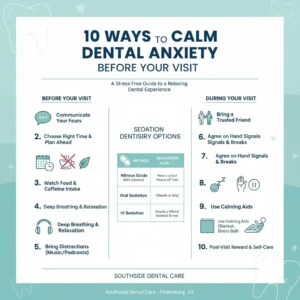
If anxiety is severe, sedation dentistry is a safe, proven option. Sedation dentistry uses medications to help you relax before or during treatment. You stay conscious (so you can follow simple instructions) but feel drowsy and calm. Most patients report little to no memory of the procedure afterward, which helps break the fear cycle. Common sedation options include:
- Nitrous Oxide (Laughing Gas): You breathe a gas through a mask. It takes effect in minutes, creating a gentle, happy relaxation. It’s very safe and wears off quickly. You’ll be awake, but relaxed and able to drive home immediately after.
- Oral Sedation: A pill (like a low-dose Valium) taken about an hour before your appointment. It makes you very sleepy and relaxed. You’ll still be awake to communicate if needed. You must have someone drive you home afterward.
- IV Sedation: Medication delivered through an IV for a deeper relaxation. Many patients doze off and feel little anxiety at all. This is often used for longer or more complex procedures (like oral surgery). Under IV sedation you’re closely monitored by trained staff.
According to Cleveland Clinic, “In sedation dentistry, you’re awake and able to respond to questions, but you don’t notice pain… Your dentist may recommend it if you have fear of needles, severe anxiety, or for long procedures”. In our own Oral Surgery services, “comfort is a priority” – local anesthesia and sedation options are available to keep you relaxed.
Sedation is safe when administered by trained professionals. Most side effects (like grogginess or dry mouth) fade quickly. In fact, sedation can “make it possible for you to get the dental care you need, even if you have severe dental anxiety,” and even let the dentist work more efficiently while you’re calm.
Discuss sedation with your dentist before the visit. They will review your health history and choose the safest option for you. Many anxious patients are pleasantly surprised at how much calmer and pain-free sedation dentistry makes the experience. In Petersburg, our practice offers sedation dentistry (via our Oral Surgery services) to help patients remain comfortable throughout treatment.
Adopt a Positive Mindset (Visualization & Rewards)
Training your mind to think positively about the appointment can reduce anxiety. Visualize success: imagine walking out of the office with a sense of relief and achievement. Remind yourself why you are there – to improve your health and smile – not to cause you harm. Positive self-talk can be surprisingly effective: for example, quietly repeat phrases like “I am calm,” “I can handle this,” or “This appointment will be over soon.”
You might also treat yourself afterward as a reward. Plan something nice for after the visit – like a favorite meal, a movie, or coffee with a friend. Focusing on that reward gives your mind something pleasant to look forward to, which can reduce pre-appointment dread. (One dental practice even suggests planning a fun outing or dessert after the visit as a little celebration of your bravery.)
Research shows that anticipating a reward can help manage stress hormones. And celebrating your success, no matter how small, reinforces confidence for next time. So after your check-up or procedure, be sure to acknowledge how well you handled it and enjoy your reward!
Special Strategies for Children and Teens
Children (and sometimes teens) often feel more intense dental fear than adults. Fortunately, pediatric dentistry is all about making kids comfortable from the first tooth. If you’re helping a child cope with anxiety, or if you yourself had a fear of the dentist as a kid, consider these points:
- Early and Friendly Introductions: The American Academy of Pediatric Dentistry recommends a child’s first visit by age 1. Regular, gentle visits help children see the dentist as a friendly place. Pediatric offices often have colorful, play-focused waiting rooms to set a positive tone.
- Positive Communication: Our Pediatric Dentistry team uses special training to make kids feel safe – explaining each step in simple, reassuring words, and letting them touch a tooth or tools under supervision. This “behavioral guidance” approach (like a mother explaining what she’s going to do, then doing it slowly) helps children feel in control and reduces fear.
- Sedation Options for Children: In some cases, dentists may use child-friendly sedation. For example, nitrous oxide (laughing gas) is often used with anxious kids because it is quick-acting and wears off quickly. Cleveland Clinic notes that if “your child is anxious about a procedure, their dentist may give them liquid sedation like midazolam syrup (Versed®)”. These medications calm the child (sometimes leading them to nap through the treatment) without the stress of an injection.
- Rewards and Praise: Dental offices often have sticker charts, small prizes, or fun toothbrushing goodies for kids who are brave during a visit. Plan a special treat or positive activity after their appointment to reinforce the idea that going to the dentist can have a happy ending.
If your child (or teen) is particularly fearful, talk to us. We can use the resources of our Pediatric Dentistry practice to create a calm, positive experience. Sometimes even simple acts (letting a child choose a flavor of fluoride gel or giving them a chance to sit in the big chair first) make a big difference. For extreme cases, a referral to a pediatric sedation specialist might be appropriate. The key is to catch anxiety early and use compassionate, child-specific strategies so the fear doesn’t become permanent.
(Internal link: For more on how we care for young smiles and ease their fears, see our Pediatric Dentistry page.)
Conclusion and Next Steps
Remember, fear of the dentist is real and natural, but it shouldn’t keep you from getting the care you need. By understanding your fears, using relaxation and distraction techniques, and talking openly with your dentist, you can greatly reduce anxiety. Sedation dentistry offers another safe avenue if needed, and our pediatric experts ensure even children feel at ease.
At Southside Dental Cares in Petersburg, VA, we prioritize patient comfort above all. Whether that means giving you extra numbing, adjusting our pace, or offering sedation, we’ll work with you every step of the way. Don’t let anxiety stand between you and a healthy smile. Schedule your appointment today and let us help make it a calm, positive experience. We look forward to welcoming you and answering any questions – your comfort is our commitment.
Is Sedation Dentistry Right for You?
Sedation can be a wonderful solution, but it’s not necessary for everyone. How do you know if you’re a good candidate? You might consider sedation dentistry if:
- Your dental fear is severe or phobic. If you’ve been avoiding the dentist for years due to intense fear, or you experience panic attacks at even the thought of dental work, sedation can make the experience manageable.
- Local anesthesia isn’t enough for you. Some patients still feel anxious or mildly panicked even when fully numbed. Sedation addresses the anxiety itself, not just pain.
- You have a strong gag reflex or sensitive teeth. Gagging or extreme sensitivity can make dental work uncomfortable. Sedation helps relax your reflexes and nerves so treatment is easier.
- Multiple or lengthy procedures are needed. If you need a lot of work done (for example, several fillings or extractions), sedation allows the dentist to perform more in one session while you remain relaxed. This means fewer visits for you.
- You have special needs or difficulty sitting still. Patients with certain cognitive or physical conditions, or even children who are very fearful, often benefit from sedation to ensure they can receive care safely. (For pediatric cases, our doctors will discuss the best approach with parents individually.)
Before proceeding with any sedative approach, our dentist will evaluate your overall health and medical history. Safety is paramount: certain medications or health conditions might influence which sedation method is appropriate. For instance, if you have severe asthma or obstructive sleep apnea, we might avoid deeper sedation, or if you’re pregnant, we’ll likely stick to minimal nitrous oxide if anything. We will always explain the risks and benefits, and obtain your informed consent. Rest assured, when used appropriately sedation dentistry is very safe – our team is trained to administer these medications and monitor your vital signs throughout the procedure. The goal is to find the lightest level of sedation that keeps you comfortable. Many patients are pleasantly surprised at how well they handled an appointment with a little pharmaceutical help. It can truly be the bridge that allows you to receive care you’ve been postponing due to fear.
If you’re unsure whether sedation is right for you, come in for a consultation (there’s no pressure to undergo treatment that same day). We can talk about your options and even do a short trial of nitrous oxide so you can experience how it makes you feel. Ultimately, the decision is yours – we’re here to guide you and ensure that, sedated or not, you have a positive, stress-free experience.
Safety and Aftercare Tips for An Anxiety-Free Experience
Taking care of yourself during and after your dental visit will help keep anxiety at bay and ensure a smooth recovery from any procedure. Use this handy checklist to stay safe and comfortable:
- ✔️ Follow pre-appointment instructions: If we’ve prescribed an oral sedative for you, take it exactly as directed (usually at a specified time before your visit). Arrange safe transportation in advance – you’ll need a friend or family member to drive if you take stronger anti-anxiety medication or undergo IV sedation (no driving yourself afterward).
- ✔️ Communicate during the visit: Don’t hesitate to speak up if you’re feeling uncomfortable or need a break (using the hand signal you and your dentist agreed on). We’re here to listen. Sometimes just saying “I’m a bit anxious” out loud can prompt additional reassurance from the team.
- ✔️ Use calming aids in the chair: Feel free to bring your stress ball, wear your headphone for music, or ask for a blanket if you’re cold. We want you as cozy as possible. Some patients also use aromatherapy (a drop of lavender oil on a tissue) to have a calming scent during the appointment – this is welcome in our office as long as it’s not overpowering for others.
- ✔️ After the procedure – follow all instructions: Your dentist will give you specific aftercare guidelines if you had a treatment like an extraction or filling. Follow them closely, as doing so will prevent complications and reduce any post-treatment pain (which in turn reduces future anxiety). Take prescribed medications (like pain relievers or antibiotics) as directed. If you received sedation, you may be groggy for a few hours – plan to rest at home for the remainder of the day, and have someone stay with you if possible until you’re fully alert.
- ✔️ Practice good oral hygiene at home: One way to ease anxiety about future visits is to keep your teeth and gums as healthy as possible. By brushing, flossing, and perhaps using a fluoride rinse daily, you’ll reduce the chance of needing invasive treatments. That means your checkups will more likely be routine cleanings with no surprises, which can definitely help you feel more at ease next time.
- ✔️ Reflect and reward yourself: After the appointment, take a moment to acknowledge your accomplishment – you faced your fear and took care of your health! That’s something to be proud of. It can also help to plan a small reward for yourself afterward. Treat yourself to a favorite meal, watch a movie, or do any fun activity you enjoy. This positive reinforcement creates a good association with having completed the dental visit, making you more likely to feel optimistic about the next one.
By following these safety and aftercare tips, you’ll not only recover well but also build confidence. Over time, each successful visit will chip away at your anxiety, proving to yourself that you can do this and it wasn’t as bad as you feared. Our team will check on you post-visit if needed, and we’re only a phone call away for any questions or concerns after treatment.
FAQ
Q: What can I do right before my dental appointment to feel less anxious?
A: In the hour before your appointment, focus on calming activities. Take slow deep breaths (in for 4, out for 8 counts), listen to soothing music or a podcast in the car or waiting room, and remind yourself that the dentist’s goal is to keep you comfortable. Avoid caffeine, get fresh air, and if possible, arrive a few minutes early so you don’t feel rushed. Communicating with the front desk or your dentist about feeling nervous can also help them prepare a relaxed environment for you.
Q: What are common sedation options and how do they work?
A: Sedation options range from mild to stronger sedation. Nitrous oxide (“laughing gas”) is inhaled and causes a gentle state of relaxation. Oral sedation involves a pill taken before the visit to make you drowsy. IV sedation is an injection that induces a deep relax where many patients drift off to sleep. All allow you to stay conscious (except general anesthesia) but with very little anxiety or memory of the procedure. Your dentist will explain each option’s benefits. The goal is to keep you calm and pain-free so that dental work can be done safely.
Q: Are these sedation methods safe?
A: Yes. Sedation dentistry has been used for decades by trained professionals and is very safe when properly administered. We monitor your vital signs throughout the procedure. According to Cleveland Clinic, sedation can “make it possible for you to get the dental care you need, even if you have severe anxiety”. After minor side effects (like grogginess or dry mouth), patients recover quickly. Children are monitored closely for any post-sedation nausea or slow wake-up. Always discuss your medical history with us so we choose the safest plan.
Q: Can sedation dentistry be used for children?
A: Yes. Pediatric dentists often use mild sedation for anxious children. Nitrous oxide is commonly used because it works quickly and wears off fast. Sometimes a child-friendly sedative liquid (like midazolam syrup) is given for very anxious kids. We only use these when needed and with special pediatric care standards. Our pediatric team is trained to make children feel safe using gentle words and step-by-step guidance, and sedation is another tool to help children feel calm through more involved procedures.
Q: How effective are breathing and visualization techniques?
A: They can be surprisingly effective! Relaxation techniques slow down the body’s “fight or flight” response. Harvard Health reports that “relaxation exercises such as focused breathing and meditation can successfully slow your heart rate and put you at ease.”. Patients who practice deep breathing before and during the appointment often report feeling significantly calmer. Visualization (like imagining a peaceful scene) also helps shift your mind away from fear. Pairing these with distractions (music, talking to your dentist) creates a powerful anxiety-combating strategy.
Q: How can I help my child overcome dental fear?
A: Begin early and keep visits positive. Make the first visits fun and non-threatening (for example, “happy visits” where the dentist just looks or counts teeth). Read children’s books about the dentist, and role-play at home. During the visit, let your child hold a stuffed animal or squeeze a parent’s hand. Our pediatric team uses friendly explanations and may use simple sedation (like gas or medication) if needed. Praise and small rewards (stickers, toys) after the visit reinforce bravery. With a gentle approach, most children grow out of their fear quickly and even look forward to check-ups.