
Common Flossing Myths Debunked and Interdental Cleaning Facts
Executive Summary: Flossing – cleaning between the teeth – is a vital part of oral hygiene, yet many myths confuse patients. In this article, our Petersburg, VA dental team at Southside Dental Cares breaks down the truth about flossing. We address common misconceptions (like “brushing is enough” or “flossing isn’t proven”), explain why interdental cleaning matters, and describe the best tools and techniques. You’ll find evidence-based facts, practical recommendations for daily interdental care, and a comparison of flossing options. By the end, local patients will understand how to protect against cavities and gum disease with confident daily habits, and know when to see their Petersburg dentist for guidance.
Why Flossing Matters
Brushing alone cleans only about 60–70% of tooth surfaces; the narrow spaces between teeth and just under the gumline remain hidden to a toothbrush. Those interproximal areas are exactly where plaque builds up and causes cavities and gum inflammation. “Interdental cleaning helps remove debris and plaque between teeth,” explains the American Dental Association (ADA), reducing the chance of tooth decay and gum disease. In fact, plaque not removed by brushing can harden into tartar, which leads to gingivitis and eventually more serious periodontal (gum) disease. A review of multiple studies found that brushing plus flossing yields a significantly greater reduction in gum inflammation (gingivitis) and plaque than brushing alone. Even though long-term trials are limited, experts note that “the absence of proof isn’t proof of absence” – flossing is a low-risk, low-cost habit with real benefits.
Southside Dental Cares in Petersburg, VA emphasizes preventative care. Our Preventive Dental Plans recommend brushing twice daily and daily interdental cleaning (flossing) to protect enamel and gums. Proper flossing physically removes the sticky plaque film that leads to cavities and red, swollen gums. Over time, consistent flossing helps prevent cavities between teeth and reduces the risk of gum disease – a leading cause of adult tooth loss. In short: brushing is crucial, but it isn’t enough on its own.
Debunking Common Flossing Myths
Even well-intentioned patients hear misinformation about flossing. Below we tackle the most common myths with facts and evidence:
Myth: “Brushing is enough – I don’t need to floss.”
Fact: This is false. Toothbrushes can’t reach between teeth or under the gumline. The ADA notes that “even the best brushing only cleans about 60% of your tooth surfaces,” leaving tight spaces where plaque accumulates. Those hidden spots are high-risk for cavities and gum inflammation. The CDC likewise advises: “Brush your teeth twice a day and floss between your teeth to remove dental plaque”. In fact, Southside Dental’s Cavity Prevention plan explicitly lists daily flossing alongside brushing as key to protecting enamel. Brushing can clean the broad surfaces of teeth, but interdental cleaning – whether with floss, interdental brushes, picks, or water flossers – is required to remove food and bacteria in between. Long-term studies show that combined brushing and flossing significantly reduce plaque buildup and gingivitis compared to brushing alone. In practice, our Petersburg dentists find that patients who skip flossing build more tartar (hard plaque) near the gums and between teeth. Bottom line: Brushing is essential, but skipping interdental cleaning leaves about 40% of surfaces uncleaned. To fully protect your smile, incorporate a daily interdental cleaner.
Myth: “There’s no proof flossing works, so it’s optional.”
Fact: This myth sprang from reports noting a lack of large, long-term trials proving flossing’s benefits. However, health experts caution that “absence of proof isn’t proof of absence.” The ADA and CDC still strongly recommend flossing. ADA guidance explicitly states that using floss (or another interdental cleaner) in addition to brushing “is more effective than brushing alone at reducing plaque and gingivitis.”. A 2019 Cochrane review found low-certainty evidence that flossing or interdental brushes plus brushing may reduce gingivitis and plaque more than brushing alone. Similarly, a 2011 Cochrane review found flossing added a “statistically significant albeit clinically small reduction” in gingivitis when added to brushing. Another analysis reported that regular flossing (5 days per week) significantly lowers cavities between teeth.
Importantly, experts agree flossing is low-risk and easy. The National Institutes of Health (NIH) notes that “flossing is low-cost, low-risk, and has potential … health benefits” and suggests that patients continue flossing while more research is done. The evidence gap is often due to study design issues (short duration, difficulty tracking real habits). But many dentists (including ours in Petersburg) have observed that patients who floss regularly maintain healthier gums. In summary, authorities conclude that while rigorous trials are limited, the biological rationale and the available data support flossing as an important preventive measure.
Myth: “Floss only when something is stuck between my teeth.”
Fact: This misunderstands the goal of flossing. Floss is meant as a preventive tool, not just an emergency fix. Yes, floss removes trapped food, but more importantly it scrapes away daily plaque (an invisible film of bacteria) that brushes don’t reach. If you wait until you feel debris wedged between teeth, plaque has been accumulating unchecked. The ADA and NIH both emphasize flossing daily to remove this sticky film before it hardens into tartar. In other words, make flossing part of your routine like brushing, not something you only do after meals. Even if you don’t see anything between your teeth, microscopic bacteria are there – remove them daily to keep cavities and gingivitis at bay.
Myth: “If my gums bleed when I floss, I should stop flossing.”
Fact: Bleeding is not a sign that flossing is bad; in fact it often means you need to floss more. Gums bleed when they are inflamed, usually due to plaque buildup. As NIH health experts explain, “red or swollen gums that bleed easily can be a clear sign that flossing … is needed”. When you start flossing (or resume after a break), bleeding might occur for a week or two as gums heal. Stick with gentle flossing: curve the floss in a C-shape, gently rub up-and-down along each tooth. Over time, the inflammation will subside and bleeding should lessen. If bleeding persists for many weeks despite daily gentle flossing, that could signal moderate gum disease, so schedule a check-up. But don’t quit flossing entirely at the first sign of blood; instead, improve technique or ask our Petersburg hygienists for a demonstration.
Myth: “Flossing will make my teeth loose or create gaps.”
Fact: Proper flossing cannot loosen teeth or push them apart. Any widening between teeth that appears after flossing is usually due to gums recovering from swelling, not the floss itself. Gum disease can cause gums to swell around teeth; flossing reduces that swelling and reveals the true spacing. In reality, healthy gums snugly support teeth, so seeing normal spacing after plaque is cleared is actually a good sign of gum health. The ADA affirms that correctly done flossing is safe for gums. Only aggressive, sawing motions with floss can damage gum tissue. So use a gentle technique (don’t snap floss down hard) and you should not worry about gaps. If you have concerns, ask our Petersburg dentists to check your technique – we’ll ensure you’re using floss correctly to clean without harm.
Myth: “Flossing causes gum recession or damage.”
Fact: This myth is mostly false. Flossing itself does not cause gums to recede. In fact, flossing helps prevent the gum disease that does lead to recession. Removing plaque daily stops the infection that can erode bone and gum around teeth. However, if someone “whacks” the floss harshly or uses improper technique, they can irritate or nick the gums, which is uncomfortable but rare. The remedy is simple: use gentle, careful motions. Curve the floss like a C and slide it up and down each tooth gently under the gumline. If flossing ever feels like it’s cutting into your gums, pause and rinse – you might need instruction on proper pressure. Our experienced hygienists in Petersburg can demonstrate the correct method. In short, flossing itself protects gum health; only incorrect use can cause minor irritation, which is easily corrected.
Myth: “I use mouthwash or a water flosser – that means I don’t need string floss.”
Fact: While mouthwash and water flossers are helpful additions, they do not fully replace flossing for most people. Antibacterial rinses can kill germs on accessible surfaces, but they can’t physically scrape away the sticky plaque stuck between teeth. Likewise, water flossers (oral irrigators) use a stream of water to flush out debris, and they have been shown to significantly reduce plaque and gingival bleeding. But most dental experts recommend using a water flosser in addition to floss or brushes, not as a sole substitute. The goal is to ensure mechanical removal of plaque from all sides of every tooth. The ADA notes water flossers are very useful for people with braces, bridges, or dexterity issues, but “look for the ADA Seal on products” and remember that any interdental cleaner (floss, brush, or irrigator) must be used regularly. Ultimately, choose the tool that you will actually use daily. If you hate flossing with string, try an interdental brush or a water flosser – they can be as effective or even superior for some situations. But if possible, learn to do string floss correctly, since it is the most versatile for tight contacts.
In summary, the truth is that cleaning between teeth is an essential habit – whether with floss, picks, brushes or water jets – and skipping it leaves almost half of your tooth surfaces vulnerable to decay and disease. Don’t be fooled by myths: ADA, CDC, NIH and our Petersburg dental team all agree that daily interdental cleaning is key to a healthy smile.
Interdental Cleaning Tools: Options and Evidence
If flossing with string isn’t working for you, there are several effective interdental cleaners:
- Dental Floss (string): Traditional floss (nylon or PTFE filament) can reach tight spaces. It’s effective for most people with normal gum health. ADA notes there is no difference in plaque removal between waxed vs unwaxed floss; focus on technique instead.
- Floss Picks / Flossers: These are pre-threaded floss holders or disposable picks. They can be easier for kids or patients with limited dexterity, but they limit the technique (you can’t always wrap them around the tooth like string floss). One study found floss picks were “at least as good as” standard floss for plaque removal in a single use.
- Interdental Brushes: Tiny cone- or cylinder-shaped brushes designed for between teeth (often called “proxy brushes”). They come in different sizes. The ADA and Cochrane evidence suggest interdental brushes may remove more plaque than floss when gaps are present. They are especially recommended if you have larger spaces (from gum recession or orthodontic work). Our Petersburg hygienists often recommend brushes for patients with braces or wide contacts because they clean robustly and are easy to use.
- Water Flossers (Oral Irrigators): These devices shoot a jet of water between teeth. Studies have found water flossers significantly reduce plaque and gingival bleeding. A 2024 systematic review reported that most studies “favored water flossers over dental floss in plaque reduction” and found them very effective at cleaning hard-to-reach areas. Water flossers are excellent for braces, implants, or anyone who finds string floss difficult. They tend to be more expensive initially but are easy to use and safe.
Below is a quick comparison of these tools:
| Tool | Effectiveness | Ease of Use | Cost | Best Use-Case |
| String Floss | High (if done correctly) – removes plaque between tight contacts. | Moderate; requires dexterity and proper technique. | Low ($) (packs of floss are inexpensive). | Ideal for very tight spaces, normal gum health. Standard of care recommended by ADA. |
| Floss Picks/Flossers | Good – easier reach behind last molars, but less flexible contact with teeth. | High; convenient single-hand use for most people. | Low ($) for a pack of picks. | Great for children, travelers, or patients with limited dexterity. (Good hygiene tool when used daily). |
| Interdental Brushes | Very high when properly sized – often more effective than floss for plaque removal. | Moderate; need to choose correct size; easy on larger gaps. | Low to moderate ($) for brush pack; reusable. | Best for braces, implants, bridges, or if gums have receded creating gaps. |
| Water Flosser | High – studies show similar or greater plaque reduction than floss. | High; gentle and easy, especially for braces or implant cleaning. | High ($$$ initial device, but long-term use). | Excellent for braces, dental work, or people with arthritis; good daily habit enhancer. |
Each tool can effectively clean interdental areas when used correctly and regularly. The ADA Seal or reputable brands should be your guide for quality products.
Choosing the Right Tool for You
Everyone’s mouth is different. Use the flowchart below to guide your choice of interdental cleaner:
- If you have braces, bridges or implants, water flossers or floss threaders (which help guide floss under wires) are often the easiest and most effective choice.
- If your teeth have large gaps, interdental brushes are typically best. They clean broadly and stimulate gums. Dental floss can be used too, but brushes may remove more plaque in wider spaces.
- If you have trouble manipulating string floss (due to arthritis, kids, or simply dislike), try floss picks (picks with pre-strung floss) or a water flosser. These are easier to hold and still clean effectively.
- For very tight, normal contact areas, traditional string floss will reach places other tools may not. If you can manage it, the ADA still recommends floss once a day.
- Tip: Experiment with different tools. The “best” interdental cleaner is one you will use every day. You can even switch tools: for example, brush and floss at night, and use a water flosser in the morning.
Whatever method you choose, consistency is key. Ask your Southside Dental hygienist for a quick demo during your next check-up to ensure you’re using your chosen tool correctly. With the right technique, any tool can help prevent plaque buildup and keep your gums healthy.
Practical Interdental Cleaning Recommendations
- Frequency: Aim to clean between your teeth at least once a day. The ADA and CDC both state daily interdental cleaning is part of good oral hygiene. Many people find flossing best at night so the mouth stays clean overnight, but choose a time that fits your routine.
- Technique for String Floss: Break off ~18 inches of floss, wrap it around middle fingers, and hold a few inches taut between thumbs/forefingers. Gently slide it between teeth using a zig-zag motion – don’t snap it. Curve the floss into a “C” against one tooth, and rub up and down to the gumline (do both sides of each contact). Replace sections of floss as it gets dirty. This “C-shape” technique cleans the tooth surface and just under the gum gently.
- Interdental Brushes: Choose a size that fits snugly without forcing. Gently insert and move back-and-forth. Change brushes when bristles bend.
- Water Flosser Use: Fill with lukewarm water, start on low pressure, and aim the nozzle at each gumline and between teeth. Sweep along gum margins slowly. Clean all around implants, bridgework, or braces.
- Alternate Tools: If one method causes pain or bleeding, try another. For instance, if string flossing is painful, a water flosser may be more comfortable. If an interdental brush hurts your gum, try a smaller size or gentle floss instead. The key is gentle but thorough cleaning, not forceful scrubbing.
- Aftercare: Rinse with water or mouthwash after flossing. Do not re-use floss strands. Most floss and interdental brushes are inexpensive – replace them as needed.
- Special Populations:
- Children: Floss as soon as two teeth touch (usually around age 2-3). At first a parent will need to do it, but by age 10–12 most kids can floss themselves. Southside Dental’s pediatric team can show caregivers how to start flossing safely.
- Adults & Elderly: It’s never too late to start flossing. Even if you haven’t flossed before, begin gradually. Expect some initial bleeding if you’ve been neglecting it – this is normal and will improve. For seniors or anyone with limited mobility, floss picks or floss threaders can be easier to use. Denture wearers should also clean any remaining natural teeth and see the dentist for advice on keeping gums healthy.
- Visit Your Dentist: Regular check-ups at Southside Dental Cares ensure any plaque you miss is professionally cleaned. Our Petersburg dental team provides personalized “Oral Hygiene Coaching” to teach brushing and flossing techniques. We’ll also identify if you need special tools (for example, an interdental brush for an implant or a water flosser for braces).
Evidence-based Fact: According to the ADA and a review of trials, any form of daily interdental cleaning (string floss or alternatives) plus brushing will give you better gum health than brushing alone. A community survey even found that plaque scores were lowest in those who used interdental brushes along with brushing. In the heart of Petersburg, following these practices – along with Southside Dental’s preventive care (fluoride, sealants, cleanings) – will keep your smile strong.
Summary
Flossing myths can lead to confusion and skipped flossing sessions, but the science is clear: cleaning between your teeth every day is essential for oral health. Brushing alone misses almost half of your tooth surfaces; only interdental tools can clean those spots. Dental authorities (ADA, CDC, NIH) and our Southside Dental dentists unanimously recommend daily flossing or equivalent interdental cleaning, as it significantly reduces plaque and gingivitis.
For Petersburg, VA residents, the key takeaways are:
- Floss once daily (use whatever tool you’ll stick with) to remove plaque and prevent cavities.
- Don’t quit if gums bleed – that’s a sign to floss more gently and consistently.
- Choose tools to fit your needs: floss picks or water flossers for ease, interdental brushes for braces or large gaps.
- Get professional advice: our gum care services and cavity prevention program emphasize interdental cleaning as part of your routine.
By debunking myths and adopting the right interdental cleaning technique, you can protect your smile for life. Southside Dental Cares in Petersburg is committed to guiding each patient to the healthiest habits. If you have any concerns or need a personalized plan (for example, tailored advice on flossing or alternative tools), just ask our friendly team at your next visit.
Sources: Authoritative dental and public health sources were used, including the American Dental Association (ADA), Centers for Disease Control and Prevention (CDC), National Institutes of Health (NIH), and recent peer-reviewed research. Key references include ADA guidelines on flossing, CDC oral health recommendations, and studies on interdental cleaning tools. Southside Dental Cares’ own patient education pages on Gum Care and Cavity Prevention helped ensure local context and consistency with our Petersburg practice’s preventive strategies.
How to Floss Properly (Step-by-Step Guide)
Flossing shouldn’t be painful or intimidating. Using the right technique will protect your gums and make flossing more effective. Here’s a simple step-by-step guide to floss like a pro:
- Take Enough Floss: Start with about 18 inches of floss (about the length from your hand to your shoulder). Wind most of it around one middle finger and the rest around the opposite middle finger. This gives you a clean section to use for each tooth.
- Gentle Insertion: Hold the floss taut between your thumbs and forefingers. Gently guide it between your teeth using a back-and-forth rubbing motion. Never snap the floss down into your gums, as that can hurt or cut the tissue. If your contacts are tight, move slowly or use a thinner floss – do not force it.
- C-Shape and Slide: When the floss reaches the gumline, curve it around one tooth in a “C” shape. Slide it up and down the side of the tooth and just under the gum edge. This hugs the tooth to remove plaque from the gum pocket. Then curve and clean the adjacent tooth side. Make sure you go below the gumline gently – that’s where a lot of plaque hides.
- Use a Clean Segment for Each Tooth: As you move from tooth to tooth, unwind a fresh section of floss from your fingers. Using a clean piece for each space helps you avoid transferring plaque or bacteria to new areas.
- Don’t Forget the Molars: Remember to floss the back sides of your last molars. These outer surfaces trap plaque too, and skipping them means leaving bacteria behind.
- Be Consistent: Floss once a day (the time of day doesn’t matter – whenever fits your routine is fine). It might feel awkward at first, but it gets easier with practice. If you feel mild soreness or see a little bleeding initially, that’s usually normal for unaccustomed gums – it should improve after a week of regular flossing as your gums get healthier. If pain or heavy bleeding persists beyond a week, contact your dentist for advice.
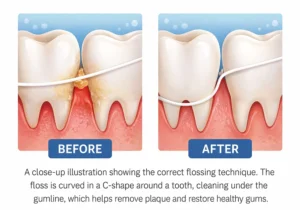
By following these steps, flossing will become a quick, routine part of your day. If you ever feel unsure, our friendly hygienists at Southside Dental Care are happy to do a hands-on demo and share expert pointers. The goal is to floss effectively without causing discomfort – and we’ll help you get there.
Aftercare and Safety Tips (Checklist)
Flossing is generally safe and beneficial, but keeping a few tips in mind will ensure you get the most out of it without hurting your gums. Here’s a handy checklist for flossing do’s and don’ts:
- ✅ Do be gentle: Use a slow, sawing motion to get the floss between teeth, and slide it under the gumline with care. If you feel pain, you may be flossing too harshly – gentle pressure is all that’s needed to scrape away plaque.
- ✅ Do floss daily: Consistency is key. Regular flossing helps prevent the gum inflammation and bleeding that happen when plaque sits for too long. Skipping days allows plaque to harden into tartar, which can irritate gums and is much harder to remove.
- ✅ Do use the right tools: Choose a floss or interdental cleaner that works for you. If you have braces, use orthodontic floss threaders or a water flosser to get between wires. If standard floss is tough to handle, try floss picks or interdental brushes. The right tool is one that makes you comfortable enough to do it every day.
- 🚫 Don’t “saw” into your gums: Never snap the floss down or drag it roughly. This can cut or irritate your gum tissue. If your gums bleed due to injury, rinse your mouth with warm salt water and be gentler next time.
- 🚫 Don’t panic if you see blood: A little bleeding when you first start flossing or if you haven’t flossed in a while is common. It usually means your gums are inflamed from plaque. Keep at it – gentle daily flossing will make the bleeding stop as your gums heal. However, do contact us or your dentist if bleeding is heavy, painful, or doesn’t improve after a week of consistent flossing.
- 🚫 Don’t substitute brushing for flossing: Brushing and flossing work together for complete oral hygiene. One should not replace the other. Likewise, mouthwash alone won’t remove plaque between teeth. Stick to a routine of “brush and floss” for best results.
By following this checklist, you’ll ensure your flossing routine is safe and effective. Over time, flossing will feel as second-nature as brushing. Remember, healthy gums shouldn’t ache or bleed with regular care – so these tips will help keep your gums comfortable. For more personalized guidance or flossing tips tailored to your mouth, our team at Southside Dental Care is always here to help.
Frequently Asked Questions (FAQ)
Q1: Do I really need to floss every day if I brush twice a day?
A: Yes. Brushing twice daily is important, but it can’t reach between teeth the way floss (or other interdental cleaners) can. Plaque forms in those tight gaps every day. Flossing daily removes this hidden plaque before it hardens or causes gum irritation. If you only brush, you’re leaving a significant portion of your tooth surfaces uncleaned, which can lead to cavities between teeth and gum disease over time. Think of flossing as the finishing touch to complete the job that brushing starts – both are necessary for a truly clean, healthy mouth.
Q2: What if my gums bleed or hurt when I floss?
A: If you notice a little bleeding when flossing, especially if you’re new to it or inconsistent, it’s often a sign of inflammation from plaque, not that flossing is harming you. Gently continue flossing daily and within about a week you should see the bleeding reduce as your gums get healthier. Make sure you’re using proper technique – don’t snap the floss, and curve it around the tooth rather than digging into the gums. Mild soreness should also improve with regular care. If your gums remain very tender or bleed a lot even after a week of correct flossing, let your dentist know. It could be a sign of gingivitis that may need a professional cleaning. In short, a little bleeding isn’t a reason to stop – it’s a reason to keep flossing consistently. And if flossing is painful, talk to your dentist; we can ensure you’re doing it right or suggest alternatives like water flossers to keep you comfortable.
Q3: Can I use a water flosser or interdental brushes instead of flossing?
A: Absolutely – the key is that you clean between your teeth daily, using whatever tool you will stick with. Water flossers and interdental brushes are effective at removing plaque and debris, and some studies even show interdental brushes can remove more plaque than floss in larger spaces. If you have braces, bridges, or find string floss awkward, these alternatives can be a godsend. Many patients use a combination: for example, brushing, plus water flossing, plus occasional traditional flossing in tight spots. Everyone’s mouth is different, so you should use what works best for you. Just remember, rinsing alone isn’t enough – you need that physical removal of plaque. So whether it’s a jet of water between your teeth or a tiny brush or a piece of floss, be sure to get in between every day. And if you’re not sure which method is best, our dentists can guide you on choosing the right tool for your needs. The bottom line: some interdental cleaning is non-negotiable – how you do it is up to you!