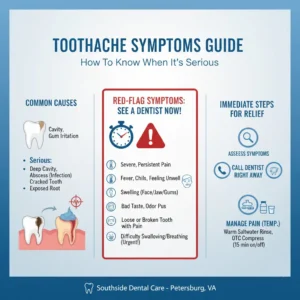

For sudden tooth pain: rinse with warm salt water, floss gently either side of the tooth to remove trapped food, take ibuprofen if you can take it safely, and hold a cold compress against the outside of your cheek for 15 minutes at a time. Do not place aspirin on the gum and do not apply heat. Then call a dentist — painkillers buy hours, not a cure.
Toothache has a habit of starting at nine in the evening or on a Saturday. This is what to do in the hours between the pain starting and getting into a dental chair, which symptoms mean you should not wait until morning, and what we can do once you arrive.
First 20 minutes: what actually helps
- Rinse with warm salt water. Half a teaspoon of salt in a cup of warm water, swished for 30 seconds. It clears debris and calms inflamed gum tissue.
- Floss around the sore tooth, gently. A surprising share of “toothache” is a popcorn husk or a fibre of meat wedged under the gum. If that is the cause, relief is immediate.
- Take an anti-inflammatory. Ibuprofen works better than paracetamol for dental pain because most of it is inflammatory. Follow the dose on the packet, and skip it if you have been told to avoid NSAIDs — stomach ulcers, kidney problems, blood thinners, or pregnancy without medical advice.
- Cold on the outside of the cheek. Fifteen minutes on, fifteen off. It reduces swelling and dulls the pain.
- Sleep propped up. Lying flat increases blood pressure in the head and makes throbbing worse. An extra pillow genuinely helps you get through the night.
What to avoid, even though the internet suggests it
- Aspirin held against the gum. It burns the tissue and leaves a chemical ulcer on top of the original problem. Swallow painkillers; do not pack them.
- Heat on the face. Warmth expands blood vessels and, if there is an abscess, encourages the infection to spread.
- Leftover antibiotics. A partial course from a previous illness will not clear a dental abscess and encourages resistance. Antibiotics also do not fix the source — the tooth still needs treatment.
- Pushing through with a numbing gel for days. Benzocaine gels mask pain for 20 minutes and delay the appointment that solves it.
- Chewing on that side. Give the tooth a rest until it is seen.
When it is an emergency tonight, not a problem for Monday
Call for urgent care, or go to an emergency room if you cannot reach a dentist, when you have any of these:
- Swelling of the face, jaw or under the eye, especially if it is spreading.
- Difficulty swallowing, breathing, or opening your mouth. This is a medical emergency — go to the emergency room.
- Fever alongside the toothache.
- A knocked-out adult tooth. See the section below; time matters more here than in any other dental situation.
- Bleeding that will not stop after 20 minutes of firm pressure.
- Trauma to the jaw or teeth that no longer meet properly.
Pain alone, without swelling or fever, is usually safe to manage overnight — but it still needs an appointment as soon as the office opens.
The specific emergencies, and what to do
Knocked-out permanent tooth
Pick the tooth up by the crown, never the root. Rinse it briefly in milk or saline — not tap water, and do not scrub it. If you can, push it straight back into the socket and bite gently on a clean cloth. If not, keep it in a cup of milk (or in the patient’s own saliva) and get to a dentist within 30 to 60 minutes. Reimplantation success drops sharply after an hour. A knocked-out baby tooth is not put back — it can damage the permanent tooth developing underneath.
Broken or chipped tooth
Save any pieces in milk. Rinse your mouth with warm water and use cold on the cheek to control swelling. If a sharp edge is cutting your tongue, cover it with orthodontic wax or sugar-free gum until you are seen. Avoid chewing on that side.
Lost filling or crown
Keep the crown — it can often be re-cemented. Temporary dental cement from a pharmacy protects the tooth for a day or two; denture adhesive is a poor substitute in an emergency. Never use household glue. Avoid very hot, cold or sweet food, which will hit the exposed dentine.
Abscess: a pimple on the gum
A small bump on the gum that leaks pus and tastes foul is a draining abscess. The pain often eases when it drains, which fools people into ignoring it — the infection is still there and is now spreading through bone. Rinse with warm salt water and get seen promptly.
Pain after a recent extraction
Severe pain three to four days after a tooth comes out, often radiating to the ear with a bad taste, is usually dry socket — the protective clot has been lost. It is treated in minutes with a medicated dressing and does not resolve well on its own. Our home care instructions cover the aftercare that prevents it.
What we do when you arrive
The first job is to get you out of pain, not to sell you a treatment plan. That usually means an X-ray and an exam to find the source, then local anaesthetic and whatever gives immediate relief — opening and draining an abscess, removing decay, smoothing a fracture, or starting root canal treatment. Definitive work, such as a crown, is scheduled once you are comfortable. If a tooth cannot be saved, we explain that honestly and discuss replacement rather than rushing the decision.
Details of what we cover are on our emergency dentistry page.
Preventing the 2 a.m. version of this
Most dental emergencies are not accidents. They are small problems that were ignorable for months: a shadow on an X-ray, a hairline crack, sensitivity that came and went. Six-monthly check-ups exist to catch those while they are still cheap and painless, and a nightguard protects the teeth of anyone who grinds. If you play contact sports, a custom mouthguard costs a fraction of replacing a front tooth. See our cavity prevention page for what routine care actually prevents.
Frequently Asked Questions
Q: What is the fastest way to stop a toothache at home?
A: Rinse with warm salt water, floss around the tooth to dislodge trapped food, take ibuprofen if it is safe for you, and hold a cold compress against your cheek for 15 minutes at a time. Sleep with your head raised. These measures control pain until you can be seen; they do not treat the cause.
Q: When should a toothache send me to the emergency room?
A: Go immediately if you have difficulty breathing or swallowing, swelling that is spreading towards the eye or neck, a high fever, or uncontrolled bleeding. Those signs mean the infection has moved beyond the tooth. Ordinary tooth pain without swelling can usually wait for a dental appointment.
Q: Can I put aspirin on my gum for pain?
A: No. Aspirin is acidic and burns the gum, adding a chemical ulcer to the problem. Painkillers only work when swallowed. For dental pain, ibuprofen is generally more effective than paracetamol because it targets the inflammation.
Q: My knocked-out tooth — can it be saved?
A: Often, if you act within an hour. Hold it by the crown, rinse it in milk or saline without scrubbing, and either place it straight back into the socket or transport it in milk. Do not let it dry out. Get to a dentist immediately; every ten minutes reduces the chance of success.
Q: Will antibiotics clear up my toothache?
A: Antibiotics can slow a spreading infection, but they never fix its source. The bacteria live inside a tooth where the blood supply is dead, so no drug reaches them. Pain returns once the course ends unless the tooth is treated or removed.
Q: The pain suddenly stopped — am I fine now?
A: Not necessarily. Pain that disappears abruptly after being severe often means the nerve inside the tooth has died. The infection continues silently in the bone and typically returns as swelling weeks later. Have it checked even if you now feel nothing.
We keep time for urgent visits
If you are in pain in the Petersburg area, call (804) 732-8557 during office hours — Monday to Thursday 8am to 5pm and Friday 8am to 1pm — and we will find room for you the same day where we can. Outside those hours you can send a request and we will contact you first thing. If you have facial swelling with fever or difficulty breathing, do not wait for us; go to the nearest emergency room.