Does your child put up a fight at toothbrush time? Many parents worry about cavities and healthy smiles when their little ones refuse to brush or floss. It’s normal for kids to dislike brushing at first – the minty taste, the routine, or simply toddler stubbornness can all play a part. The good news is that with the right approach, you can turn brushing battles into healthy habits.
At Southside Dental Care, we understand the challenges of keeping kids’ teeth clean. Our pediatric dental care team specializes in gentle techniques and kid-friendly education. We’re here to help you with practical tips to protect your child’s teeth at home and ensure positive experiences during dental visits. In this article, we’ll explain why oral hygiene is so important for children and how to help kids brush in a fun, stress-free way. You’ll also learn when to schedule regular kids checkups and how Southside Dental Care can support your family’s smiles every step of the way.
Why Brushing Matters & How to Do It Right
Baby teeth may be temporary, but they matter a lot. Kids’ primary teeth help them chew and speak properly, and they hold space for adult teeth to grow in correctly. If baby teeth get cavities or are lost too early, children can experience pain, difficulty eating, or even speech problems. Poor oral hygiene can also lead to gum infections and affect how permanent teeth develop later. In short, good brushing habits protect your child’s health now and in the future.
So, how should children’s teeth be cared for? Dentists recommend brushing twice a day for two minutes each time (morning and especially before bed) and cleaning between the teeth daily once any two teeth touch. Use a child-sized toothbrush with soft bristles and age-appropriate fluoride toothpaste. Starting at birth, even before the first tooth comes in, you can wipe your baby’s gums with a clean damp cloth after feedings. Once that first tooth erupts (around 6 months), begin gently brushing it twice a day with a tiny smear of fluoride toothpaste. By age 3, most children have a full set of 20 baby teeth. At that point, use a pea-sized amount of fluoride toothpaste and brush all sides of each tooth in gentle circles. Young kids often need an adult to do the actual brushing to ensure all teeth (front, back, and chewing surfaces) are properly cleaned.
Don’t forget about fluoride and flossing. Fluoride is a mineral that strengthens enamel and helps prevent cavities. Using fluoride toothpaste is one of the most effective ways to protect your child’s teeth. Just be sure to use the correct amount: a rice-grain sized smear for under 3 years old, and a pea-sized dab for ages 3-6. Teach your child to spit out the toothpaste after brushing, but don’t have them rinse with water immediately – leaving a thin coating of fluoride on the teeth helps strengthen them. As soon as two teeth touch, start flossing your child’s teeth once a day to clean those tricky in-between spots where a brush can’t reach. You can use kid-friendly flossers or floss picks to make it easier on both of you.
Finally, make oral hygiene a team effort. Children usually need help brushing until they are around 7 or 8 years old, roughly when they can tie their shoelaces independently. Even after that, supervision is wise to ensure they’re brushing the full two minutes and using proper technique. By helping your child with brushing and flossing early on, you’re setting them up for a lifetime of healthy habits and cavity-free checkups.
Manual vs. Electric Toothbrushes for Kids (Comparison)
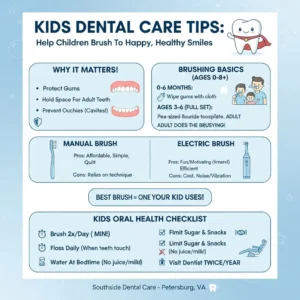
Many parents wonder whether an electric toothbrush is better for their child than a regular manual brush. The truth is both can clean effectively, as long as your child brushes properly and for long enough. In fact, studies show manual brushes can remove plaque well, and some kids prefer them because electric vibrations might feel strange. On the other hand, an electric toothbrush’s moving bristles and fun features (like timers or music) can motivate some children to brush more willingly and even remove a bit more plaque in certain cases. Below is a comparison of the two options to help you decide which might be best for your child:
| Feature | Manual Toothbrush | Electric Toothbrush |
| Cleaning Effectiveness | Very effective when used with proper technique; soft bristles can thoroughly remove plaque if you brush all surfaces. | Efficient at plaque removal with rotating/vibrating bristles; may remove slightly more plaque due to powered motion. Built-in timers help ensure a full 2-minute brushing. |
| Ease of Use | Simple design that’s lightweight and easy for small hands to control. No batteries or charging needed, and no noise or vibration (good for kids who are sensitive to sensations). | Does some of the brushing work for you – useful if a child has limited hand dexterity or needs help reaching all areas. However, slightly heavier and requires charging or battery changes. |
| Comfort & Fun | Quiet and familiar – no buzzing. Comes in kids’ themes and colors, but lacks special effects. Some kids feel more comfortable without the vibration and enjoy manual brushing just fine. | Often decorated with cartoon characters and lights/sounds, which can make brushing more fun and engaging. The novelty can encourage reluctant brushers, but a few children may find the vibration ticklish or odd. |
| Cost & Maintenance | Very affordable and widely available. Entire brush needs replacing every 2–3 months or when bristles fray. Replacing the whole brush is cheap, and some have color indicators on bristles to show wear. | Higher upfront cost. Brush heads should be replaced every 3 months, and those replacements can be pricier than a regular toothbrush. You’ll need to keep it charged (or fresh batteries) for it to work well. If power is low, it won’t clean as effectively. |
In summary: There’s no single “right” choice – the best toothbrush is the one your child will actually use happily! If your little one hates the buzzing feeling of an electric brush, a manual brush will do a fine job. If they’re gadget-loving or need extra motivation, an electric brush with fun features might make them eager to brush. What matters most is consistency: brushing twice daily with proper technique and toothpaste. No toothbrush can prevent cavities if it just sits in the cabinet.
Step-by-Step: Teaching Your Child Good Brushing Habits
Getting children to brush and care for their teeth can be challenging, but by approaching it step by step, you can help them learn lifelong healthy habits. Here’s a step-by-step guide for parents to make brushing and oral care a positive part of your child’s daily routine:
- Start early – even before the first tooth: Begin cleaning your baby’s mouth from infancy. After feedings, gently wipe the gums with a clean, damp washcloth or gauze. This keeps the mouth clean and familiarizes your infant with oral care. When the first tooth appears (around 6 months), use a soft infant toothbrush with just water or a tiny smear of toothpaste to brush that tooth. Early exposure makes brushing feel normal from the start.
- Use the right tools for their age: Choose a kid-friendly toothbrush designed for little mouths – one with soft bristles and a small head that’s easy to maneuver. Use fluoride toothpaste in the appropriate amount (a rice-grain smear for under 3; pea-sized for age 3-6). Always have an adult dispense the toothpaste and keep the tube out of reach. Proper tools ensure effective cleaning and safety for your child.
- Make it a game and keep it fun: Transform brushing from a chore into a fun activity. Sing a silly toothbrushing song or play a favorite 2-minute tune while brushing to make sure they brush long enough. You can find brushing songs (even by popular characters) recommended by dentists. Use a colorful sand timer or a phone app with a cartoon that plays for two minutes. You might even let your child “brush” the teeth of a favorite stuffed animal or doll as part of the routine. Turning brushing into a game or playtime helps reduce resistance and makes kids look forward to it.
- Model good brushing behavior: Young children learn by watching you. Let them observe how you brush your own teeth every day. Better yet, brush your teeth together in the mirror each morning and night. Show them how you spit and rinse. You can even let your child “help” brush your teeth for fun, then switch so you brush theirs. By seeing that you value oral care and that it can be done cheerfully, they will be more likely to copy those good habits.
- Give kids a sense of control: Toddlers and preschoolers love to assert their independence. Harness that by offering choices whenever possible. Let your child pick out their own toothbrush (maybe one with their favorite superhero or cartoon) and flavor of toothpaste (child-friendly flavors like strawberry or bubblegum). At brushing time, you might ask, “Do you want to brush your top teeth first or your bottom teeth?” Giving two simple choices makes them feel in charge while still accomplishing the task. This reduces power struggles and makes them an active participant in their own care.
- Stay positive and patient: Teaching a child to brush properly takes time. Expect that they will make a mess or miss spots – that’s okay. Praise their efforts, and gently guide them on what to do better next time. Avoid turning brushing into a battle. If your child is resistant, keep your cool. Encourage and cheer them on (“You’re doing such a great job cleaning those teeth!”). If they only let you brush a little at first, gradually increase it. The goal in early years is to get them comfortable with the routine – you can always go back and brush missed spots yourself. Keeping the experience positive will encourage your child to continue without feeling forced. Over time, with consistency, they’ll need less coaxing as brushing becomes just another familiar part of the day.
By following these steps and making oral care a regular routine, you’ll help your child build confidence in taking care of their teeth. Remember that every child is different – some may take to brushing eagerly, while others need weeks or months of patient coaching. Stick with it, and don’t hesitate to ask your dentist for tips if you’re struggling. The effort you put in now will pay off in healthier checkups and a lifetime of strong dental habits!
Safety & Aftercare: Your Kids’ Dental Care Checklist
Caring for kids’ teeth isn’t just about the brushing itself – it’s also about creating a safe, healthy environment for their oral care and knowing what to do between dental visits. Here’s a handy checklist for parents to ensure you’re covering all the bases of your child’s dental care:
- Brush twice a day, for 2 full minutes: Use a timer or fun song to ensure your child brushes for 2 minutes each session (morning and before bed). Brushing before bedtime is most critical – after that, no more snacks or sugary drinks until morning to prevent overnight tooth decay.
- Use fluoride toothpaste (correct amount): Fluoride protects against cavities, so use it as soon as your child has teeth. For children under 3, just a rice-sized smear; for ages 3-6, a pea-sized dab. Teach your child to spit out the toothpaste. If they haven’t mastered spitting, have them tilt their mouth down so excess paste dribbles out rather than swallowing.
- Floss daily: Once your child has teeth that touch each other, help them floss every day to clean between those teeth. You can use child-friendly flossers to make it easier. Good flossing habits will prevent cavities between teeth that even good brushing might miss.
- Use age-appropriate tools and techniques: Always supervise young kids while brushing. Children often lack the coordination to brush every tooth well until at least age 6-8. Until they consistently do a thorough job alone, you or an older sibling should help “finish up” the brushing. Also, use a soft-bristled, small toothbrush to avoid hurting their gums, and replace the brush every 3 months (or sooner if bristles are frayed). A worn toothbrush doesn’t clean effectively.
- Watch out for sugar and snacking: Limit sugary foods and drinks which fuel cavity-causing bacteria. Offer water, milk, or diluted juice instead of sweet juice or soda, especially between meals. If your child enjoys sweets, try to serve them as part of a meal rather than a standalone snack (when saliva flow helps rinse sugars away). And never put baby to bed with a bottle of milk or juice – stick to water to prevent “baby bottle tooth decay.”
- Schedule regular kids checkups: Don’t skip the dentist! Children should see a dentist by their first birthday or within six months of their first tooth coming in. After that, routine checkups every six months are typically recommended. At these visits, the dentist will gently clean your child’s teeth, apply fluoride or sealants if needed, and catch any small issues before they become big problems. Regular checkups combined with good home care are the key to cavity prevention.
By following this checklist, you can be confident you’re doing everything necessary to keep your child’s teeth safe and healthy. Consistency is key – small daily habits (like brushing and flossing) plus periodic professional care add up to strong, cavity-free smiles.
The Southside Advantage: Compassionate Pediatric Dental Care
Choosing the right dentist for your child can make all the difference in their oral health journey. At Southside Dental Care, we pride ourselves on providing gentle, friendly dental care designed to keep children’s smiles healthy and stress-free. Here’s what sets our pediatric dental care apart:
- Specialized Pediatric Expertise: Our team includes experienced dentists and staff who are trained to work with children at every stage—from infants getting their first tooth to teens needing guidance on braces. We understand the unique needs of growing smiles. Early dental visits focus on prevention, proper development, and building trust. We know healthy smiles start early, and we’re dedicated to supporting kids’ oral health from the very first visit.
- Comfort & Positive Experiences: A trip to the dentist can be scary for little ones, so we go above and beyond to create a welcoming, non-threatening environment. Our clinic is kid-friendly and calming. The team uses positive communication and behavioral techniques to help children feel safe and in control during their visit. We take time to introduce new tools or procedures in a fun, gentle way. By reducing fear and anxiety, we help kids build confidence in dental care instead of dread. (In fact, many of our young patients end up enjoying their visits – as evidenced by happy parents and even kids saying they love coming here!)
- Preventive Focus: At Southside, prevention is a cornerstone. During kids checkups, we don’t just fix problems – we proactively protect your child’s teeth. Our pediatric services include regular cleanings, fluoride treatments, and protective sealants on molars to help stop cavities before they start. We also provide parents with guidance on diet and home care (like proper brushing techniques – much like the tips in this article!). By partnering with families, we aim to keep little teeth healthy and avoid unnecessary dental work.
- State-of-the-Art Care & Emergency Ready: Our clinic uses modern technology and up-to-date techniques to ensure high-quality care for every child. From low-radiation digital X-rays to comfortable child-sized equipment, we invest in tech that makes treatment effective and easy on patients. Should your child ever face a dental emergency or need a repair (like a filling or crown), our team uses child-friendly techniques to treat the issue while keeping your child calm and supported. We’re also equipped to monitor orthodontic development early and guide you if any preventive interventions are needed. In short, we’ve got you covered for all aspects of your child’s dental health under one roof.
- Friendly, Family-Centered Service: We treat our young patients and their parents like family. You’ll never feel rushed – our dentists take time to answer questions and explain options We celebrate your child’s progress, whether it’s a cavity-free checkup or finally mastering brushing on their own. Our goal is to make every visit educational, positive, and perfectly tailored to your child’s needs. With flexible scheduling and a compassionate team, we make it convenient and stress-free for your family to maintain excellent oral health.
Southside Dental Care is proud to be a trusted partner for families in Petersburg, VA and surrounding areas. We combine the personal touch of a hometown dental office with the advanced care of a modern practice. When you choose us, you’re choosing a team that truly cares about your child’s smile and well-being.
Ready to experience the Southside difference? If you have questions or want to ensure your child’s teeth are on the right track, give us a call. We’re always here to help – whether it’s advice on toothbrushes or a gentle exam for your little one. You can also book children’s visit online through our website at any time. We look forward to keeping your child’s smile bright for years to come!
Conclusion & FAQs
Keeping your child’s teeth healthy is a team effort between you, your child, and your dentist. By starting good habits early and making oral care fun, you set your little one up for a lifetime of strong, happy smiles. Remember, it’s normal to face some challenges – but consistency and positivity will go a long way. Southside Dental Care is here to support you with expert advice and gentle care whenever you need a hand. Together, we can make dental health something your child feels proud of.
Q1: When should my child start brushing and see a dentist?
A: You should begin cleaning your child’s mouth even before the first tooth erupts – simply wipe the gums with a damp cloth after feedings. Once teeth appear, start brushing them gently with a soft brush and tiny bit of toothpaste. As for the dentist, the American Academy of Pediatric Dentistry recommends a first dental visit by age one, or within six months of the first tooth coming in. Early dental visits are usually quick and help your baby get comfortable with the dentist while giving you crucial guidance on caring for those new teeth.
Q2: At what age can children brush their teeth on their own?
A: Most kids don’t have the dexterity to brush effectively on their own until around 7 or 8 years old. A good rule of thumb: when they can tie their shoelaces by themselves, they likely have the coordination to handle brushing solo. Even then, it’s wise to supervise periodically to ensure they’re doing a thorough job and brushing for the full 2 minutes. Every child is different – some may do well a bit earlier, others might need help longer. The key is to gradually let them take more responsibility while you double-check that no spots are missed.
Q3: What if my child hates brushing their teeth?
A: It’s a common struggle! Try to make brushing as fun and empowering as possible. Let them choose a toothbrush with a favorite character and a yummy-tasting toothpaste. Turn brushing into a game – play music, use a sticker chart for motivation, or read a short story about brushing. You can also brush together and let them “teach” a stuffed toy how to brush, turning it into play. Keep your tone positive and avoid scolding. If you stay consistent with a routine, most children adapt over time. If you’re still having trouble, talk to your pediatric dentist – they can offer creative tips or demonstrate techniques during your child’s visit to encourage better cooperation.
By following these tips and maintaining regular dental visits, you’re helping your child build a foundation for excellent oral health. Healthy baby teeth lead to healthy adult teeth, and positive early experiences set the stage for a lifetime of confident smiles. If you have any more questions or concerns, Southside Dental Care is just a phone call away. Together, let’s keep those tiny teeth shining bright!