Have you noticed your child’s teeth looking crowded or their bite seeming “off”? Maybe you’re an adult with long-standing gaps or jaw pain, wondering if you’ve missed the window for a straight smile. It’s natural to ask, “When is it time for orthodontics?” Orthodontic issues can affect more than just appearance – they can impact comfort, speech, and oral health. The good news is that there’s never a wrong time to seek guidance. Whether it’s a young child’s first evaluation or an adult considering braces later in life, help is available.
At Southside Dental Care, we understand the anxieties that come with orthodontic decisions. In this orthodontic evaluation guide, we’ll walk you through the why and when of treatment. Our compassionate team offers modern orthodontic treatments – from traditional braces to discreet clear aligners – tailored to each patient’s needs. We’re here to ensure you or your child achieves a healthy, confident smile with expert care every step of the way.
Why Timing Matters and How Orthodontics Helps
Choosing the right timing for orthodontic treatment can make all the difference. For children, early evaluation is key. Dental experts (including the American Association of Orthodontists) recommend an orthodontic check-up by age 7. Around this age, kids have a mix of baby and adult teeth, allowing an orthodontist to spot emerging problems early. Identifying issues sooner rather than later can help guide jaw growth and tooth alignment while the child is still developing. In fact, seeing an orthodontist by age 7 can “help maintain oral health and may avoid more costly or invasive treatments down the road”. Importantly, an early visit doesn’t always mean immediate braces – sometimes the orthodontist will simply monitor growth and let parents know the ideal time for treatment.
For teens, the question of timing often comes when most permanent teeth are in (usually between ages 11 and 15). This is a common stage for braces or aligners, as the teeth and jaws are easier to move before full maturity. Correcting issues in the teenage years can prevent dental problems in adulthood and boost self-esteem during those all-important school years.
For adults, you might be relieved to know it’s never too late for orthodontics. Healthy teeth can be moved at any age. In fact, modern orthodontics has seen a rise in adult patients seeking the smiles they’ve always wanted. While adult treatment can take a bit longer due to mature jawbones, adults can still achieve excellent results. There is essentially no upper age limit for braces or aligners – as long as your gums and bone are healthy, you can straighten your teeth even in your 40s, 50s, or beyond. Orthodontic care not only improves appearance; it can also fix bite problems that lead to jaw pain or uneven tooth wear, contributing to better overall dental health.
How do orthodontic treatments actually work? Whether you choose braces or clear aligners, the principle is the same: gentle, controlled forces gradually move your teeth into proper alignment. With braces, small brackets are affixed to the teeth and connected by wires; with periodic adjustments, the wires apply pressure to shift teeth into place. Clear aligners (like Invisalign) use a series of custom-fit plastic trays that you switch out every couple of weeks, each tray slightly straighter than the last, nudging your teeth toward the desired positions. Over time, these treatments can close gaps, correct crowded or crooked teeth, and harmonize your bite. The result is not just a prettier smile, but often a healthier one – aligned teeth are easier to clean and less prone to decay or gum issues.
Braces vs. Aligners: Which Is Right for You?
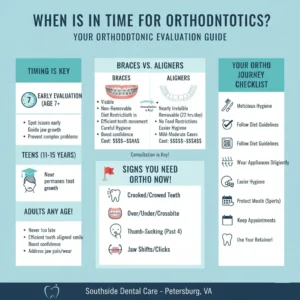
One of the biggest decisions in orthodontic care is choosing between traditional braces and clear aligners. Both options straighten teeth effectively, but they have different advantages that may make one a better fit for your lifestyle or your child’s needs. Here’s a side-by-side comparison of braces vs aligners to help guide your decision:
| Feature | Braces (Traditional Brackets & Wires) | Clear Aligners (Removable Trays) |
| Visibility | Visible metal or ceramic brackets and wires are attached to the teeth. Modern options include tooth-colored or behind-the-teeth braces for a subtler look. | Nearly invisible; made of clear plastic that fits snugly over teeth. Most people won’t notice you’re wearing them. |
| Removability | Not removable – braces stay on 24/7 until treatment is complete. | Removable; you take them out to eat, drink anything besides water, and for cleaning. Must be worn ~22 hours per day for best results. |
| Diet Restrictions | Somewhat strict – you must avoid hard, sticky, or chewy foods that could break brackets or wires. This means cutting back on things like popcorn, nuts, caramel, and gum. | No food restrictions since aligners are taken out at mealtimes. Enjoy your normal diet, but always remove aligners when eating and brush before putting them back on. |
| Oral Hygiene | Requires careful brushing and flossing around brackets and wires. Extra effort is needed to keep teeth and braces clean. Special tools (threader floss, water flossers) can help. | Easier to brush and floss normally since aligners come out. However, you must clean your teeth after eating and before re-inserting aligners to avoid trapping food against teeth. |
| Comfort & Soreness | May cause mild soreness after adjustments or when first placed; also, brackets can rub on the inside of your cheeks (orthodontic wax helps). Generally, discomfort is short-lived. | May cause mild tenderness when switching to a new tray. Edges of aligners can occasionally irritate gums or tongue, but they are smooth by design. Any soreness is usually brief and manageable. |
| Effectiveness | Highly effective for all types of orthodontic issues, from minor cosmetic tweaks to complex bite corrections. Orthodontists can make precise adjustments for detailed control. | Effective for many mild to moderate issues. New advances continually expand what aligners can fix, but very complex or severe cases may respond better to braces for more control. |
| Typical Cost Range | \$2,750–\$7,500 (varies by case complexity and location). Many standard orthodontic insurance plans cover a portion of this. | \$3,250–\$8,250 (varies by case complexity and location). Often comparable in cost to braces; financing plans can make either option budget-friendly. |
Both braces and aligners will straighten your teeth effectively. The best choice really depends on the patient. For example, compliance is a big factor: aligners require discipline to wear them almost all day, whereas braces stay on and do their job without the patient having to remember anything. Teens who might be prone to losing aligners or not wearing them enough could do better with braces. On the other hand, an image-conscious adult or responsible teen might love the near-invisibility of aligners and be willing to keep them in as directed.
It’s also worth noting that one method isn’t inherently “better” than the other overall. Orthodontic experts stress that the right treatment is the one tailored to your specific case and lifestyle. At Southside Dental Care, our orthodontist will evaluate your or your child’s needs and recommend whether traditional braces or clear aligners (or sometimes a combination of methods) would give the best results. Whichever path you choose, the goal is the same: straight, healthy teeth and a smile you’ll love.
Is Orthodontic Treatment Right for You?
How do you know if you or your child needs orthodontic treatment, and when to start? The answer varies per individual, but there are some general guidelines and signs that can help. Here’s what to consider:
- Young Children (Ages 7+): As mentioned earlier, it’s wise to schedule an early evaluation with an orthodontist by age seven. This doesn’t mean your 7-year-old will get braces right away! In fact, many young kids won’t need any treatment at that age. However, that initial check-up is crucial to spot subtle issues or jaw growth patterns. If a problem is developing, the orthodontist can advise you on the optimal timing for treatment – whether it’s needed now or five years from now. If no issues are found, you get peace of mind. And if something is slightly off, your orthodontist will simply monitor it with periodic check-ups. Early intervention (often called Phase I orthodontics) is only recommended if it will genuinely benefit the child, such as correcting a crossbite or creating space for crowded teeth before they fully erupt. By catching these problems early, you might save your child from more complex treatments later on.
- Signs Your Child Might Need Braces: Some orthodontic problems are easy to spot, while others are subtle. Obvious signs include crooked, crowded, or overlapping teeth, or teeth that protrude. Pay attention to your child’s bite as well: if the upper and lower teeth don’t meet evenly (such as with an overbite, underbite, or crossbite), an evaluation is warranted. More subtle clues could be difficulty chewing or biting food, mouth-breathing, or even frequent thumb-sucking past age 4 or 5, which can affect tooth alignment. Jaw issues might show up as the jaw shifting when your child bites down, or jaw clicks and pops. If you notice any of these signs, it’s “time for orthodontics” in the sense that you should consult an expert. Remember, sometimes orthodontic issues aren’t painful or obvious to the untrained eye – which is why that early orthodontic check is so valuable.
- Teens and Adolescents: By the early teen years, most permanent teeth are in place, which is often the ideal time to begin full orthodontic treatment if needed. If your teen missed an evaluation at 7, don’t worry – just have them assessed as soon as possible if you or your dentist notice crowding or bite issues. Teenagers are actually the most common age group for braces, so your child will likely have peers going through the same process. Orthodontic treatment in the teen years can correct alignment efficiently while the jaw is still growing and before they reach adulthood (when treatment can be slightly slower). Plus, many teens today get to choose colorful rubber bands for braces or opt for clear aligners, turning a potentially anxious experience into something they can customize and take pride in.
- Adults: Perhaps you’ve spent years feeling self-conscious about your teeth, or you’ve developed bite problems or spacing issues later in life. You might be asking, “Is it still worth it for me to get braces or aligners now?” The answer in most cases is absolutely, yes. Adults can and do benefit from orthodontic treatment. As long as your teeth and gums are in good shape (no uncontrolled gum disease or significant dental decay), you can pursue orthodontics at any age. In fact, improving your bite alignment as an adult can alleviate jaw strain and prevent excessive wear on certain teeth. Many adults also find that a better-aligned smile boosts their confidence in professional and social settings. Treatment options for adults are often very discreet – ceramic braces or clear aligners are popular for minimizing the visibility of orthodontic work. While an adult’s teeth may move a little more slowly than a teenager’s, the results can be just as effective. It’s never too late for a healthier, more beautiful smile!
- Consultation: The best way to determine if you or your child should start orthodontic treatment is to get a professional evaluation. Consider booking a consultation (we offer them at Southside Dental Care) to have an orthodontist examine the teeth, jaw, and bite. During a consultation, we’ll take any necessary X-rays or photos, discuss what issues are present (if any), and outline a plan. You’ll find out whether treatment is recommended, what the options are (braces vs aligners, etc.), and the expected timeline and cost. This information will help you make an informed decision. Remember, an initial consult doesn’t commit you to starting treatment right away – it’s an opportunity to get expert advice. And because many orthodontic consultations are complimentary, you have nothing to lose by getting one. At Southside Dental Care, our goal is to give you clear answers and peace of mind about the next steps for your smile.
What to Expect: Safety and Aftercare Tips
Getting braces or aligners is a big step, and it’s normal to worry about safety, discomfort, or how to care for them. Rest assured, orthodontic treatment is very safe when conducted by trained professionals. While moving teeth does cause some pressure and minor soreness (especially in the first few days of a new wire or aligner), it should never be unmanageable. Your orthodontic team will provide wax to cover any poking wires and suggest over-the-counter pain relievers if needed, but most patients adjust quickly. The appliances and techniques used today are advanced, gentle, and designed with patient comfort in mind.
Just as important as the treatment itself is how you care for your teeth and appliances during the process. Proper aftercare ensures the treatment stays on track and your mouth stays healthy. Here’s a handy checklist to follow during (and after) orthodontic treatment:
- Keep Up Meticulous Oral Hygiene: Brush your teeth after every meal and floss daily. Braces create nooks where food can get stuck, so take your time brushing around every bracket and along the gumline. If you have aligners, remove them to brush and floss normally, and clean your aligners as instructed. Excellent hygiene prevents cavities and gum issues during treatment.
- Follow Dietary Guidelines: If you’re wearing braces, steer clear of hard, sticky, or chewy foods that could damage the brackets or wires. Common culprits to avoid include ice, hard candies, popcorn, caramel, taffy, and gum. Cut raw fruits and veggies into bite-size pieces. With clear aligners, you can eat what you want but always take the aligners out first and do not chew gum with them in. Drinking water with aligners in is fine, but remove them for any other beverages (especially sugary or acidic drinks) to prevent tooth decay.
- Wear Your Appliances as Directed: Your orthodontist’s instructions are key to finishing treatment on time. If you have braces, that might mean wearing elastics (rubber bands) on certain teeth consistently to correct the bite. If you have Invisalign or another aligner, be diligent about wearing them 22 hours a day – essentially all the time except when eating or brushing. Skipping days or not wearing aligners long enough can prolong treatment. Consistency is your friend!
- Protect Your Mouth During Activities: If you or your child play sports or do any activity with a risk of contact, use a mouthguard. Specialized orthodontic mouthguards are available to fit over braces. This will prevent injuries to the lips or cheeks and protect the appliances from impact. Even with aligners (or once braces are off), a mouthguard is a good idea during sports to shield your teeth.
- Keep Your Appointments: Throughout treatment, you’ll have regular check-ups for adjustments (tightening wires, getting new aligner trays, etc.). These appointments ensure teeth are moving as planned. Try not to miss them, because delayed adjustments can extend the overall treatment time. If something ever feels very wrong – for example, a wire is poking painfully or a bracket comes loose – don’t hesitate to call us. We can schedule a quick fix rather than waiting in discomfort.
- Use Your Retainer After Treatment: Finishing braces or aligners is an exciting milestone, but your responsibility isn’t over yet. To keep that beautiful new smile in place, you’ll need to wear a retainer as instructed by your orthodontist. Teeth have a tendency to shift back if retainers aren’t worn, especially in the first year or two after treatment. We will provide a custom retainer and guidance (often full-time wear for a while, then nightly wear long-term). Protect your investment in your smile by sticking with retainers – it’s the key to a lifelong result.
By following these aftercare tips, you’ll set yourself up for a smooth orthodontic journey and a healthy outcome. Our team at Southside Dental Care will also be there to guide you, answer questions, and make adjustments to your care plan as needed. We prioritize your safety and comfort, using the latest technology and gentle techniques to make orthodontic treatment as easy as possible.
The Southside Dental Care Advantage
Why choose Southside Dental Care for you or your child’s orthodontic needs? We know you have options when it comes to dental providers, and we’re honored to be considered. Here are a few reasons patients trust us with their family’s smiles:
- Experienced, Specialized Team: Our clinic’s orthodontic services are led by a skilled professional with specialized training in aligning teeth and correcting bites. You’ll be in the hands of an expert who has successfully treated cases of all complexities – from simple crowding to more challenging jaw misalignments. We stay up-to-date with the latest in orthodontic techniques and continuing education. But just as importantly, we’re great listeners. We take the time to understand your concerns and explain every option in plain language, so you feel informed and confident in your care plan.
- Comprehensive Orthodontic Solutions: Southside Dental Care offers a full range of orthodontic options under one roof. This means we can treat patients of all ages – children, teens, and adults – with the method best suited to them. Our services include traditional metal braces, ceramic braces (which blend with tooth color), and clear aligner therapy. We also provide interceptive treatments for younger children if needed, such as expanders or partial braces, to address issues early. Because we provide orthodontic treatments as part of a complete dental practice, our team collaborates to manage your overall oral health during orthodontics. From the first evaluation to the day the braces come off (and beyond), we’ve got you covered.
- State-of-the-Art Technology: We believe our patients deserve the best, so we’ve invested in advanced technology to improve your orthodontic experience. For example, we use digital 3D scanners to take precise impressions of your teeth – no more goopy molds that make you gag! Digital imaging and computerized treatment planning help us map out tooth movements with extreme accuracy. If you’re getting clear aligners, these 3D models will show you a preview of the expected results. Our modern facility and equipment also mean quicker appointments and greater comfort. We even utilize low-radiation digital X-rays and photos to track progress without unnecessary exposure. By staying on the cutting edge, we make your treatment more efficient, comfortable, and effective.
- Patient Comfort & Personalized Care: From the moment you walk into Southside Dental Care, you’ll notice our commitment to a friendly, stress-free environment. We know that orthodontic work can make patients (especially kids) a bit nervous. That’s why our staff is trained to offer extra-gentle, reassuring care. We take the time to demonstrate how to clean braces or handle aligners, and we’re always available to answer questions or address concerns. If your child is anxious, we have techniques to put them at ease – from a tour of the office to fun kid-friendly explanations of their treatment. For busy adults, we offer flexible scheduling (including weekend or evening appointments) so that taking care of your smile fits conveniently into your life. Every smile is unique, and so is our approach: we customize each treatment plan to the individual’s needs and goals, rather than a one-size-fits-all protocol.
- Your Partners in Dental Health: Choosing us means you’re not just getting a set of braces or aligners – you’re gaining a dental home for long-term care. Our orthodontic patients often continue with us for regular dental checkups and any other dental work they need. This continuity of care means we know your history and can maintain your oral health comprehensively. If any issues arise during ortho treatment (like a cavity or a gum concern), we can handle it in-house, minimizing referrals and extra appointments. We also work with families on flexible payment plans and insurance processing, because we believe financial considerations should never be a barrier to a healthy smile. Our transparent pricing and knowledgeable staff will help you navigate the insurance details and find a payment schedule that suits your budget.
In short, the Southside Advantage is about trust, quality, and a patient-centered experience. We treat our patients like family, and we truly care about your results. Seeing the confidence that blossoms with a new smile is the reason we love what we do. When you’re ready to take the next step toward a straighter smile, we’ll be here to guide you with expertise and warmth.
Conclusion
Deciding when it’s time for orthodontics depends on each person’s unique situation, but a few truths apply across the board. For children, it’s best not to wait – an early orthodontic check-up by age 7 will put you on the right path, whether that means immediate treatment or just routine monitoring. For teens, the window of early adolescence is often ideal for correcting issues before adulthood. And for adults, it bears repeating: it is never too late to improve your smile and oral health with orthodontic treatment. The timing that’s “right” is whenever you decide to take that first step, armed with professional guidance.
If you’re unsure about the next step, we encourage you to reach out to us at Southside Dental Care. Our team is happy to answer your questions and set up a friendly, informative consultation (there’s no pressure or obligation). During the visit, we’ll let you know what, if any, orthodontic treatment would benefit you or your child, and when the optimal time to start would be. You’ll leave with a clear understanding of the path to a healthier, more confident smile.
Remember, orthodontics is not just about straight teeth – it’s about investing in long-term dental health and personal confidence. Whether it’s guiding a child’s growing smile or giving an adult a second chance at perfectly aligned teeth, we are passionate about creating positive change. When is it time for orthodontics? If you’re asking the question, the time might be now. And whenever you decide to begin, Southside Dental Care will be by your side to make the journey comfortable, effective, and even enjoyable. Here’s to the start of something great – the smile you or your child deserves!
FAQ
Q1: What age is best for my child to get braces or an orthodontic evaluation?
A: The American Association of Orthodontists recommends that children see an orthodontist by age 7 for an initial evaluation. At this age, an orthodontist can identify any developing issues. This doesn’t always mean treatment will start right away – often, if everything looks fine or issues are minor, the orthodontist will just monitor your child’s growth. Many kids begin full braces treatment around age 11–13, once most adult teeth have come in. However, if a specific problem is spotted early (like a crossbite or severe crowding), early intervention (Phase I treatment) might be done around ages 7–10 to address it. In summary, get the evaluation by age 7, and then follow the orthodontist’s guidance on timing. Early check-ups ensure that if braces are needed, they’re done at the optimal time for your child’s development.
Q2: Is it ever too late to get braces as an adult?
A: No – you can straighten your teeth at any age as long as your teeth and gums are healthy! There is no upper age limit for orthodontic treatment. These days, adults make up a significant portion of orthodontic patients, and they can achieve fantastic results. The main differences for adult orthodontics are that treatment might take a bit longer (since an adult’s jaw is fully developed) and that certain conditions like gum health need to be stable before starting. But whether you’re 30 or 60, don’t hesitate to consult an orthodontist if you want to improve your smile or bite. Options like clear ceramic braces or nearly invisible aligners are popular for adults. Ultimately, adult braces are very common, and studies show that properly aligned teeth can improve oral health at any age. If your dentist or orthodontist gives you the green light, it’s never too late to invest in your smile.
Q3: Which is better for me, braces or Invisalign (clear aligners)?
A: There isn’t a one-size-fits-all answer – the “better” option depends on your specific needs and how responsible you (or your child) will be with the appliance. Braces (the traditional brackets and wires) are very effective for all types of orthodontic cases, especially complex ones. Because they are fixed to your teeth, they’re working 24/7 and don’t rely on patient compliance. Braces might be the better choice if you have a more severe bite issue or if you worry about remembering to wear aligners. Clear aligners (like Invisalign) are nearly invisible and let you eat and brush with freedom since you remove them. They work great for mild to moderate corrections and for those who value aesthetics during treatment. However, you must be disciplined about wearing them ~22 hours a day and keeping track of them. Many patients love aligners for their comfort and appearance. In contrast, some younger patients do better with braces that don’t tempt them to take them out. In short: neither is universally better – both straighten teeth well. Your orthodontist will consider the complexity of your case and your lifestyle to recommend the ideal choice. Sometimes the decision also involves personal preference. During your consultation, we’ll happily discuss both options so you can make an informed choice that you’ll be comfortable with throughout treatment.